Matching the mind: The FTI and the future of scientifically guided dating

In the age of endless swiping, real connection has become surprisingly rare, especially for people navigating a dating app in Bangalore, where choice overload is intense. We have more profiles, more options and more novelty than ever before, yet our emotional lives often feel shallow and tired. The technology that is supposed to help us connect mostly creates distraction, burnout and emotional distance. Many people criticise existing dating apps for two main reasons: the attention economy, which means apps are designed to keep us scrolling as long as possible to make money from our time, and algorithmic bias, which means the app’s matching system can sometimes favour certain types of people or behaviours without us realising it. But a deeper question remains: “Can science help us build relationships that actually match the way our brains work, relationships that support attention, trust and emotional balance?” These questions are beginning to shape how a new generation of the dating app in Bangalore ecosystem approaches compatibility and intention.
This question sits at the meeting point of neuroscience, psychology and design. Scientific matching, which many people think simply means algorithm-based compatibility, is actually a much bigger idea. It’s not just about predicting who you might find attractive. It’s about understanding how the brain forms bonds, how chemicals, thoughts and emotions work together to create trust, stability and desire. If we look at it this way, the future of dating design may not depend on “smarter” algorithms at all. Instead, it may lie in creating dating systems that respect our limited mental energy, reduce overload and support healthier emotional experiences.
Why the brain fails under swipe conditions ?
The human brain was never designed to evaluate hundreds of romantic prospects in rapid succession. For most of evolutionary history, mate selection unfolded within small, familiar communities where individuals encountered only a limited number of potential partners over extended periods of time [1–3]. Attraction was not a split-second judgment but a slow, context-rich process shaped by repeated interactions, shared environments, nonverbal cues, mutual obligations, and the gradual development of trust [1–3].Online dating collapses this entire ecological framework into a rapid-fire sequence of faces and profiles, stripped of sensory depth and social grounding. This pattern is also reflected in user fatigue across many Bangalore dating sites, where abundance often replaces meaningful interaction. Instead of meaningful encounters, users navigate an endless stream of unfamiliar strangers presented at a pace the brain is poorly equipped to process [1–3].
Cognitive load theory helps explain why this experience feels mentally exhausting. Human working memory can hold only a limited number of meaningful elements at once, yet a typical swipe session inundates the prefrontal cortex with dozens of micro-decisions in minutes [4,5]. This region, responsible for deliberation and evaluative reasoning, becomes overwhelmed. In response, the brain defaults to cognitive shortcuts, snap judgments, shallow filtering, and impulsive preferences. What begins as exploration quickly degrades into confusion and emotional fatigue, leaving users uncertain about what or whom they are actually seeking [4,5].
The strain does not end there. Online dating also disrupts the brain’s reward system. Match notifications arrive unpredictably, closely resembling variable reward schedules used in gambling machines. Each notification delivers a small, unexpected dopamine pulse, training the brain to seek the thrill of potential matches rather than the slow, rewarding process of building connection. Desire shifts away from presence and toward possibility. The app becomes the source of the excitement, not the people on it.[6-10].
The emotional consequences are even more subtle. Every slow reply, abrupt silence, or vanished match registers in the brain as a social threat. The amygdala, wired to detect interpersonal danger, interprets these ambiguous digital signals as rejection. Even when we intellectually understand that someone may simply be busy, our nervous system responds defensively. Trust erodes. Anxiety grows. We begin approaching new conversations with caution instead of curiosity, being guarded rather than open. [11-17]
Together, these cognitive, neurochemical and emotional disruptions reshape the landscape of online dating in ways most people feel but struggle to describe. The core issue is not simply that there are too many choices or too many notifications. The deeper problem is that our neurobiology was never built for this pace, this volatility or this level of social ambiguity. The result is a system that overwhelms the mind, destabilises reward pathways and quietly exhausts our capacity for genuine intimacy.[6,18] Such emotional fatigue is now commonly reported by users navigating any fast-paced dating app in Bangalore environment.
The neurobiology of compatibility :

Dr. Helen Fisher, a biological anthropologist who has spent decades studying romantic love, proposes that the roots of compatibility lie in four primary neurochemical systems that shape personality and attraction: dopamine, serotonin, testosterone and estrogen [21]. Her Fisher Temperament Inventory (FTI), categorises people into four broad temperament groups: Explorers, Builders, Directors and Negotiators, each reflecting dominant neural pathways. [19,20]
- Explorers (Dopamine-dominant) seek novelty, spontaneity and adventure. Their brains are reward-sensitive and thrive on new experiences.
- Builders (Serotonin-dominant) value stability, order, and social cohesion. They often gravitate toward structure and loyalty.
- Directors (Testosterone-driven) are analytical, decisive and competitive, drawn to logic and precision.
- Negotiators (Estrogen-influenced) exhibit empathy, intuition, and verbal fluency, often valuing emotional attunement and harmony.
These categories are not deterministic but interactive, the neural equivalent of personality chemistry. Dopamine-dominant individuals often pair well with fellow novelty-seekers, while serotonin-driven Builders gravitate toward those who provide reliability. Testosterone-driven Directors frequently connect with estrogen-dominant Negotiators, balancing logic with empathy [22,19,20] .
Compatibility, from this lens, is not a social construct but a neurochemical dialogue, a conversation between two brains wired for compatible reward systems. Scientific matching systems inspired by Dr. Fisher’s framework attempt to go beyond superficial preferences or swipe-based heuristics. They seek patterns in temperament, values and emotional regulation, aligning partners whose cognitive and hormonal landscapes may interact more harmoniously. While the idea may sound mechanistic, it mirrors the biological mechanism that underpins long-term attachment in all social species.
This biological framing also demystifies attraction: what we call “chemistry” is often quite literal, a resonance between neurotransmitter systems seeking equilibrium. Long-term compatibility, then, becomes less about shared interests and more about sustained neurochemical harmony.[22,19,20 ]
The power of FTI in matching compatible partners:
The FTI is especially powerful due to its biological and psychological precision. Instead of surface-based selection, like photos or interests, the FTI identifies core personality features that predict compatibility and relational satisfaction. For instance, pairing two Explorers may lead to fun, spontaneous adventures but could lack needed stability. Conversely, matching a Director with a Negotiator might balance logic with emotional depth, forming a resilient partnership.[19,20,23]
The FTI reflects measurable brain activity associated with these systems, validated by functional MRI studies showing distinct neural correlates: for instance, Explorer scores correlate with substantia nigra activity linked to dopamine, whereas Negotiator scores associate with brain regions rich in oxytocin receptors linked to empathy. This biological grounding differentiates the FTI from traditional personality tests by linking temperament directly to brain chemistry.[20]
While many dating approaches emphasise superficial compatibility, appearance, hobbies or demographic criteria, the FTI-based method focuses on core neurochemical and personality signatures that predict relational stability and satisfaction. Matching partners whose temperament profiles complement each other ensures a balance of traits such as stability versus excitement or rationality versus empathy, enriching the relational dynamic. [22,23,20]
The Fisher Temperament Inventory (FTI) has been used to examine how people choose potential partners on dating platforms like Chemistry.com >.Thousands of users first complete the FTI to identify their temperament type(s), after which one group was asked about their preferences (such as political leaning, level of education, etc.) and the another completed the NEO-FFI (the standard personality inventory) in parallel.
It was established that the FTI shows significant correlations with the studied preferences. For example Men are on average higher on the Testosterone scale, and women score higher on the Estrogen scale. The FTI has also shown direct correlation with the NEO-FFI dimensions, Ex: Dopamine- Open to experience (+ve), Neuroticism (-ve)
Therefore, the FTI is accurately able to capture real life personality dynamics. It is a completely non-pathalogical inventory that represents individual personalities as four broad temperaments, based on which we can draw insights into individuals.These insights can act as a good basis to suggest romantic matches to individuals based on their temperaments. [19]
Cognitive psychology has long established that individuals differ widely in their reliance on intuition, analysis, sensory cues or verbal reasoning. In romantic relationships, these differences can either facilitate clarity or generate chronic misunderstanding.[24]
For example, Directors (testosterone-influenced) often rely heavily on systemising and linear reasoning, while Negotiators (estrogen-influenced) tend to prioritise contextual interpretation and emotional nuance [25] .These cognitive differences are not obstacles; they can complement each other when paired intentionally. But when conflicting styles collide without awareness, communication breakdown becomes more likely [26].
Why the FTI goes beyond traditional personality tests?
The Fisher Temperament Inventory stands apart from conventional personality frameworks because it is anchored in measurable biological substrates. Unlike the Myers-Briggs Type Indicator or Enneagram, which are based on patterns of self-description, the FTI draws from neurochemical activity and hormonal influences that exhibit stability across time. Its categories are not simply conceptual; functional MRI studies have shown differential activation in brain regions associated with each temperament, including dopamine-rich pathways for Explorers or oxytocin-linked circuits for Negotiators [19,20,22,23,27]
This biological anchoring gives the FTI particular relevance for romantic matching. Romantic relationships are not only cognitive enterprises; they are deeply physiological ones. They involve hormonal regulation, stress modulation, reward processing and social inference. A test that captures the neurochemical underpinnings of these processes provides a more reliable foundation for predicting relational dynamics. It identifies how people handle stress, how they pursue closeness and how they experience emotional safety, all factors crucial for long-term relational health [19,20,27,23,25].
Moreover, the FTI helps illuminate why two individuals may feel instantly comfortable in one relationship and chronically strained in another. The difference often lies not in effort or compatibility on the surface but in how their neurobiological systems interact. When systems are complementary, the relationship feels stabilising; when they clash, even simple disagreements can generate emotional turbulence [23,25]
The neuroscience of emotional synchrony:
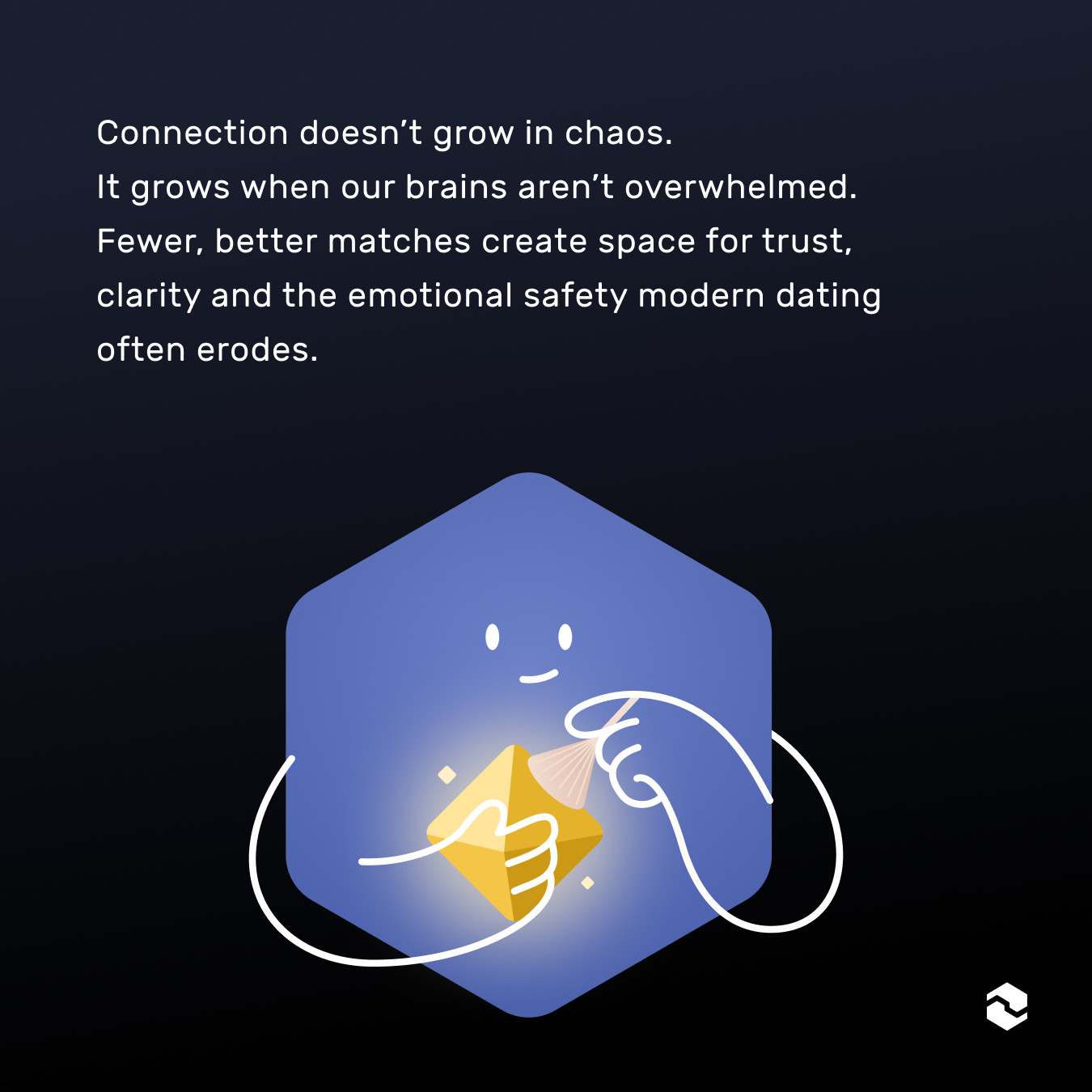
Beyond individual chemistry, connection emerges when two brains literally begin to move in rhythm. Neuroscientists call this inter-brain synchrony, a phenomenon where neural activity between two individuals aligns during moments of shared understanding, empathy or attraction [28,29,30].
Hyperscanning studies have shown that during engaging conversation or storytelling, the brains of participants exhibit synchronised patterns across regions like the temporal–parietal junction (TPJ) and medial prefrontal cortex (mPFC), areas linked to social cognition and emotional inference. This synchrony is predictive of mutual trust and rapport; in romantic contexts, it mirrors the subtle dance of emotional resonance that underlies intimacy [30,31].
Curated dating platforms, informed by such findings, could move beyond matching “types” and begin designing interactions that foster neural alignment. Compatibility, then, becomes less about shared interests and more about shared rhythm, a matter of how two nervous systems learn to listen to each other [32].
Curated matching can be understood as a response to the cognitive and emotional constraints of the human brain. Whereas non-intentional platforms overload attention through rapid choice and intermittent reward, and intentional systems often overstructure compatibility through rigid filters, curated models reduce decision pressure by limiting options and slowing interaction. From a cognitive perspective, this design respects working memory limits, reduces reliance on heuristic judgment, and lowers stress associated with constant evaluation. By containing choice and restoring pacing, curated matching supports emotional regulation, trust formation and sustained attention, conditions necessary for relational depth but systematically undermined in high-volume swipe environments.
Curated matching systems informed by biological temperament help optimise these hormonal interactions. By pairing individuals whose communication patterns, emotional expectations and stress responses are compatible, curated matching increases the chances that oxytocin-driven bonding pathways will stabilise rather than falter. This perspective reframes compatibility not simply as psychological alignment but as physiological resonance [33].
The role of hormonal resonance in long-term compatibility:
While neurochemical pathways like dopamine and serotonin shape temperament and attraction, long-term bonding involves a more complex hormonal bonding. Oxytocin and vasopressin, often labeled “bonding hormones,” play critical roles in sustaining pair bonds. Their release during moments of vulnerability, shared affection or deep conversation modulates neural circuits involved in empathy, social memory and reward [33].
Research in social neuroendocrinology suggests that couples with aligned communication patterns and emotionally coherent temperaments exhibit more stable oxytocin rhythms over time. This hormonal synchrony strengthens the sense of safety and emotional familiarity within the relationship. Conversely, temperamental mismatches, like those seen in the pairing of individuals with conflicting emotional communication styles, can create hormonal disruption, weakening bonding pathways and increasing relational volatility [34].
Shared cognitive styles and the ease of understanding:
Another scientific dimension relevant to curated matching is cognitive style, the habitual ways individuals process information, solve problems and interpret the world. For example, Directors (testosterone-influenced) often rely heavily on systemising and linear reasoning, while Negotiators (estrogen-influenced) tend to prioritise contextual interpretation and emotional nuance [25] . These cognitive differences are not obstacles; they can complement each other when paired intentionally. But when conflicting styles collide without awareness, communication breakdown becomes more likely [26].
Curated matching that incorporates cognitive-temperamental understanding helps reduce this friction. It acknowledges that some individuals thrive with partners who mirror their processing tendencies, while others benefit from complementary styles that bring balance. In this sense, curated matching becomes not only a filter for attraction but a framework for long-term comprehension. It minimises the cognitive labor required in early relationship stages and lays the foundation for smoother communication [35].
Stress physiology and emotional safety:
Online dating occurs in an environment of heightened stress. Urban living, time scarcity, digital overstimulation and the performative pressure of online profiles all activate the hypothalamic–pituitary–adrenal (HPA) axis, the body’s primary stress pathway. Repeated activation of this system elevates cortisol levels, which interfere with emotional openness, reduce empathy and narrow attentional focus [36].
In dating contexts, elevated cortisol manifests as irritability, impatience or difficulty forming emotional bonds. In extreme cases, it can lead to emotional shutdown, a protective mechanism the brain employs when threatened by social overload. Many individuals misinterpret this shutdown as disinterest or incompatibility, when in fact it is a neurophysiological response to overstimulation [37]
Curated matching provides a counterbalance to cortisol-driven dating fatigue. By reducing the sheer number of interpersonal evaluations required, curated systems lower stress reactivity. They allow individuals to invest attention in fewer people, reducing the cognitive and emotional burden on the stress system. This creates space for emotional safety to develop, something often unattainable in swipe-based environments, where cortisol remains chronically elevated due to rapid-fire decision-making [35].
Curated dating: Strategically reducing cognitive overload:
Cognitive overload arises when dating users face near-infinite profiles, triggering a paradox of choice [add link to first article] where more options paradoxically lead to worse decisions, reduced satisfaction and indecision [35]. Curated dating platforms leverage psychological insights to present a manageable, highly compatible set of matches, fundamentally restructuring the dating process. By filtering profiles based on neuroscientific compatibility, users avoid the paralysis of endless swiping and can invest cognitive resources more fully into potential partners. Within the evolving dating app in Bangalore landscape, curated and science-informed matching models are emerging as an alternative to high-volume swipe mechanics. Matches are presented in intervals rather than floods, encouraging reflection, reducing impulsivity and enhancing decision quality.
This scientific basis instills confidence in users, mitigating anxieties about choice and helping rebuild relational trust damaged by traditional app design.
By presenting fewer, temperament-validated matches, curated dating acts as a choice architect, designing an environment that optimises cognitive capacity. Temperament-aligned matching also resonates with the brain’s natural drives for social bonding and hormonal regulation, making partner selection less cognitively taxing and more emotionally satisfying.
Why curated matching matters in a post-dopamine dating culture?
One of the defining features of online dating is its reliance on dopamine, specifically, the reward pathways that drive novelty-seeking and intermittent reinforcement [38] (For a deeper dive into dopamine reward loops and swipe behaviour, check out our previous article). While dopamine plays a valuable role in motivation and attraction, overreliance on dopamine-oriented platforms leads to habituation, diminished pleasure and escalating novelty demands.
Neuroscientists refer to this as reward downregulation: the brain adapts to frequent reward stimuli by reducing sensitivity, making ordinary interactions feel dull or insufficient. This is one reason many dating app users report feeling bored or emotionally numb despite constant engagement [38].
Curated matching may interrupt this cycle by shifting the focus from dopamine-driven novelty to better stability. It replaces instant stimulation with slower, deeper emotional processes associated with bonding, trust and long-term satisfaction.
Design as cognitive regulation:
User interface (UI) and user experience (UX) design are rarely discussed in neuroscience terms, but they should be. The colors, motion and temporal rhythms of digital interfaces directly modulate stress physiology. Rapid transitions, alert tones and bright color palettes activate the sympathetic nervous system, while calm gradients, soft feedback and slower interactions engage parasympathetic pathways.
Research in neuroaesthetics shows that visual harmony increases activation in the default mode network (DMN), a brain system tied to reflection, empathy and autobiographical memory [39].A dating interface that evokes calm, rather than urgency, may therefore not only feel better but also help think better, restoring the neural balance necessary for real intimacy.
In this sense, app design becomes a form of emotional ergonomics: just as good architecture prevents physical strain, good UX can prevent emotional strain. It’s not an aesthetic choice but a neural necessity.
Trust, in its biological sense, is a prediction problem. The brain weighs past outcomes and anticipates future safety, a process mediated by the ventromedial prefrontal cortex and striatal dopamine systems [40]. In traditional courtship, trust develops through repeated sensory, emotional and social feedback loops. But digital dating disrupts this calibration.
Online, trust signals are compressed and facial micro-expressions, tone, scent and timing vanish, replaced by text and curated visuals [40]. The brain must now make high-stakes emotional predictions on low-resolution data. This mismatch increases cognitive uncertainty, which is experienced as anxiety [41].fCurated systems, starting with signup processes that verify identity and relationship intent, could restore predictability through science-informed matching [32]. Verified emotional consistency, empathetic feedback mechanisms and transparency of user intent could function as synthetic trust scaffolds, external aids for an internal cognitive process [40].The goal isn’t to simulate authenticity, but to rebuild the conditions under which it naturally emerges.
The convergence of neuroscience, psychology and digital design is pointing toward a future where dating is shaped not by maximising choice but by respecting cognitive limits, honouring emotional rhythms and aligning with biological predispositions [35,40].Curated matching systems that are built on the principles of quality matches (scientific or not ) have started coming up and incorporate FTI or similar scientific frameworks represent an early glimpse into this future. They offer a model of dating that prioritises depth over abundance, coherence over chaos and compatibility over impulsivity.
In this vision, romantic technology does not replace the serendipity of connection but supports it. It becomes a scaffold, an environment that protects attention, reduces emotional noise and fosters the conditions under which intimacy naturally emerges [32]. Rather than overwhelming the brain, it works with it. At its core, this shift recognizes a simple truth: Relationships are not found through infinite options. They emerge when the mind can finally rest long enough to see another person clearly [35]. This shift may ultimately redefine what a thoughtful dating app in Bangalore can offer to people seeking genuine connection.
References:
[1] Goetz CD et al. Evolutionary mismatch in mating. Front Psychol. 2019;10:2709
[2] Buston PM, Emlen ST. Cognitive processes underlying human mate choice: the relationship between self-perception and mate preference in Western society. Proc Natl Acad Sci U S A. 2003;100(15):8805–8810.
[3] Boogert NJ et al. Mate choice for cognitive traits: a review of the evidence in nonhuman vertebrates. Behav Ecol. > 2011;22(3):447–459.
[4] Leppink J. Cognitive load theory: practical implications and an important challenge. J Taibah Univ Med Sci. 2017;12(5):385–391.
[5] Society for Education and Training.The importance of cognitive load theory.
[6] Clark L, Zack M. Engineered highs: reward variability and frequency as potential prerequisites of behavioural addiction. Addict Behav. 2023;140:107626.
[7] Zack M et al. Chronic exposure to a gambling-like schedule of reward predictive stimuli promotes sensitization to amphetamine in rats. Front Behav Neurosci. 2014;8:36.
[8] Umbrex. (2024, August 28). Variable Rewards | Tools for Thinking.
[9] Communications and Marketing. (2004, May 7). It’s a gamble: dopamine levels tied to uncertainty of rewards. Vanderbilt University.
[10] Doheny MM, Lighthall NR.Social cognitive neuroscience in the digital age. Frontiers in Human Neuroscience. 2023.
[11] Sun S, Yu H, Yu R, Wang S. Functional connectivity between the amygdala and prefrontal cortex underlies processing of emotion ambiguity. Translational Psychiatry. 2023 Oct 28;13(1):334.
[12] Adolphs, R. (2010). What does the amygdala contribute to social cognition? Annals of the New York Academy of Sciences, 1191(1), 42–61.
[13] Chester, D. S., & DeWall, C. N. (2014). Prefrontal recruitment during social rejection predicts greater subsequent self-regulatory imbalance and impairment: neural and longitudinal evidence. NeuroImage, 101, 485–493.
[14] Brain & Behavior Research Foundation. (2013). Social rejection triggers mechanism in the brain that may go awry in psychiatric disorders.
[15] Davis, S. (2023, May 29). One of humanities greatest fears: rejection. CPTSDfoundation.org.
[16] Davis, F. C., Neta, M., Kim, M. J., Moran, J. M, & Whalen, P. J. (2016). Interpreting ambiguous social cues in unpredictable contexts. Social Cognitive and Affective Neuroscience, 11(5), 775–782.
[17] Burhan, R., & Moradzadeh, J. (2020). Neurotransmitter Dopamine (DA) and its Role in the Development of Social Media Addiction . International Online Medical Council.
[18] O, J., Aspden, T., Thomas, A. G., Chang, L., Ho, M.-H. R., Li, N. P., & van Vugt, M. (2024). Mind the gap: Development and validation of an evolutionary mismatched lifestyle scale and its impact on health and wellbeing. Heliyon, 10(15), e34997.
[19] Fisher, H. E., Island, H. D., Rich, J., Marchalik, D., & Brown, L. L. (2015). Four broad temperament dimensions: description, convergent validation correlations, and comparison with the Big Five. Frontiers in Psychology, 6, 1098.
[20] Brown, L. L., Acevedo, B., & Fisher, H. E. (2013b). Neural correlates of four broad temperament dimensions: testing predictions for a novel construct of personality. PLoS ONE, 8(11), e78734.
[21] Acevedo, B. P., & Aron, A. (2011).Neural correlates of long-term intense romantic love.
Social Cognitive and Affective Neuroscience, 6(2), 145–159.
[22] Personality – Helen Fisher, PhD.
[23] Personality type combinations - the anatomy of love. (2015b, August 13).
[24] Baron-Cohen, S. (2003). The Essential Difference: The Truth About the Male and Female Brain .
[25] Fisher, H. E. (2012). We Have Chemistry! – The role of four primary temperament dimensions in mate choice and partner compatibility. Helen Fisher (feature article).
[26] APA PsycNet. (n.d.-d).
[27] Open Psychometrics. (n.d.). FTI – Four Temperaments Inventory.
[28] Czeszumski, A. et al. Hyperscanning: a valid method to study neural inter-brain underpinnings of social interaction. Frontiers in Human Neuroscience, 14, 39.
[29] Liang, Z. et al. (2022). Increased or decreased? Interpersonal neural synchronization in group creation. NeuroImage, 260, 119448.
[30] Minagawa, Y., Xu, M., & Morimoto, S. (2018). Toward interactive social neuroscience: neuroimaging Real‐World interactions in various populations. Japanese Psychological Research, 60(4), 196–224.
[31] Zhou, C. et al. (2024). Brain-to-brain synchrony increased during interpersonal touch in romantic lovers: an EEG-based hyperscanning study. BMC Psychology, 12(1), 560.
[32] Redcay, E., & Schilbach, L. (2019). Using second-person neuroscience to elucidate the mechanisms of social interaction. Nature Reviews. Neuroscience, 20(8), 495–505.
[33] Carter, C. S. (2013). Oxytocin pathways and the evolution of human behavior. Annual Review of Psychology, 65(1), 17–39.
[34] Feldman, R. (2016). The Neurobiology of human attachments. Trends in Cognitive Sciences, 21(2), 80–99.
[35] Schwartz, B. (2004). The paradox of choice: Why more is less. Ecco.
[36] McEwen, B. S. (2017). Neurobiological and systemic effects of chronic stress. Chronic Stress, 1.
[37] Sapolsky, R. M. (2017). Behave: The biology of humans at our best and worst. Penguin Press.
[38] Volkow, N. D., Wang, G., & Baler, R. D. (2010). Reward, dopamine and the control of food intake: implications for obesity. > Trends in Cognitive Sciences, 15(1), 37–46.
[39] Belfi, A. M., & Leder, H. (2019). Dynamics of aesthetic experience are reflected in the default-mode network >. NeuroImage, 188, 584-597.
[40] Friston, K. (2010). The free-energy principle: a unified brain theory? Nature Reviews. Neuroscience, 11(2), 127–138.
[41] Clark, A. (2013). Whatever next? Predictive brains, situated agents, and the future of cognitive science. Behavioral and Brain Sciences, 36(3), 181–204.
About the author:
Sharvani is a bioinformatics graduate and neuroscience enthusiast passionate about understanding behavior, emotion, and connection. She enjoys exploring how science and technology influence modern relationships. In her free time, she loves watching films and reading. Connect with her on LinkedIn
Matching the mind: The FTI and the future of scientifically guided dating
In the age of endless swiping, real connection has become surprisingly rare, especially for people navigating a dating app in Bangalore, where choice overload is intense. We have more profiles, more options and more novelty than ever before, yet our emotional lives often feel shallow and tired. The technology that is supposed to help us connect mostly creates distraction, burnout and emotional distance. Many people criticise existing dating apps for two main reasons: the attention economy, which means apps are designed to keep us scrolling as long as possible to make money from our time, and algorithmic bias, which means the app’s matching system can sometimes favour certain types of people or behaviours without us realising it. But a deeper question remains: “Can science help us build relationships that actually match the way our brains work, relationships that support attention, trust and emotional balance?” These questions are beginning to shape how a new generation of the dating app in Bangalore ecosystem approaches compatibility and intention.
This question sits at the meeting point of neuroscience, psychology and design. Scientific matching, which many people think simply means algorithm-based compatibility, is actually a much bigger idea. It’s not just about predicting who you might find attractive. It’s about understanding how the brain forms bonds, how chemicals, thoughts and emotions work together to create trust, stability and desire. If we look at it this way, the future of dating design may not depend on “smarter” algorithms at all. Instead, it may lie in creating dating systems that respect our limited mental energy, reduce overload and support healthier emotional experiences.
Why the brain fails under swipe conditions ?
The human brain was never designed to evaluate hundreds of romantic prospects in rapid succession. For most of evolutionary history, mate selection unfolded within small, familiar communities where individuals encountered only a limited number of potential partners over extended periods of time [1–3]. Attraction was not a split-second judgment but a slow, context-rich process shaped by repeated interactions, shared environments, nonverbal cues, mutual obligations, and the gradual development of trust [1–3].Online dating collapses this entire ecological framework into a rapid-fire sequence of faces and profiles, stripped of sensory depth and social grounding. This pattern is also reflected in user fatigue across many Bangalore dating sites, where abundance often replaces meaningful interaction. Instead of meaningful encounters, users navigate an endless stream of unfamiliar strangers presented at a pace the brain is poorly equipped to process [1–3].
Cognitive load theory helps explain why this experience feels mentally exhausting. Human working memory can hold only a limited number of meaningful elements at once, yet a typical swipe session inundates the prefrontal cortex with dozens of micro-decisions in minutes [4,5]. This region, responsible for deliberation and evaluative reasoning, becomes overwhelmed. In response, the brain defaults to cognitive shortcuts, snap judgments, shallow filtering, and impulsive preferences. What begins as exploration quickly degrades into confusion and emotional fatigue, leaving users uncertain about what or whom they are actually seeking [4,5].
The strain does not end there. Online dating also disrupts the brain’s reward system. Match notifications arrive unpredictably, closely resembling variable reward schedules used in gambling machines. Each notification delivers a small, unexpected dopamine pulse, training the brain to seek the thrill of potential matches rather than the slow, rewarding process of building connection. Desire shifts away from presence and toward possibility. The app becomes the source of the excitement, not the people on it.[6-10].
The emotional consequences are even more subtle. Every slow reply, abrupt silence, or vanished match registers in the brain as a social threat. The amygdala, wired to detect interpersonal danger, interprets these ambiguous digital signals as rejection. Even when we intellectually understand that someone may simply be busy, our nervous system responds defensively. Trust erodes. Anxiety grows. We begin approaching new conversations with caution instead of curiosity, being guarded rather than open. [11-17]
Together, these cognitive, neurochemical and emotional disruptions reshape the landscape of online dating in ways most people feel but struggle to describe. The core issue is not simply that there are too many choices or too many notifications. The deeper problem is that our neurobiology was never built for this pace, this volatility or this level of social ambiguity. The result is a system that overwhelms the mind, destabilises reward pathways and quietly exhausts our capacity for genuine intimacy.[6,18] Such emotional fatigue is now commonly reported by users navigating any fast-paced dating app in Bangalore environment.
The neurobiology of compatibility :
Dr. Helen Fisher, a biological anthropologist who has spent decades studying romantic love, proposes that the roots of compatibility lie in four primary neurochemical systems that shape personality and attraction: dopamine, serotonin, testosterone and estrogen [21]. Her Fisher Temperament Inventory (FTI), categorises people into four broad temperament groups: Explorers, Builders, Directors and Negotiators, each reflecting dominant neural pathways. [19,20]
- Explorers (Dopamine-dominant) seek novelty, spontaneity and adventure. Their brains are reward-sensitive and thrive on new experiences.
- Builders (Serotonin-dominant) value stability, order, and social cohesion. They often gravitate toward structure and loyalty.
- Directors (Testosterone-driven) are analytical, decisive and competitive, drawn to logic and precision.
- Negotiators (Estrogen-influenced) exhibit empathy, intuition, and verbal fluency, often valuing emotional attunement and harmony.
These categories are not deterministic but interactive, the neural equivalent of personality chemistry. Dopamine-dominant individuals often pair well with fellow novelty-seekers, while serotonin-driven Builders gravitate toward those who provide reliability. Testosterone-driven Directors frequently connect with estrogen-dominant Negotiators, balancing logic with empathy [22,19,20] .
Compatibility, from this lens, is not a social construct but a neurochemical dialogue, a conversation between two brains wired for compatible reward systems. Scientific matching systems inspired by Dr. Fisher’s framework attempt to go beyond superficial preferences or swipe-based heuristics. They seek patterns in temperament, values and emotional regulation, aligning partners whose cognitive and hormonal landscapes may interact more harmoniously. While the idea may sound mechanistic, it mirrors the biological mechanism that underpins long-term attachment in all social species.
This biological framing also demystifies attraction: what we call “chemistry” is often quite literal, a resonance between neurotransmitter systems seeking equilibrium. Long-term compatibility, then, becomes less about shared interests and more about sustained neurochemical harmony.[22,19,20 ]
The power of FTI in matching compatible partners:
The FTI is especially powerful due to its biological and psychological precision. Instead of surface-based selection, like photos or interests, the FTI identifies core personality features that predict compatibility and relational satisfaction. For instance, pairing two Explorers may lead to fun, spontaneous adventures but could lack needed stability. Conversely, matching a Director with a Negotiator might balance logic with emotional depth, forming a resilient partnership.[19,20,23]
The FTI reflects measurable brain activity associated with these systems, validated by functional MRI studies showing distinct neural correlates: for instance, Explorer scores correlate with substantia nigra activity linked to dopamine, whereas Negotiator scores associate with brain regions rich in oxytocin receptors linked to empathy. This biological grounding differentiates the FTI from traditional personality tests by linking temperament directly to brain chemistry.[20]
While many dating approaches emphasise superficial compatibility, appearance, hobbies or demographic criteria, the FTI-based method focuses on core neurochemical and personality signatures that predict relational stability and satisfaction. Matching partners whose temperament profiles complement each other ensures a balance of traits such as stability versus excitement or rationality versus empathy, enriching the relational dynamic. [22,23,20]
The Fisher Temperament Inventory (FTI) has been used to examine how people choose potential partners on dating platforms like Chemistry.com >.Thousands of users first complete the FTI to identify their temperament type(s), after which one group was asked about their preferences (such as political leaning, level of education, etc.) and the another completed the NEO-FFI (the standard personality inventory) in parallel.
It was established that the FTI shows significant correlations with the studied preferences. For example Men are on average higher on the Testosterone scale, and women score higher on the Estrogen scale. The FTI has also shown direct correlation with the NEO-FFI dimensions, Ex: Dopamine- Open to experience (+ve), Neuroticism (-ve)
Therefore, the FTI is accurately able to capture real life personality dynamics. It is a completely non-pathalogical inventory that represents individual personalities as four broad temperaments, based on which we can draw insights into individuals.These insights can act as a good basis to suggest romantic matches to individuals based on their temperaments. [19]
Cognitive psychology has long established that individuals differ widely in their reliance on intuition, analysis, sensory cues or verbal reasoning. In romantic relationships, these differences can either facilitate clarity or generate chronic misunderstanding.[24]
For example, Directors (testosterone-influenced) often rely heavily on systemising and linear reasoning, while Negotiators (estrogen-influenced) tend to prioritise contextual interpretation and emotional nuance [25] .These cognitive differences are not obstacles; they can complement each other when paired intentionally. But when conflicting styles collide without awareness, communication breakdown becomes more likely [26].
Why the FTI goes beyond traditional personality tests?
The Fisher Temperament Inventory stands apart from conventional personality frameworks because it is anchored in measurable biological substrates. Unlike the Myers-Briggs Type Indicator or Enneagram, which are based on patterns of self-description, the FTI draws from neurochemical activity and hormonal influences that exhibit stability across time. Its categories are not simply conceptual; functional MRI studies have shown differential activation in brain regions associated with each temperament, including dopamine-rich pathways for Explorers or oxytocin-linked circuits for Negotiators [19,20,22,23,27]
This biological anchoring gives the FTI particular relevance for romantic matching. Romantic relationships are not only cognitive enterprises; they are deeply physiological ones. They involve hormonal regulation, stress modulation, reward processing and social inference. A test that captures the neurochemical underpinnings of these processes provides a more reliable foundation for predicting relational dynamics. It identifies how people handle stress, how they pursue closeness and how they experience emotional safety, all factors crucial for long-term relational health [19,20,27,23,25].
Moreover, the FTI helps illuminate why two individuals may feel instantly comfortable in one relationship and chronically strained in another. The difference often lies not in effort or compatibility on the surface but in how their neurobiological systems interact. When systems are complementary, the relationship feels stabilising; when they clash, even simple disagreements can generate emotional turbulence [23,25]
The neuroscience of emotional synchrony:
Beyond individual chemistry, connection emerges when two brains literally begin to move in rhythm. Neuroscientists call this inter-brain synchrony, a phenomenon where neural activity between two individuals aligns during moments of shared understanding, empathy or attraction [28,29,30].
Hyperscanning studies have shown that during engaging conversation or storytelling, the brains of participants exhibit synchronised patterns across regions like the temporal–parietal junction (TPJ) and medial prefrontal cortex (mPFC), areas linked to social cognition and emotional inference. This synchrony is predictive of mutual trust and rapport; in romantic contexts, it mirrors the subtle dance of emotional resonance that underlies intimacy [30,31].
Curated dating platforms, informed by such findings, could move beyond matching “types” and begin designing interactions that foster neural alignment. Compatibility, then, becomes less about shared interests and more about shared rhythm, a matter of how two nervous systems learn to listen to each other [32].
Curated matching can be understood as a response to the cognitive and emotional constraints of the human brain. Whereas non-intentional platforms overload attention through rapid choice and intermittent reward, and intentional systems often overstructure compatibility through rigid filters, curated models reduce decision pressure by limiting options and slowing interaction. From a cognitive perspective, this design respects working memory limits, reduces reliance on heuristic judgment, and lowers stress associated with constant evaluation. By containing choice and restoring pacing, curated matching supports emotional regulation, trust formation and sustained attention, conditions necessary for relational depth but systematically undermined in high-volume swipe environments.
Curated matching systems informed by biological temperament help optimise these hormonal interactions. By pairing individuals whose communication patterns, emotional expectations and stress responses are compatible, curated matching increases the chances that oxytocin-driven bonding pathways will stabilise rather than falter. This perspective reframes compatibility not simply as psychological alignment but as physiological resonance [33].
The role of hormonal resonance in long-term compatibility:
While neurochemical pathways like dopamine and serotonin shape temperament and attraction, long-term bonding involves a more complex hormonal bonding. Oxytocin and vasopressin, often labeled “bonding hormones,” play critical roles in sustaining pair bonds. Their release during moments of vulnerability, shared affection or deep conversation modulates neural circuits involved in empathy, social memory and reward [33].
Research in social neuroendocrinology suggests that couples with aligned communication patterns and emotionally coherent temperaments exhibit more stable oxytocin rhythms over time. This hormonal synchrony strengthens the sense of safety and emotional familiarity within the relationship. Conversely, temperamental mismatches, like those seen in the pairing of individuals with conflicting emotional communication styles, can create hormonal disruption, weakening bonding pathways and increasing relational volatility [34].
Shared cognitive styles and the ease of understanding:
Another scientific dimension relevant to curated matching is cognitive style, the habitual ways individuals process information, solve problems and interpret the world. For example, Directors (testosterone-influenced) often rely heavily on systemising and linear reasoning, while Negotiators (estrogen-influenced) tend to prioritise contextual interpretation and emotional nuance [25] . These cognitive differences are not obstacles; they can complement each other when paired intentionally. But when conflicting styles collide without awareness, communication breakdown becomes more likely [26].
Curated matching that incorporates cognitive-temperamental understanding helps reduce this friction. It acknowledges that some individuals thrive with partners who mirror their processing tendencies, while others benefit from complementary styles that bring balance. In this sense, curated matching becomes not only a filter for attraction but a framework for long-term comprehension. It minimises the cognitive labor required in early relationship stages and lays the foundation for smoother communication [35].
Stress physiology and emotional safety:
Online dating occurs in an environment of heightened stress. Urban living, time scarcity, digital overstimulation and the performative pressure of online profiles all activate the hypothalamic–pituitary–adrenal (HPA) axis, the body’s primary stress pathway. Repeated activation of this system elevates cortisol levels, which interfere with emotional openness, reduce empathy and narrow attentional focus [36].
In dating contexts, elevated cortisol manifests as irritability, impatience or difficulty forming emotional bonds. In extreme cases, it can lead to emotional shutdown, a protective mechanism the brain employs when threatened by social overload. Many individuals misinterpret this shutdown as disinterest or incompatibility, when in fact it is a neurophysiological response to overstimulation [37]
Curated matching provides a counterbalance to cortisol-driven dating fatigue. By reducing the sheer number of interpersonal evaluations required, curated systems lower stress reactivity. They allow individuals to invest attention in fewer people, reducing the cognitive and emotional burden on the stress system. This creates space for emotional safety to develop, something often unattainable in swipe-based environments, where cortisol remains chronically elevated due to rapid-fire decision-making [35].
Curated dating: Strategically reducing cognitive overload:
Cognitive overload arises when dating users face near-infinite profiles, triggering a paradox of choice [add link to first article] where more options paradoxically lead to worse decisions, reduced satisfaction and indecision [35]. Curated dating platforms leverage psychological insights to present a manageable, highly compatible set of matches, fundamentally restructuring the dating process. By filtering profiles based on neuroscientific compatibility, users avoid the paralysis of endless swiping and can invest cognitive resources more fully into potential partners. Within the evolving dating app in Bangalore landscape, curated and science-informed matching models are emerging as an alternative to high-volume swipe mechanics. Matches are presented in intervals rather than floods, encouraging reflection, reducing impulsivity and enhancing decision quality.
This scientific basis instills confidence in users, mitigating anxieties about choice and helping rebuild relational trust damaged by traditional app design.
By presenting fewer, temperament-validated matches, curated dating acts as a choice architect, designing an environment that optimises cognitive capacity. Temperament-aligned matching also resonates with the brain’s natural drives for social bonding and hormonal regulation, making partner selection less cognitively taxing and more emotionally satisfying.
Why curated matching matters in a post-dopamine dating culture?
One of the defining features of online dating is its reliance on dopamine, specifically, the reward pathways that drive novelty-seeking and intermittent reinforcement [38] (For a deeper dive into dopamine reward loops and swipe behaviour, check out our previous article). While dopamine plays a valuable role in motivation and attraction, overreliance on dopamine-oriented platforms leads to habituation, diminished pleasure and escalating novelty demands.
Neuroscientists refer to this as reward downregulation: the brain adapts to frequent reward stimuli by reducing sensitivity, making ordinary interactions feel dull or insufficient. This is one reason many dating app users report feeling bored or emotionally numb despite constant engagement [38].
Curated matching may interrupt this cycle by shifting the focus from dopamine-driven novelty to better stability. It replaces instant stimulation with slower, deeper emotional processes associated with bonding, trust and long-term satisfaction.
Design as cognitive regulation:
User interface (UI) and user experience (UX) design are rarely discussed in neuroscience terms, but they should be. The colors, motion and temporal rhythms of digital interfaces directly modulate stress physiology. Rapid transitions, alert tones and bright color palettes activate the sympathetic nervous system, while calm gradients, soft feedback and slower interactions engage parasympathetic pathways.
Research in neuroaesthetics shows that visual harmony increases activation in the default mode network (DMN), a brain system tied to reflection, empathy and autobiographical memory [39].A dating interface that evokes calm, rather than urgency, may therefore not only feel better but also help think better, restoring the neural balance necessary for real intimacy.
In this sense, app design becomes a form of emotional ergonomics: just as good architecture prevents physical strain, good UX can prevent emotional strain. It’s not an aesthetic choice but a neural necessity.
Trust, in its biological sense, is a prediction problem. The brain weighs past outcomes and anticipates future safety, a process mediated by the ventromedial prefrontal cortex and striatal dopamine systems [40]. In traditional courtship, trust develops through repeated sensory, emotional and social feedback loops. But digital dating disrupts this calibration.
Online, trust signals are compressed and facial micro-expressions, tone, scent and timing vanish, replaced by text and curated visuals [40]. The brain must now make high-stakes emotional predictions on low-resolution data. This mismatch increases cognitive uncertainty, which is experienced as anxiety [41].fCurated systems, starting with signup processes that verify identity and relationship intent, could restore predictability through science-informed matching [32]. Verified emotional consistency, empathetic feedback mechanisms and transparency of user intent could function as synthetic trust scaffolds, external aids for an internal cognitive process [40].The goal isn’t to simulate authenticity, but to rebuild the conditions under which it naturally emerges.
The convergence of neuroscience, psychology and digital design is pointing toward a future where dating is shaped not by maximising choice but by respecting cognitive limits, honouring emotional rhythms and aligning with biological predispositions [35,40].Curated matching systems that are built on the principles of quality matches (scientific or not ) have started coming up and incorporate FTI or similar scientific frameworks represent an early glimpse into this future. They offer a model of dating that prioritises depth over abundance, coherence over chaos and compatibility over impulsivity.
In this vision, romantic technology does not replace the serendipity of connection but supports it. It becomes a scaffold, an environment that protects attention, reduces emotional noise and fosters the conditions under which intimacy naturally emerges [32]. Rather than overwhelming the brain, it works with it. At its core, this shift recognizes a simple truth: Relationships are not found through infinite options. They emerge when the mind can finally rest long enough to see another person clearly [35]. This shift may ultimately redefine what a thoughtful dating app in Bangalore can offer to people seeking genuine connection.
References:
[1] Goetz CD et al. Evolutionary mismatch in mating. Front Psychol. 2019;10:2709
[2] Buston PM, Emlen ST. Cognitive processes underlying human mate choice: the relationship between self-perception and mate preference in Western society. Proc Natl Acad Sci U S A. 2003;100(15):8805–8810.
[3] Boogert NJ et al. Mate choice for cognitive traits: a review of the evidence in nonhuman vertebrates. Behav Ecol. > 2011;22(3):447–459.
[4] Leppink J. Cognitive load theory: practical implications and an important challenge. J Taibah Univ Med Sci. 2017;12(5):385–391.
[5] Society for Education and Training.The importance of cognitive load theory.
[6] Clark L, Zack M. Engineered highs: reward variability and frequency as potential prerequisites of behavioural addiction. Addict Behav. 2023;140:107626.
[7] Zack M et al. Chronic exposure to a gambling-like schedule of reward predictive stimuli promotes sensitization to amphetamine in rats. Front Behav Neurosci. 2014;8:36.
[8] Umbrex. (2024, August 28). Variable Rewards | Tools for Thinking.
[9] Communications and Marketing. (2004, May 7). It’s a gamble: dopamine levels tied to uncertainty of rewards. Vanderbilt University.
[10] Doheny MM, Lighthall NR.Social cognitive neuroscience in the digital age. Frontiers in Human Neuroscience. 2023.
[11] Sun S, Yu H, Yu R, Wang S. Functional connectivity between the amygdala and prefrontal cortex underlies processing of emotion ambiguity. Translational Psychiatry. 2023 Oct 28;13(1):334.
[12] Adolphs, R. (2010). What does the amygdala contribute to social cognition? Annals of the New York Academy of Sciences, 1191(1), 42–61.
[13] Chester, D. S., & DeWall, C. N. (2014). Prefrontal recruitment during social rejection predicts greater subsequent self-regulatory imbalance and impairment: neural and longitudinal evidence. NeuroImage, 101, 485–493.
[14] Brain & Behavior Research Foundation. (2013). Social rejection triggers mechanism in the brain that may go awry in psychiatric disorders.
[15] Davis, S. (2023, May 29). One of humanities greatest fears: rejection. CPTSDfoundation.org.
[16] Davis, F. C., Neta, M., Kim, M. J., Moran, J. M, & Whalen, P. J. (2016). Interpreting ambiguous social cues in unpredictable contexts. Social Cognitive and Affective Neuroscience, 11(5), 775–782.
[17] Burhan, R., & Moradzadeh, J. (2020). Neurotransmitter Dopamine (DA) and its Role in the Development of Social Media Addiction . International Online Medical Council.
[18] O, J., Aspden, T., Thomas, A. G., Chang, L., Ho, M.-H. R., Li, N. P., & van Vugt, M. (2024). Mind the gap: Development and validation of an evolutionary mismatched lifestyle scale and its impact on health and wellbeing. Heliyon, 10(15), e34997.
[19] Fisher, H. E., Island, H. D., Rich, J., Marchalik, D., & Brown, L. L. (2015). Four broad temperament dimensions: description, convergent validation correlations, and comparison with the Big Five. Frontiers in Psychology, 6, 1098.
[20] Brown, L. L., Acevedo, B., & Fisher, H. E. (2013b). Neural correlates of four broad temperament dimensions: testing predictions for a novel construct of personality. PLoS ONE, 8(11), e78734.
[21] Acevedo, B. P., & Aron, A. (2011).Neural correlates of long-term intense romantic love.
Social Cognitive and Affective Neuroscience, 6(2), 145–159.
[22] Personality – Helen Fisher, PhD.
[23] Personality type combinations - the anatomy of love. (2015b, August 13).
[24] Baron-Cohen, S. (2003). The Essential Difference: The Truth About the Male and Female Brain .
[25] Fisher, H. E. (2012). We Have Chemistry! – The role of four primary temperament dimensions in mate choice and partner compatibility. Helen Fisher (feature article).
[26] APA PsycNet. (n.d.-d).
[27] Open Psychometrics. (n.d.). FTI – Four Temperaments Inventory.
[28] Czeszumski, A. et al. Hyperscanning: a valid method to study neural inter-brain underpinnings of social interaction. Frontiers in Human Neuroscience, 14, 39.
[29] Liang, Z. et al. (2022). Increased or decreased? Interpersonal neural synchronization in group creation. NeuroImage, 260, 119448.
[30] Minagawa, Y., Xu, M., & Morimoto, S. (2018). Toward interactive social neuroscience: neuroimaging Real‐World interactions in various populations. Japanese Psychological Research, 60(4), 196–224.
[31] Zhou, C. et al. (2024). Brain-to-brain synchrony increased during interpersonal touch in romantic lovers: an EEG-based hyperscanning study. BMC Psychology, 12(1), 560.
[32] Redcay, E., & Schilbach, L. (2019). Using second-person neuroscience to elucidate the mechanisms of social interaction. Nature Reviews. Neuroscience, 20(8), 495–505.
[33] Carter, C. S. (2013). Oxytocin pathways and the evolution of human behavior. Annual Review of Psychology, 65(1), 17–39.
[34] Feldman, R. (2016). The Neurobiology of human attachments. Trends in Cognitive Sciences, 21(2), 80–99.
[35] Schwartz, B. (2004). The paradox of choice: Why more is less. Ecco.
[36] McEwen, B. S. (2017). Neurobiological and systemic effects of chronic stress. Chronic Stress, 1.
[37] Sapolsky, R. M. (2017). Behave: The biology of humans at our best and worst. Penguin Press.
[38] Volkow, N. D., Wang, G., & Baler, R. D. (2010). Reward, dopamine and the control of food intake: implications for obesity. > Trends in Cognitive Sciences, 15(1), 37–46.
[39] Belfi, A. M., & Leder, H. (2019). Dynamics of aesthetic experience are reflected in the default-mode network >. NeuroImage, 188, 584-597.
[40] Friston, K. (2010). The free-energy principle: a unified brain theory? Nature Reviews. Neuroscience, 11(2), 127–138.
[41] Clark, A. (2013). Whatever next? Predictive brains, situated agents, and the future of cognitive science. Behavioral and Brain Sciences, 36(3), 181–204.
About the author:
Sharvani is a bioinformatics graduate and neuroscience enthusiast passionate about understanding behavior, emotion, and connection. She enjoys exploring how science and technology influence modern relationships. In her free time, she loves watching films and reading. Connect with her on LinkedIn

Your privacy matters most.
- We will never share your data with any third parties. Vlncy will always be an ad-free platform.
- We will use your anonymised data only to improve the platform, in our efforts to serve you better.
- We do not store/ own any of your content on our servers.
- Upon account deletion, we will purge all your personal data.
- We will never reveal your identity on the platform. Only you decide when, how and with whom your information is shared.


