Your brain on ghosting, breadcrumbing and ragebaiting

You open your phone and notice that someone you were talking to yesterday has viewed your Instagram story but hasn't replied to your message. A few days later, they send a casual "hey" or react to a meme, just enough to restart the conversation. Then, without warning, they disappear again. For many people navigating modern dating, this experience is deeply familiar. In the context of dating in Bangalore, these patterns are becoming increasingly visible in everyday interactions.
Digital communication has fundamentally changed how romantic interactions unfold. Conversations can begin instantly, escalate quickly and disappear without explanation. Behaviors such as ghosting, breadcrumbing, orbiting and ragebaiting have become widely recognised features of contemporary dating culture, particularly among Gen Z. While these terms emerged from internet slang, they correspond to well-established psychological and neurobiological processes that govern social attachment, reward learning and emotional regulation. This ambiguity is particularly amplified in dating in Bangalore, where interactions often move quickly but lack clarity.
Human beings evolved as highly social organisms whose survival historically depended on maintaining stable relationships within groups. As a result, the brain developed specialised neural systems designed to detect signals of acceptance and rejection. Experiences that threaten social belonging activate neural circuits associated with pain, vigilance and emotional distress. Social disconnection is therefore not merely metaphorically painful, but it activates neural mechanisms strikingly similar to those involved in physical pain [1].
Research in social neuroscience shows that experiences of social rejection activate the dorsal anterior cingulate cortex (dACC) and the anterior insula, regions associated with the affective component of physical pain [1,2]. A meta-analysis of neuroimaging studies confirmed that the dACC consistently contributes to the processing of social pain across multiple paradigms [2], and functional imaging work demonstrates that being excluded from social interactions can trigger neural responses comparable to those observed during physical injury [3,4].
Modern online dating environments interact with these neural systems in unique ways. Unlike face-to-face interactions, online communication often lacks clear social cues such as tone of voice, facial expressions, or immediate feedback. As a result, the brain must interpret ambiguous signals, delayed replies, viewed messages, or sudden silences without sufficient contextual information. This ambiguity can activate multiple neural systems simultaneously, including those responsible for reward anticipation, threat detection and social pain.
The brain as a social organ
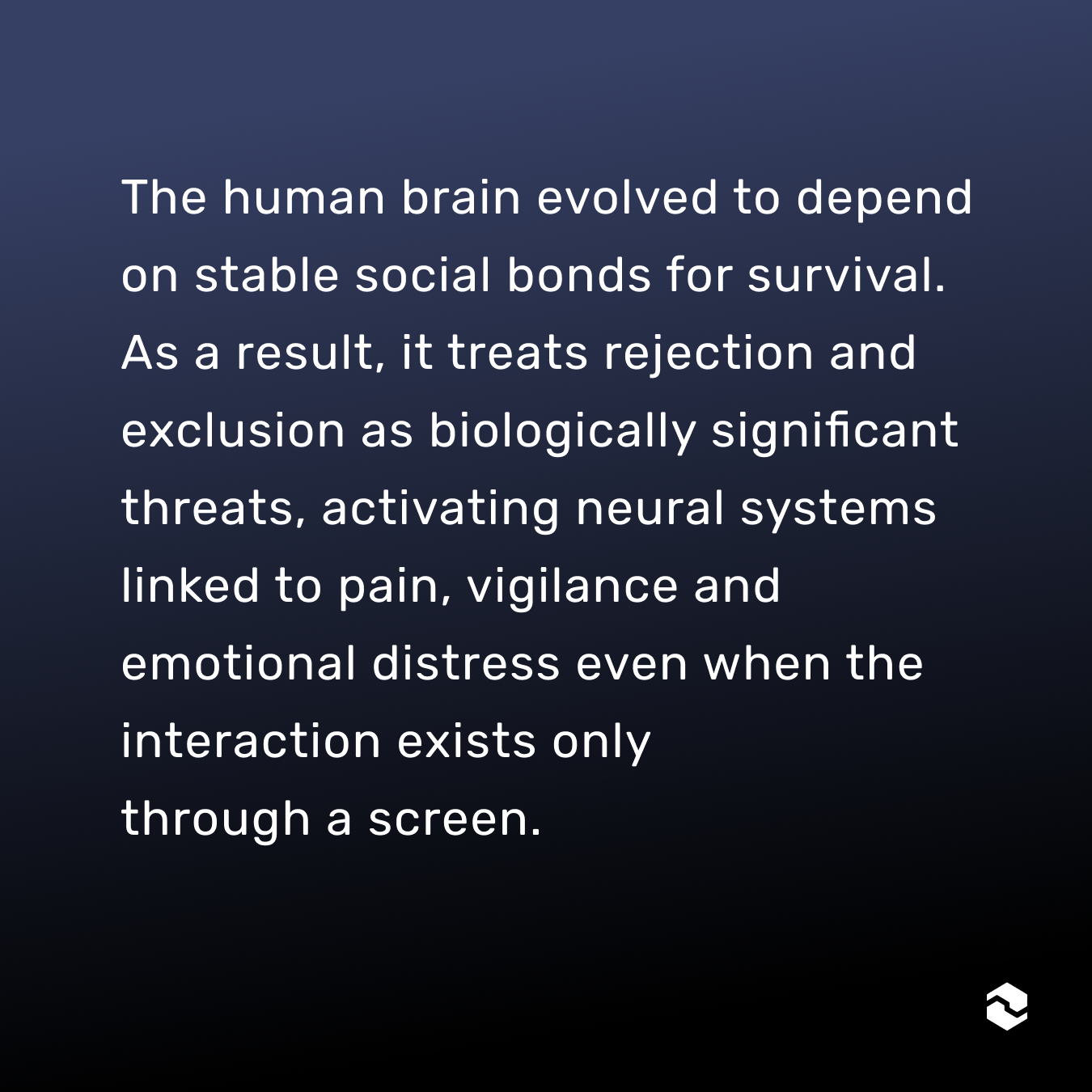
The human brain is fundamentally organised around social interaction. Evolutionary psychologists and neuroscientists argue that the development of complex social networks played a critical role in shaping human cognition. Maintaining relationships, interpreting social signals and responding to rejection became essential skills for survival.
One influential explanation for the emotional impact of social rejection is the social pain overlap theory, which proposes that the neural systems responsible for processing physical pain were evolutionarily adapted to process social pain as well [1,3]. According to this theory, the brain treats social exclusion as a biologically significant threat because isolation historically reduced an individual's chances of survival. Neuroimaging evidence supports this model: romantic rejection has been shown to activate the secondary somatosensory cortex and dorsal posterior insula, regions associated with the sensory components of physical pain [4]. Digital communication, however, often provides incomplete information, forcing the brain to interpret ambiguous cues. This ambiguity creates the psychological conditions in which behaviors such as ghosting, breadcrumbing and orbiting can exert particularly strong emotional effects.
Ghosting: Social rejection without closure
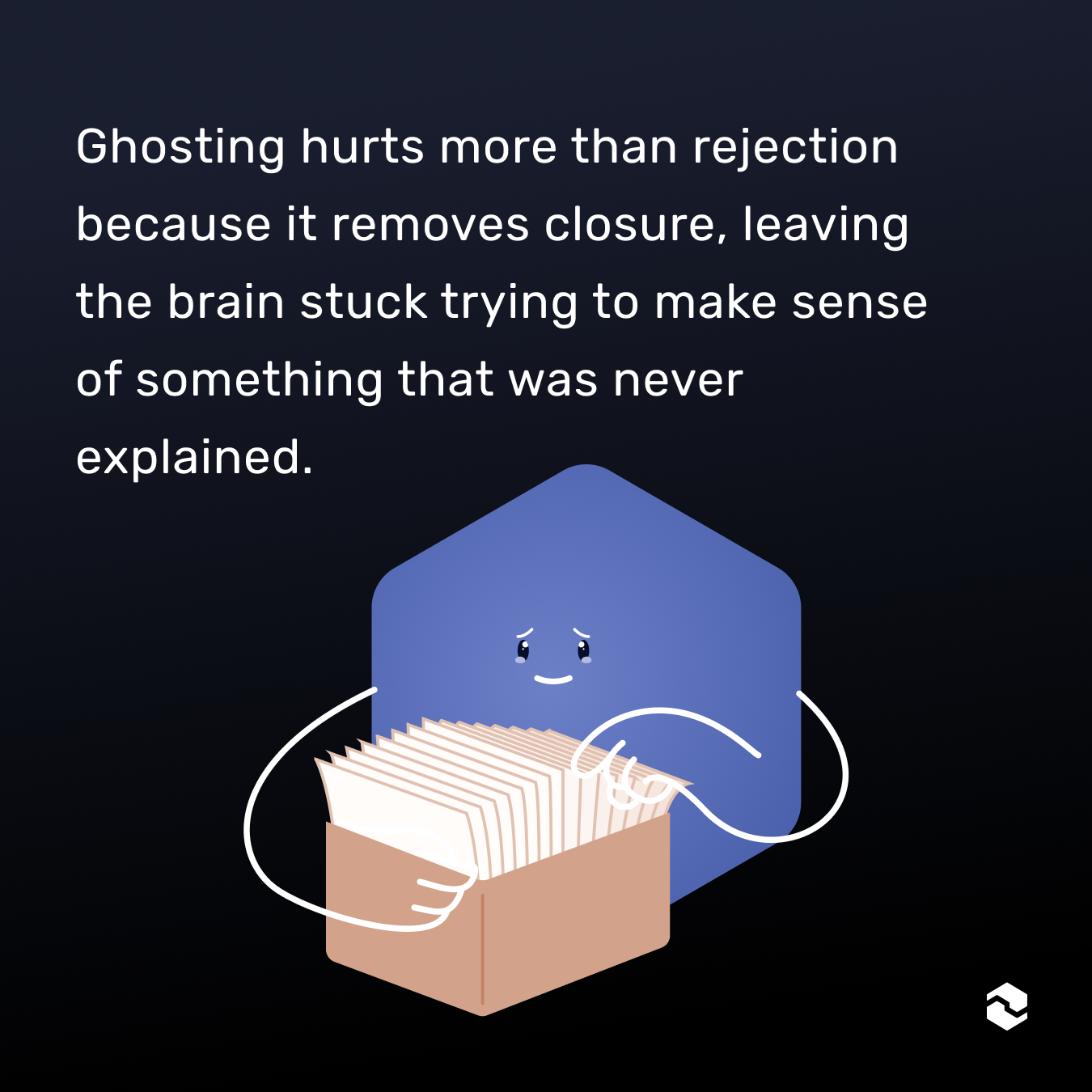
Ghosting has become a common experience within Bangalore dating, often leaving individuals without closure. Among the many behaviors that characterise modern online dating, ghosting is perhaps the most psychologically disruptive. Ghosting refers to the sudden and unexplained cessation of communication in a relationship. Unlike direct rejection, where an individual communicates their lack of interest, ghosting eliminates the possibility of explanation or closure. Messages remain unanswered, conversations abruptly stop and the individual disappears from communication entirely.
Ghosting represents a unique form of social rejection because it combines rejection with uncertainty. Traditional rejection provides cognitive closure: the brain can categorise the relationship as finished and begin emotional recovery. Ghosting, however, leaves the status of the relationship ambiguous. Research on digital dissolution strategies finds that this ambiguity is a key driver of the prolonged distress ghosted individuals report, as the brain is denied the closure it needs to disengage [8].
Ghosting may intensify this response because it introduces an additional element: uncertainty. When communication stops without explanation, the brain's predictive systems attempt to resolve the ambiguity. Crucially, dACC responds not only to social rejection itself but also to expectancy violation, the detection that something has gone differently from what was predicted [5]. Ghosting delivers both simultaneously. Individuals may repeatedly ask themselves: "Did I say something wrong?", "Did something happen to them?", "Are they intentionally ignoring me?"
This repeated cognitive analysis can lead to rumination, and individuals with heightened rejection sensitivity show particularly strong neural responses in the dACC and associated regions when confronted with social exclusion [6,7]. Another factor that intensifies the emotional impact of ghosting is the presence of digital traces. Unlike traditional relationship endings, ghosted individuals may still see the other person active online, posting stories, liking content, or interacting with others. These cues reinforce the perception that the silence is intentional, amplifying distress [8].Within dating in Bangalore, this pattern is often intensified by constant online visibility and passive interaction.
Ghosting activates several processes in the brain at the same time. It triggers the brain’s social pain system, especially areas like the dACC and anterior insula, which respond to feelings of rejection [1,2]. It can also activate the amygdala, a brain region involved in detecting threats and emotional significance [12]. At the same time, the brain tries to make sense of what happened because the sudden silence violates our expectations of normal communication [5,7]. Together, these reactions can create a strong emotional response that may continue even after the interaction is over.
Ghosting is often dismissed as a casual feature of online dating culture, even though empirical research confirms its psychological costs: ghosted individuals report lower satisfaction, higher uncertainty and greater psychological distress than those who receive direct rejection [8].
Breadcrumbing: The neuroscience of intermittent reinforcement
While ghosting represents sudden and complete disappearance, breadcrumbing operates through the opposite mechanism: minimal but recurring attention. Breadcrumbing refers to a pattern in which an individual sends occasional texts, reacts to social media posts, or engages briefly in conversation without showing consistent interest in building a meaningful relationship. The interaction remains alive but never progresses. Breadcrumbing is especially prevalent in dating in Bangalore, where intermittent attention sustains prolonged engagement.
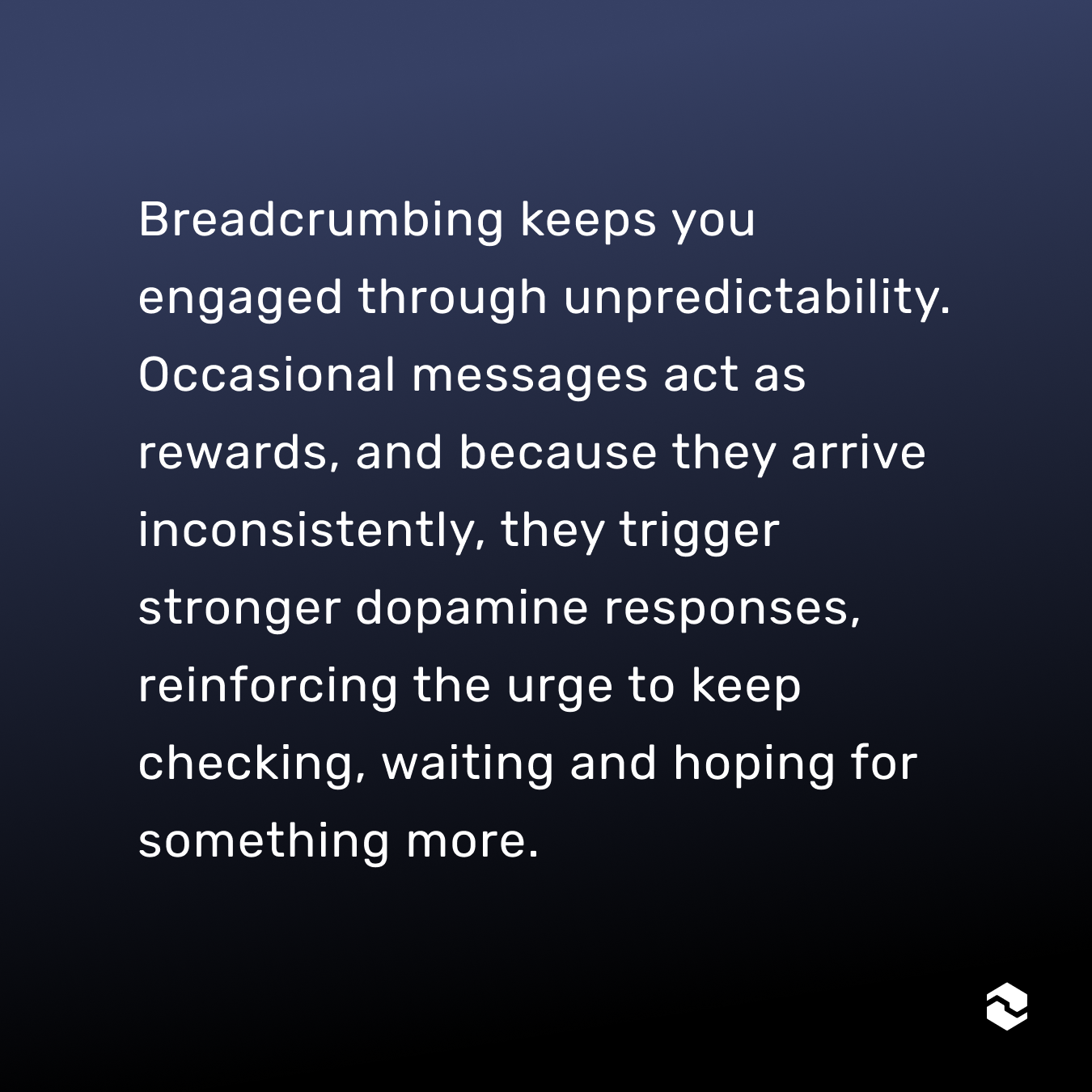
Breadcrumbing engages one of the most influential learning mechanisms in the brain: intermittent reinforcement. Intermittent reinforcement happens when rewards are given unpredictably instead of regularly. Research in behavioral psychology shows that this pattern makes people more likely to keep repeating a behavior, often even more than when rewards are given consistently [9]. [Read previous article for further reading]
In the brain, this process involves dopamine, a chemical linked to reward and motivation. When something turns out better than the brain expected, dopamine neurons increase their activity, reinforcing the behavior that led to the reward. Because unpredictable rewards create a bigger “surprise” for the brain, they produce stronger dopamine signals. This is why variable and unpredictable rewards can keep people engaged for longer periods of time [10].
Breadcrumbing exploits this neural mechanism. In online dating interactions, attention functions as a social reward. A message, emoji reaction, or sudden reappearance after a period of silence can activate the brain's reward system. Because these signals arrive unpredictably, they generate stronger dopamine responses than consistent communication would.
A key distinction in understanding this dynamic is the difference between "wanting" and "liking", two separable processes in the brain's reward architecture. Berridge and Robinson demonstrated that dopamine primarily drives the motivational "wanting" component: the incentive salience or motivational drive to pursue a reward, even when genuine pleasure (“liking”) may be absent [11]. This explains why breadcrumbed individuals may find themselves persistently checking their messages and replaying interactions even when the relationship brings them little genuine satisfaction.
Ragebaiting: Emotional provocation and the amygdala
Another emerging behavior in online dating is ragebaiting, a strategy in which individuals deliberately post provocative or controversial content to trigger emotional reactions from others. While ragebaiting is often discussed in the context of social media engagement, similar dynamics also appear in dating contexts: inflammatory statements, controversial opinions, polarising humor, or exaggerated viewpoints designed to provoke strong emotional responses.These dynamics are also visible in Bangalore dating, where emotionally provocative behavior can drive engagement.
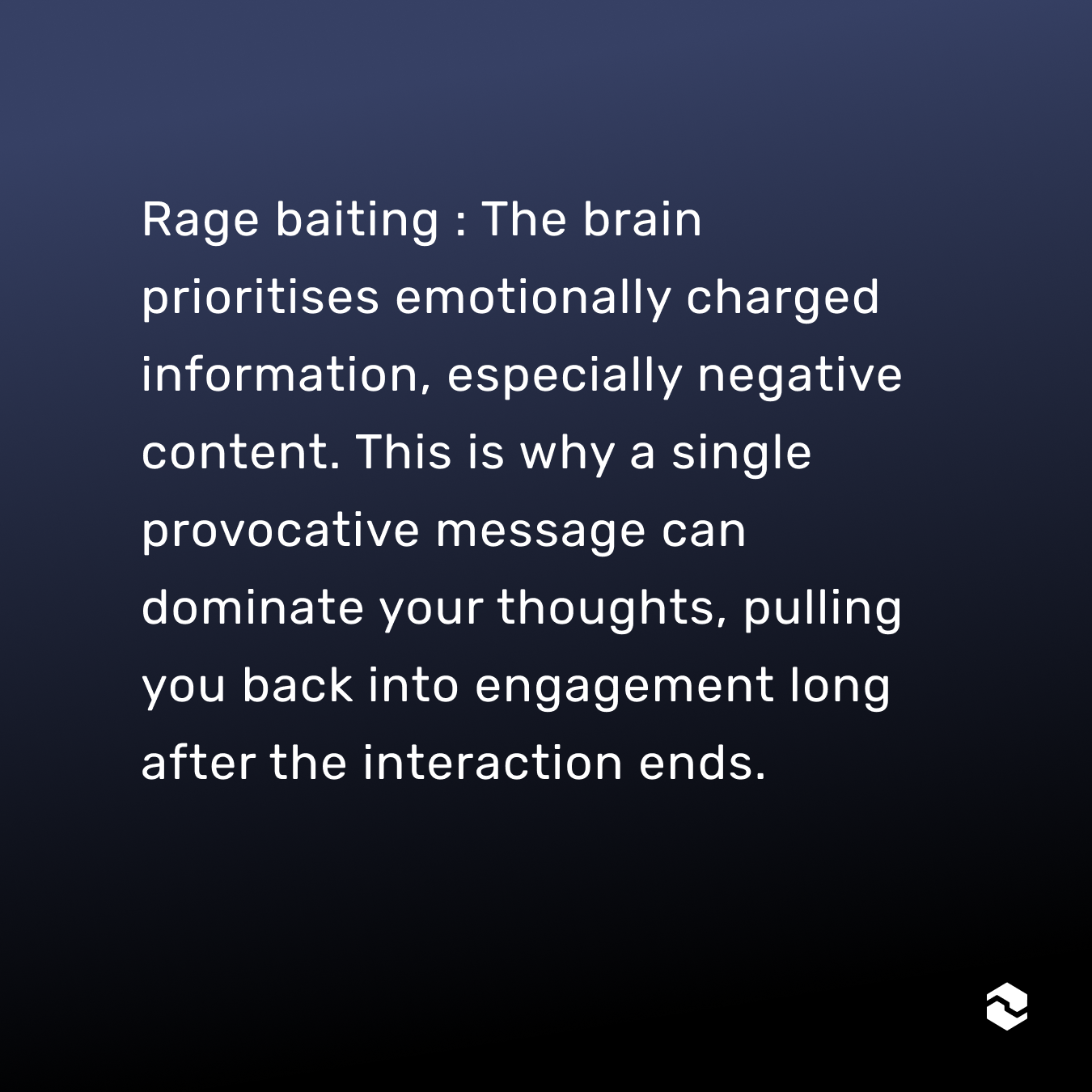
The effectiveness of ragebaiting lies in the way the human brain processes emotionally salient information. Central to this process is the amygdala, a key structure within the limbic system that rapidly evaluates incoming stimuli for threat or emotional significance [12]. This evaluation occurs largely outside conscious awareness, enabling fast responses to potential social dangers.
Research in affective neuroscience demonstrates that emotionally arousing stimuli activate the amygdala more strongly than neutral stimuli and that this activation directly enhances attention and strengthens memory consolidation via interactions with the hippocampus [13]. Provocative or emotionally charged content not only captures attention in the moment, but tends to be remembered more vividly and for longer, giving ragebaiting an outsized footprint in a person's mental landscape. As a result, individuals may respond impulsively to provocative content, commenting, arguing, or engaging, before conscious reasoning has had a chance to intervene [12].
The psychological impact of ragebaiting is further amplified by the negativity bias, the well-documented tendency of the brain to weigh negative information more heavily than equivalent positive information [14]. Baumeister and colleagues showed that bad events, bad feedback and bad interactions have a stronger, more lasting impact on cognition and emotion than comparably valenced positive experiences [14]. Because of this bias, a single provocative statement in a dating profile or conversation can dominate a person's attention long after the interaction has ended, even when they consciously wish to move on.

Ragebaiting reflects deep properties of human cognition. The brain evolved to prioritise emotionally significant information, especially signals associated with conflict or threat. In modern digital environments, this ancient survival mechanism can be deliberately exploited to attract attention, provoke responses and sustain engagement.
Modern dating behaviors such as ghosting, breadcrumbing and ragebaiting may seem like products of digital culture, but the emotional reactions they trigger are rooted in fundamental brain processes. These interactions activate neural systems involved in social pain, reward learning and threat detection, making seemingly small online behaviors feel deeply significant. The human brain evolved for clear, face-to-face social cues, whereas online dating often introduces ambiguity and unpredictability. This mismatch can intensify emotional responses in modern relationships. These insights are particularly relevant for dating in Bangalore, where fast-paced and ambiguous interactions are common. Understanding the neuroscience behind these behaviors can help individuals interpret online interactions more rationally and navigate online dating environments with greater awareness and emotional resilience.
References:
[1] Eisenberger NI. The pain of social disconnection: examining the shared neural underpinnings of physical and social pain . Nat Rev Neurosci. 2012;13(8):421–434.
[2] Rotge JY, Lemogne C, Hinfray S, et al. A meta-analysis of the anterior cingulate contribution to social pain. Soc Cogn Affect Neurosci. 2015;10(1):19–27.
[3] Eisenberger NI, Lieberman MD. Why rejection hurts: a common neural alarm system for physical and social pain. Trends Cogn Sci. 2004;8(7):294–300.
[4] Kross E, Berman MG, Mischel W, Smith EE, Wager TD. Social rejection shares somatosensory representations with physical pain. Proc Natl Acad Sci U S A. 2011;108(15):6270–6275.
[5] Somerville LH, Heatherton TF, Kelley WM. Anterior cingulate cortex responds differentially to expectancy violation and social rejection. Nat Neurosci. 2006;9(8):1007–1008.
[6] Burklund LJ, Eisenberger NI, Lieberman MD. The face of rejection: rejection sensitivity moderates dorsal anterior cingulate activity to disapproving facial expressions. Soc Neurosci. 2007;2(3–4):238–253.
[7] Kawamoto T, Onoda K, Nakashima K, et al. Is dorsal anterior cingulate cortex activation in response to social exclusion due to expectancy violation? An fMRI study. Front Evol Neurosci. 2012;4:11.
[8] Koessler RB, Kohut T, Campbell L. When your boo becomes a ghost: the association between breakup strategy and breakup role in experiences of relationship dissolution. Collabra Psychol. 2019;5(1):29.
[9] Ferster CB, Skinner BF. Schedules of Reinforcement. Appleton-Century-Crofts. 1957;:New York.
[10] Schultz W, Dayan P, Montague PR. A neural substrate of prediction and reward. Science. 1997;275(5306):1593–1599.
[11] Berridge KC, Robinson TE. Parsing reward. Trends Neurosci. 2003;26(9):507–513.
[12] LeDoux JE. Emotion circuits in the brain. Annu Rev Neurosci. 2000;23:155–184.
[13] Cahill L, McGaugh JL. Mechanisms of emotional arousal and lasting declarative memory. Trends Neurosci. 1998;21(7):294–299.
[14] Baumeister RF, Bratslavsky E, Finkenauer C, Vohs KD. Bad is stronger than good. Rev Gen Psychol. 2001;5(4):323–370.
About the author:
Sharvani is a bioinformatics graduate and neuroscience enthusiast passionate about understanding behavior, emotion, and connection. She enjoys exploring how science and technology influence modern relationships. In her free time, she loves watching films and reading. Connect with her onLinkedIn
Your brain on ghosting, breadcrumbing and ragebaiting
You open your phone and notice that someone you were talking to yesterday has viewed your Instagram story but hasn't replied to your message. A few days later, they send a casual "hey" or react to a meme, just enough to restart the conversation. Then, without warning, they disappear again. For many people navigating modern dating, this experience is deeply familiar. In the context of dating in Bangalore, these patterns are becoming increasingly visible in everyday interactions.
Digital communication has fundamentally changed how romantic interactions unfold. Conversations can begin instantly, escalate quickly and disappear without explanation. Behaviors such as ghosting, breadcrumbing, orbiting and ragebaiting have become widely recognised features of contemporary dating culture, particularly among Gen Z. While these terms emerged from internet slang, they correspond to well-established psychological and neurobiological processes that govern social attachment, reward learning and emotional regulation. This ambiguity is particularly amplified in dating in Bangalore, where interactions often move quickly but lack clarity.
Human beings evolved as highly social organisms whose survival historically depended on maintaining stable relationships within groups. As a result, the brain developed specialised neural systems designed to detect signals of acceptance and rejection. Experiences that threaten social belonging activate neural circuits associated with pain, vigilance and emotional distress. Social disconnection is therefore not merely metaphorically painful, but it activates neural mechanisms strikingly similar to those involved in physical pain [1].
Research in social neuroscience shows that experiences of social rejection activate the dorsal anterior cingulate cortex (dACC) and the anterior insula, regions associated with the affective component of physical pain [1,2]. A meta-analysis of neuroimaging studies confirmed that the dACC consistently contributes to the processing of social pain across multiple paradigms [2], and functional imaging work demonstrates that being excluded from social interactions can trigger neural responses comparable to those observed during physical injury [3,4].
Modern online dating environments interact with these neural systems in unique ways. Unlike face-to-face interactions, online communication often lacks clear social cues such as tone of voice, facial expressions, or immediate feedback. As a result, the brain must interpret ambiguous signals, delayed replies, viewed messages, or sudden silences without sufficient contextual information. This ambiguity can activate multiple neural systems simultaneously, including those responsible for reward anticipation, threat detection and social pain.
The brain as a social organ
The human brain is fundamentally organised around social interaction. Evolutionary psychologists and neuroscientists argue that the development of complex social networks played a critical role in shaping human cognition. Maintaining relationships, interpreting social signals and responding to rejection became essential skills for survival.
One influential explanation for the emotional impact of social rejection is the social pain overlap theory, which proposes that the neural systems responsible for processing physical pain were evolutionarily adapted to process social pain as well [1,3]. According to this theory, the brain treats social exclusion as a biologically significant threat because isolation historically reduced an individual's chances of survival. Neuroimaging evidence supports this model: romantic rejection has been shown to activate the secondary somatosensory cortex and dorsal posterior insula, regions associated with the sensory components of physical pain [4]. Digital communication, however, often provides incomplete information, forcing the brain to interpret ambiguous cues. This ambiguity creates the psychological conditions in which behaviors such as ghosting, breadcrumbing and orbiting can exert particularly strong emotional effects.
Ghosting: Social rejection without closure
Ghosting has become a common experience within Bangalore dating, often leaving individuals without closure. Among the many behaviors that characterise modern online dating, ghosting is perhaps the most psychologically disruptive. Ghosting refers to the sudden and unexplained cessation of communication in a relationship. Unlike direct rejection, where an individual communicates their lack of interest, ghosting eliminates the possibility of explanation or closure. Messages remain unanswered, conversations abruptly stop and the individual disappears from communication entirely.
Ghosting represents a unique form of social rejection because it combines rejection with uncertainty. Traditional rejection provides cognitive closure: the brain can categorise the relationship as finished and begin emotional recovery. Ghosting, however, leaves the status of the relationship ambiguous. Research on digital dissolution strategies finds that this ambiguity is a key driver of the prolonged distress ghosted individuals report, as the brain is denied the closure it needs to disengage [8].
Ghosting may intensify this response because it introduces an additional element: uncertainty. When communication stops without explanation, the brain's predictive systems attempt to resolve the ambiguity. Crucially, dACC responds not only to social rejection itself but also to expectancy violation, the detection that something has gone differently from what was predicted [5]. Ghosting delivers both simultaneously. Individuals may repeatedly ask themselves: "Did I say something wrong?", "Did something happen to them?", "Are they intentionally ignoring me?"
This repeated cognitive analysis can lead to rumination, and individuals with heightened rejection sensitivity show particularly strong neural responses in the dACC and associated regions when confronted with social exclusion [6,7]. Another factor that intensifies the emotional impact of ghosting is the presence of digital traces. Unlike traditional relationship endings, ghosted individuals may still see the other person active online, posting stories, liking content, or interacting with others. These cues reinforce the perception that the silence is intentional, amplifying distress [8].Within dating in Bangalore, this pattern is often intensified by constant online visibility and passive interaction.
Ghosting activates several processes in the brain at the same time. It triggers the brain’s social pain system, especially areas like the dACC and anterior insula, which respond to feelings of rejection [1,2]. It can also activate the amygdala, a brain region involved in detecting threats and emotional significance [12]. At the same time, the brain tries to make sense of what happened because the sudden silence violates our expectations of normal communication [5,7]. Together, these reactions can create a strong emotional response that may continue even after the interaction is over.
Ghosting is often dismissed as a casual feature of online dating culture, even though empirical research confirms its psychological costs: ghosted individuals report lower satisfaction, higher uncertainty and greater psychological distress than those who receive direct rejection [8].
Breadcrumbing: The neuroscience of intermittent reinforcement
While ghosting represents sudden and complete disappearance, breadcrumbing operates through the opposite mechanism: minimal but recurring attention. Breadcrumbing refers to a pattern in which an individual sends occasional texts, reacts to social media posts, or engages briefly in conversation without showing consistent interest in building a meaningful relationship. The interaction remains alive but never progresses. Breadcrumbing is especially prevalent in dating in Bangalore, where intermittent attention sustains prolonged engagement.
Breadcrumbing engages one of the most influential learning mechanisms in the brain: intermittent reinforcement. Intermittent reinforcement happens when rewards are given unpredictably instead of regularly. Research in behavioral psychology shows that this pattern makes people more likely to keep repeating a behavior, often even more than when rewards are given consistently [9]. [Read previous article for further reading]
In the brain, this process involves dopamine, a chemical linked to reward and motivation. When something turns out better than the brain expected, dopamine neurons increase their activity, reinforcing the behavior that led to the reward. Because unpredictable rewards create a bigger “surprise” for the brain, they produce stronger dopamine signals. This is why variable and unpredictable rewards can keep people engaged for longer periods of time [10].
Breadcrumbing exploits this neural mechanism. In online dating interactions, attention functions as a social reward. A message, emoji reaction, or sudden reappearance after a period of silence can activate the brain's reward system. Because these signals arrive unpredictably, they generate stronger dopamine responses than consistent communication would.
A key distinction in understanding this dynamic is the difference between "wanting" and "liking", two separable processes in the brain's reward architecture. Berridge and Robinson demonstrated that dopamine primarily drives the motivational "wanting" component: the incentive salience or motivational drive to pursue a reward, even when genuine pleasure (“liking”) may be absent [11]. This explains why breadcrumbed individuals may find themselves persistently checking their messages and replaying interactions even when the relationship brings them little genuine satisfaction.
Ragebaiting: Emotional provocation and the amygdala
Another emerging behavior in online dating is ragebaiting, a strategy in which individuals deliberately post provocative or controversial content to trigger emotional reactions from others. While ragebaiting is often discussed in the context of social media engagement, similar dynamics also appear in dating contexts: inflammatory statements, controversial opinions, polarising humor, or exaggerated viewpoints designed to provoke strong emotional responses.These dynamics are also visible in Bangalore dating, where emotionally provocative behavior can drive engagement.
The effectiveness of ragebaiting lies in the way the human brain processes emotionally salient information. Central to this process is the amygdala, a key structure within the limbic system that rapidly evaluates incoming stimuli for threat or emotional significance [12]. This evaluation occurs largely outside conscious awareness, enabling fast responses to potential social dangers.
Research in affective neuroscience demonstrates that emotionally arousing stimuli activate the amygdala more strongly than neutral stimuli and that this activation directly enhances attention and strengthens memory consolidation via interactions with the hippocampus [13]. Provocative or emotionally charged content not only captures attention in the moment, but tends to be remembered more vividly and for longer, giving ragebaiting an outsized footprint in a person's mental landscape. As a result, individuals may respond impulsively to provocative content, commenting, arguing, or engaging, before conscious reasoning has had a chance to intervene [12].
The psychological impact of ragebaiting is further amplified by the negativity bias, the well-documented tendency of the brain to weigh negative information more heavily than equivalent positive information [14]. Baumeister and colleagues showed that bad events, bad feedback and bad interactions have a stronger, more lasting impact on cognition and emotion than comparably valenced positive experiences [14]. Because of this bias, a single provocative statement in a dating profile or conversation can dominate a person's attention long after the interaction has ended, even when they consciously wish to move on.
Ragebaiting reflects deep properties of human cognition. The brain evolved to prioritise emotionally significant information, especially signals associated with conflict or threat. In modern digital environments, this ancient survival mechanism can be deliberately exploited to attract attention, provoke responses and sustain engagement.
Modern dating behaviors such as ghosting, breadcrumbing and ragebaiting may seem like products of digital culture, but the emotional reactions they trigger are rooted in fundamental brain processes. These interactions activate neural systems involved in social pain, reward learning and threat detection, making seemingly small online behaviors feel deeply significant. The human brain evolved for clear, face-to-face social cues, whereas online dating often introduces ambiguity and unpredictability. This mismatch can intensify emotional responses in modern relationships. These insights are particularly relevant for dating in Bangalore, where fast-paced and ambiguous interactions are common. Understanding the neuroscience behind these behaviors can help individuals interpret online interactions more rationally and navigate online dating environments with greater awareness and emotional resilience.
References:
[1] Eisenberger NI. The pain of social disconnection: examining the shared neural underpinnings of physical and social pain . Nat Rev Neurosci. 2012;13(8):421–434.
[2] Rotge JY, Lemogne C, Hinfray S, et al. A meta-analysis of the anterior cingulate contribution to social pain. Soc Cogn Affect Neurosci. 2015;10(1):19–27.
[3] Eisenberger NI, Lieberman MD. Why rejection hurts: a common neural alarm system for physical and social pain. Trends Cogn Sci. 2004;8(7):294–300.
[4] Kross E, Berman MG, Mischel W, Smith EE, Wager TD. Social rejection shares somatosensory representations with physical pain. Proc Natl Acad Sci U S A. 2011;108(15):6270–6275.
[5] Somerville LH, Heatherton TF, Kelley WM. Anterior cingulate cortex responds differentially to expectancy violation and social rejection. Nat Neurosci. 2006;9(8):1007–1008.
[6] Burklund LJ, Eisenberger NI, Lieberman MD. The face of rejection: rejection sensitivity moderates dorsal anterior cingulate activity to disapproving facial expressions. Soc Neurosci. 2007;2(3–4):238–253.
[7] Kawamoto T, Onoda K, Nakashima K, et al. Is dorsal anterior cingulate cortex activation in response to social exclusion due to expectancy violation? An fMRI study. Front Evol Neurosci. 2012;4:11.
[8] Koessler RB, Kohut T, Campbell L. When your boo becomes a ghost: the association between breakup strategy and breakup role in experiences of relationship dissolution. Collabra Psychol. 2019;5(1):29.
[9] Ferster CB, Skinner BF. Schedules of Reinforcement. Appleton-Century-Crofts. 1957;:New York.
[10] Schultz W, Dayan P, Montague PR. A neural substrate of prediction and reward. Science. 1997;275(5306):1593–1599.
[11] Berridge KC, Robinson TE. Parsing reward. Trends Neurosci. 2003;26(9):507–513.
[12] LeDoux JE. Emotion circuits in the brain. Annu Rev Neurosci. 2000;23:155–184.
[13] Cahill L, McGaugh JL. Mechanisms of emotional arousal and lasting declarative memory. Trends Neurosci. 1998;21(7):294–299.
[14] Baumeister RF, Bratslavsky E, Finkenauer C, Vohs KD. Bad is stronger than good. Rev Gen Psychol. 2001;5(4):323–370.
About the author:
Sharvani is a bioinformatics graduate and neuroscience enthusiast passionate about understanding behavior, emotion, and connection. She enjoys exploring how science and technology influence modern relationships. In her free time, she loves watching films and reading. Connect with her onLinkedIn

Your privacy matters most.
- We will never share your data with any third parties. Vlncy will always be an ad-free platform.
- We will use your anonymised data only to improve the platform, in our efforts to serve you better.
- We do not store/ own any of your content on our servers.
- Upon account deletion, we will purge all your personal data.
- We will never reveal your identity on the platform. Only you decide when, how and with whom your information is shared.


