Relationships after rupture: Intimacy and Divorce in contemporary India

Relationships after divorce in India unfold in the shadow of marriage, an institution that continues to structure kinship, gender roles, respectability, and economic survival, even as urbanisation and women's workforce participation challenge its absoluteness. India continues to report one of the lowest formal divorce rates among large national populations worldwide. According to NFHS-5 (2019–21), only 1.4% of ever-married women aged 15-49 report being divorced or separated, a modest increase from 0.6% in NFHS-3 (2005–06) [1,3].However, urban centres such as Delhi, Mumbai, and Bengaluru have reported noticeable increases in divorce filings over the past decade, reflecting shifting marital expectations and greater legal awareness [2,5,6]. These low rates do not necessarily indicate marital satisfaction; rather, they reflect persistent stigma, economic dependence, legal barriers, and strong familial pressure to maintain marriages, making post-divorce intimacy a negotiation between personal desire and social constraint [4,7]. For many navigating renewed intimacy, the search for a thoughtful dating app in Bangalore becomes part of this negotiation between autonomy and social visibility.
Divorce as Social Rupture:
In the Indian context, divorce is not merely the dissolution of a marital relationship but a social rupture that affects identity, morality, and social belonging [4,9]. For women, divorce often imposes a “double burden”: navigating personal grief while contending with societal judgment that frames them as failed or selfish [10]. Urban, educated women increasingly cite emotional neglect and incompatibility as grounds for divorce, indicating a gradual shift toward affective expectations within marriage.[11,12,13].
Post-divorce relationships cannot be understood solely as private romantic choices. They are shaped by culture, family systems, legal frameworks, gendered power relations, and uneven transitions in modernity [7,9,10]. Divorce not only ends a marriage but alters how individuals understand love, what it costs, and what risks it carries [4,14,15]. Within these socio-legal constraints, remarriage may restore social legitimacy, while dating or cohabitation often risks moral scrutiny [16,17,18].
India presents a paradoxical landscape. Divorce rates remain comparatively low, yet marital dissatisfaction, emotional disengagement and informal separations are increasingly visible, particularly in urban contexts [1,3,6,9]. This paradox reflects the enduring power of marriage as a moral institution alongside the gradual emergence of individual aspirations centered on emotional fulfillment, autonomy and psychological well-being [5,6,9]. Divorce thus emerges at the intersection of enduring institutional norms and emerging ideals of emotional fulfilment and individual autonomy. For some, it is an act of resistance against suffocating norms. For others, it is experienced as social failure, moral loss or existential disorientation [4,7,14]. Within urban contexts, this uncertainty increasingly extends into how individuals cautiously approach any dating app in Bangalore environment.
Marriage in India: an institution that shapes life after its end:
Historically, marriage in India has functioned less as a private emotional bond and more as a foundational social institution organising kinship, caste relations, gender roles, and economic security [19,20]. Marriage regulates sexuality, ensures lineage continuity, consolidates property and maintains social order [19,21]. Individual choice and emotional compatibility, while not absent, have traditionally been secondary to collective considerations such as family reputation, caste alignment and community norms [19,22].
Marriage is also rarely entered into or sustained by two individuals alone. Extended families often act as active stakeholders in marital endurance, shaping expectations around roles, sacrifice and obligation [20,22]. Within this framework, compromise, particularly by women, is valorised, and marital permanence treated as a moral achievement rather than a negotiable outcome [21,23]. Divorce, therefore, should be understood not merely as the end of a relationship, but as a disruption of social continuity and collective stability [21,24].
Over recent decades, however, marriage in India appears to have undergone significant transformation. Urbanisation, women’s education, economic liberalisation and increased exposure to global cultural narratives have introduced companionate expectations into marital life [23,25]. Emotional intimacy, mutual respect and personal fulfilment are increasingly imagined as legitimate and even necessary components of marriage [25,26]. These expectations, however, are layered onto institutional structures that remain legally, economically and socially unequal, and often morally rigid [21,23].
This coexistence of companionate ideals and traditional institutional expectations generates structural tension within contemporary marriages. Marriage is increasingly expected to deliver emotional satisfaction while continuing to preserve traditional gender hierarchies, endurance norms and family authority [23,25]. When marriages struggle to reconcile these competing demands, individuals may experience not only relational dissatisfaction but a deeper sense of psychological disillusionment [26]. In this light, divorce can be interpreted less as a rejection of commitment and more as a response to an institution strained by contradictory expectations [24,26]. Crucially, while marriage itself has become more negotiable in principle, marital exit has not been equally normalised in practice [21,24]. Individuals may be encouraged to seek love and compatibility, but are often afforded limited social support when those foundations collapse. Divorce therefore appears less as an individual failure and more as a socially fraught response to contradictions embedded within the institution of marriage itself [24].
An important but still underexplored dimension of post-divorce intimacy concerns the lingering influence of marriage as an institution, even after its formal end. Divorced individuals may not fear emotional closeness itself as much as they fear the institutional demands historically attached to it [26,27]. For some, marriage, particularly when accompanied by prolonged legal conflict, custody disputes or emotional surveillance, becomes symbolically associated with loss of autonomy, heightened scrutiny and irreversible obligation [14,18,27]. As a result, even in the presence of emotional connection, the prospect of commitment may provoke anxiety rather than reassurance [26,27].
Within this context, relational ambiguity can take on a protective function. Rather than signalling emotional unavailability, ambiguity may operate as a strategy for preserving psychological safety following institutional and emotional strain [26,27]. This tendency is often framed as commitment avoidance, yet it can also be understood as a rational response to prior relational and legal experiences [14,27]. Post-divorce individuals may desire intimacy deeply while simultaneously resisting relational structures that previously imposed disproportionate emotional, legal or economic costs. Recognising this distinction allows post-divorce relationship patterns to be interpreted without moral judgement, situating them instead within broader histories of institutional experience, power and vulnerability [26,27].
The psychological aftermath of divorce in the Indian context:
Divorce is widely associated with grief, identity disruption, and emotional recalibration across cultural contexts. In India, these psychological processes are intensified by stigma, moral judgment, and the absence of socially sanctioned recovery narratives [4,7,10,16,28]. Emotional distress after divorce is not simply an internal experience; it is shaped by family responses, cultural narratives of failure, and social surveillance [4,10,28].
Marriage in India functions as a core marker of adulthood and legitimacy [19,20]. Its dissolution often triggers an identity crisis, particularly for women [4,10,28]. Divorced individuals frequently describe feeling socially undefined, no longer fitting neatly into categories of respectability. Questions such as “Who am I now?” and “Where do I belong?” become emotionally charged in a society that offers few positive images of life after divorce [4,10,28].
Grief following divorce is frequently socially unrecognised and emotionally invalidated. Unlike bereavement, divorce-related loss is rarely acknowledged as legitimate [28,29]. There are no widely recognised rituals for mourning a failed marriage, and few collective languages exist for ambivalence or regret [28,29]. Many individuals are expected to either justify their decision or suppress their pain. This lack of recognition can prolong distress and lead to unresolved grief, emotional numbing, or anxiety [28,29].
Guilt constitutes a central component of the psychological aftermath of divorce. Women, in particular, internalise blame due to cultural expectations that frame them as custodians of family harmony [4,10,28]. Even in cases of abuse or neglect, women may feel responsible for “breaking the family.” Men, while less morally scrutinised, may experience short-term declines in emotional well-being and loneliness [14,30]. In both cases, guilt is less about the relationship itself and more about violating social duty [28,30].
Family reactions strongly shape recovery. Supportive families can buffer emotional distress by affirming the individual’s decision and offering practical help [10,28]. However, many families respond with silence, disappointment, or pressure to reconcile. Such responses intensify isolation and delay healing, forcing individuals to manage family emotions alongside their own [28,30].
Loneliness is another defining feature of post-divorce life, especially in urban settings. Divorced individuals often find themselves excluded from couple-centric social spaces. Fear of judgment may lead to withdrawal, reinforcing emotional isolation. Without strong peer networks or mental health support, loneliness can become chronic, influencing how individuals approach future intimacy [4,14,28,30]. Re-entering social life, including through a dating app in Bangalore, therefore carries emotional weight beyond ordinary romantic exploration.
Gendered emotional landscapes: How men and women relearn intimacy:
Men and women experience post-divorce reconnection differently, shaped by gender socialisation, structural constraints, and unequal moral expectations. Research on relationship preferences following union dissolution consistently indicates that women are less likely than men to pursue remarriage or co-residential partnerships, following divorce, reflecting both differential preferences and constraints in the post-separation life course [32]. These patterns are not merely individual choices but are embedded in broader social roles and institutional arrangements that shape how intimacy is re-approached after marital exit.
One explanation for this divergence lies in the unequal caregiving and domestic responsibilities that divorced women shoulder. In many contexts, women retain primary responsibility for childcare after divorce, which limits time, mobility, and opportunities for forming new intimate relationships, while also making cohabitation or remarriage less attractive or feasible [5,12,32]. As a result, women may prefer non-co-residential or emotionally cautious forms of connection that allow them to preserve autonomy while managing care obligations.
Emotional adjustment after divorce also follows gendered trajectories. Large-scale demographic and psychological studies indicate that men often experience sharper declines in everyday emotional wellbeing immediately after divorce, partly because they are more likely to have relied on a spouse as their primary or sole source of emotional intimacy [30]. Women, by contrast, tend to maintain broader support networks, including friendships and kin ties, which can buffer emotional distress and facilitate adaptive coping [30]. These differences shape how men and women relearn intimacy: men may seek rapid reconnection to restore emotional stability, while women may approach new relationships with greater selectivity and emotional vigilance.
At the same time, divorce is not only associated with loss but also with psychological transformation. Recent research demonstrates that both men and women can experience post-traumatic growth after divorce, including increased self-esteem, greater self-knowledge, and a renewed appreciation for life [31]. Importantly, evidence suggests that when individual resources such as self-esteem are accounted for, levels of post-traumatic growth may be comparable across genders, challenging deficit-based narratives that portray one gender as inherently more resilient than the other [31]. This indicates that relearning intimacy after divorce involves not only recovery from distress but also the active reconstruction of relational expectations and emotional capacities.
Beyond these general patterns, gendered emotional landscapes are shaped by lived experience and social surveillance, particularly in the Indian context. For many women, divorce produces heightened emotional caution rooted in prior experiences of emotional neglect, control, or unequal domestic and emotional labour. Qualitative studies of divorced women in India describe a persistent fear of repetition, of re-entering relationships that reproduce asymmetries of care, authority, or sacrifice [4,7,10]. This often leads to ambivalence toward intimacy, characterised by a tension between the desire for closeness and the fear of losing autonomy again.
As a result, post-divorce dating for women is rarely experienced as casual or socially neutral. Romantic engagement is entangled with concerns about dignity, safety, legitimacy, and social judgment. Divorced women must assess not only emotional compatibility but also whether a relationship exposes them to stigma or moral scrutiny, as women’s romantic choices remain more visible and more heavily policed than men’s [16]. At the same time, many women report that divorce brings psychological clarity: stronger boundaries, clearer expectations, and reduced tolerance for unequal emotional labour [4,10]. This selectivity should not be read as emotional withdrawal, but as learned self-protection shaped by prior relational strain.
Men’s emotional struggles following divorce are often less publicly articulated but remain substantial. While men generally face less stigma in remarrying, research indicates that they are more likely to experience profound loneliness and emotional disorientation following marital dissolution [14,30]. Marriage frequently provides men with their primary structure for emotional expression and daily intimacy. Its loss can leave men uncertain about how to process vulnerability, particularly in social environments where emotional disclosure is discouraged by dominant norms of masculinity [14]. Some men seek rapid reconnection to restore routine and validation, while others withdraw from intimacy altogether, unsure how to rebuild emotional closeness outside the institutional framework of marriage.
For both genders, post-divorce relationships are shaped by emotional residue carried forward from the previous marriage. Fear of trust, hyper-independence, conflict avoidance, and attempts to tightly control emotional exposure are common features of post-divorce intimacy [30,31]. As a result, intimacy becomes cautious, negotiated, and psychologically complex rather than spontaneous or taken for granted.
Divorce is often imagined as an end to emotional labour; however, empirical research suggests that emotional work is instead redistributed along familiar gendered lines. Women are more likely to engage in deliberate emotional processing after divorce, reflecting on the relationship, articulating pain, and seeking meaning, partly because emotional coherence and relational insight continue to be socially expected of them [4,10,16]. Men, by contrast, often experience divorce as emotional dislocation, with fewer socially sanctioned spaces in which vulnerability is normalised, leading emotional pain to be deferred, externalised, or relationally outsourced [14,30].
Children: how post-divorce parenting is navigated
Divorce does not only break adult partnerships; it reconfigures family systems, with children often occupying the most vulnerable positions within this transition [29,30,33,36,38]. In India, a substantial proportion of marital dissolutions involve dependent children, yet children’s emotional and relational experiences remain comparatively undertheorised within discussions of post-divorce intimacy and adult recovery [1,3,6,8]. Indian family law formally places the child’s welfare as paramount in custody determinations. In practice, mothers are more likely to receive primary custody of younger children, while courts may consider the expressed preferences of older children depending on developmental maturity and circumstances [18,35].
Post-divorce dating introduces additional emotional complexity for parents and children alike. Research consistently documents loyalty conflicts among children, in which affection toward a parent’s new partner may feel like betrayal of the other parent, particularly in high-conflict separations [29,33,34,36]. Children may also encounter social stigma in peer environments, reinforcing feelings of difference or emotional insecurity [9,29,40].
A substantial body of longitudinal research indicates that parental divorce is associated with elevated risks of emotional distress, academic disengagement, and certain risk behaviours among children, especially when exposure to parental conflict persists [29,30,33,37,38]. These outcomes are not deterministic but are strongly shaped by the quality of post-divorce parenting, emotional availability, and co-parental cooperation [34,37,39].
As a result, many single parents approach new romantic relationships cautiously. Qualitative studies suggest that parents frequently delay dating, limit children’s exposure to new partners, or establish explicit boundaries around cohabitation in an effort to protect children’s emotional stability [4,10,18,36]. Rather than impulsive reconnection, parenting responsibilities often impose slower pacing and heightened deliberation in post-divorce intimacy [4,34,40].
Co-parenting dynamics play a decisive role in children’s adjustment. Although courts mandate cooperation, prolonged conflict and litigation are common in contested cases, creating extended periods of uncertainty for children [18,35]. Evidence consistently shows that children fare better when parents establish predictable routines, minimise exposure to conflict, and coordinate caregiving through structured parenting plans or mediated agreements [34,35,39]. In this sense, children reshape post-divorce intimacy itself, encouraging forms of relational engagement that are more deliberate, accountable, and emotionally regulated rather than reactive [27,40].
What helps people reconnect emotionally after divorce
Healing after divorce is not linear. Emotional recovery requires more than time; it requires integration [36,37]. Emotional validation is foundational. Being able to speak about one’s experience without judgment reduces shame and self-blame [37,38]. Support from friends, therapists, or peer communities helps individuals reframe divorce as a life transition rather than a moral failure [38,40].
Narrative reconstruction is equally important. Making sense of the marriage and its end, without reducing oneself to victimhood or blame, allows individuals to approach new relationships without unresolved resentment or fear [37,36]. Clear boundaries and communication skills help create emotional safety [38]. Many divorced individuals prioritise clarity over romance, valuing transparency and mutual expectations [36,39].
Economic and housing stability reduce pressure to enter relationships for survival rather than compatibility. Financial independence, particularly for women, allows for greater selectivity and emotional agency [39]. Therapeutic support plays a growing role in urban India. Counseling helps individuals recognise attachment patterns, trauma responses and emotional defenses that shape future relationships [40]. While access remains uneven, therapy provides tools for healthier reconnection. Healing does not eliminate fear. It allows individuals to engage with fear consciously rather than being controlled by it [37,40].

Digital dating after divorce: A psychological and social tool
Systematic empirical research specifically examining post-divorce dating practices in the Indian context remains scarce. As such, the role of dating applications in post-divorce adjustment should currently be understood as theoretically plausible and socially emerging rather than empirically established.
Drawing on qualitative research on identity reconstruction after divorce [4,14] and
studies of online interaction among divorced populations in other cultural contexts [41], it can be proposed
that digital platforms may function as transitional social spaces through which divorced individuals
cautiously re-enter romantic and social life. These environments may offer opportunities to experiment with
self-presentation, rebuild interpersonal confidence, and establish new social ties following marital
dissolution. In rapidly urbanising regions like Bangalore, this cautious return is often mediated through a dating app in Bangalore, where anonymity and control can feel psychologically protective.
From a psychological perspective, it is further hypothesized that digital dating environments could support the restoration of personal agency after divorce by allowing individuals to regulate the timing, pace, and depth of social engagement [31,33,36]. Such control may be particularly significant for individuals whose sense of autonomy was disrupted during marital conflict or legal separation. Narrative studies of divorce also suggest that post-divorce individuals actively engage in meaning-making and identity renegotiation [4,14], processes that may extend into how they present themselves and articulate future aspirations within digital contexts.
At present, there is no robust peer-reviewed evidence documenting whether divorced users experience unique vulnerabilities on dating applications, such as heightened exposure to harassment, emotional exploitation, or decision fatigue, within Indian or comparable Global South samples. Existing concerns regarding choice overload, ghosting, and platform-mediated rejection therefore remain extrapolations from general online dating research rather than divorce-specific findings [41].When approached reflectively rather than impulsively, digital dating can represent one of several possible tools through which divorced individuals explore renewed intimacy, companionship, or deliberate singlehood on self-determined terms [27,33,36].
Rethinking intimacy after divorce:
Divorced individuals frequently occupy an ambiguous social position that falls outside dominant marital categories. Sociological scholarship conceptualizes divorce as a liminal status, characterized by social uncertainty, conditional legitimacy, and ongoing moral evaluation rather than stable belonging [27,40]. Within the Indian context, where marriage continues to function as a central marker of adulthood and social respectability [19–22], this ambiguity may be particularly pronounced.
Existing qualitative and sociological studies suggest that such liminality can translate into social marginalization. Divorced individuals, especially women, are often excluded from couple-centered social spaces, family rituals, and informal networks, and may be positioned as socially “incomplete” until remarriage occurs [10,16,18]. These dynamics are associated with stigma, emotional isolation, and constrained opportunities for social reintegration [14,18].
On this basis, it can be proposed that post-divorce romantic relationships often carry meanings that extend beyond companionship or sexuality. They may operate as sites for re-establishing social legitimacy, affirming moral worth, and reconstructing personal identity following marital dissolution [27,31]. Intimacy after divorce thus appears to involve not only emotional connection but also symbolic reintegration into socially valued relational categories.
Post-divorce intimacy also raises broader questions regarding the nature of commitment in contemporary societies. Rather than indicating declining moral standards, rising divorce rates have been interpreted as revealing the limitations of endurance-based marital models that privilege permanence over emotional well-being [24,25]. Theories of reflexive intimacy propose that modern relationships increasingly emphasize communication, consent, emotional safety, and negotiated boundaries over obligation and sacrifice [25,26].
Although systematic longitudinal evidence from India remains limited, international research suggests that individuals who re-partner after divorce often demonstrate heightened caution, emotional reflexivity, and deliberate partner selection [29,31,32]. These relationships may not necessarily be more durable in formal terms, but they are frequently more consciously structured and psychologically negotiated [25,26]. From this perspective, love after divorce may be understood not as weakened, but as recalibrated toward emotional sustainability rather than institutional permanence.
In the Indian socio-cultural setting, this recalibration unfolds within enduring kinship systems and normative expectations surrounding marriage [19,20,21]. Post-divorce intimacy potentially involves the complex task of reclaiming emotional legitimacy within a social order that remains institutionally anchored to marital status [16,18]. Qualitative research suggests that individuals re-enter intimate life while simultaneously managing fear of repetition, hope for stability, social scrutiny, and the desire for emotional safety [14,16].Understanding intimacy after divorce therefore requires shifting emphasis away from moral judgement and toward the interaction between psychological recovery, social structure, and evolving relational norms. In this landscape, the meaning of a dating app in Bangalore may shift from casual interaction toward carefully reconstructed emotional possibility.
References:
[1] https://nfhsiips.in/nfhsuser/nfhs5.php
[2] https://divorcerate.org/india/
[3] https://dhsprogram.com/pubs/pdf/FR375/FR375.pdf
[4] L AT, Saranya TS, Gupta SK. The lived experience of divorce: a narrative analysis of personal stories and identity reconstruction of women. Frontiers in Sociology. 2025 Aug 12;10:1617489.
[5] Rajgarhia A, Husain Z, Dutta M. Determinants of Union Dissolution and Remarriage in India: Evidence from the National Family Health Survey. Vidyasagar University Journal of Economics. 2024 Jun 1;XXVIII(00):45–59.
[6] Sahoo H et al. Marital dissolution in India: Patterns and correlates. International Journal of Population Studies. 2024 May 10;11(3):27.
[7] Dcunha K, Sala JI. Women seeking divorce in India: Multiaxial analysis of a traumatic process. 2022.
[8] Elisetty S, Datti RS. Research trends on the intricate dimensions of divorce among women: A bibliometric analysis . Women’s Studies International Forum. 2025 Jan;108:103028.
[9] Biswas S. What divorce and separation tell us about modern India. BBC News. 2016.
[10] Rajan D. CHALLENGES FACED BY WOMEN AFTER DIVORCE IN THIRUVANANTHAPURAM DISTRICT. University of Kerala. 2023.
[11] Rise of Mutual Divorce in Urban India 2025. MutualDivorceOnline.com; 2025
[12] Nagarajan R. 86% of divorced women left with kids but no home. Times of India; 2011 Mar 8.
[13] Why Women File for Divorce: Understanding the Legal, Social, and Emotional Dimensions. AdvocateGandhi.com; 2025 Mar.
[14] Das S. Navigating life transitions: a qualitative study of divorce’s impact on Indian men. IPC2025 International Population Conference; 2025.
[15] Kumar A. Understanding what issues lead to divorce in India. Mindtalk.in; 2023 Oct 18.
[16] Varma I. Love after divorce: the stigma around healing and seeking affection again. Feminism in India; 2022 Feb 18.
[17] Indulia B. Live-in relationships: social myths, legal realities and the way forward | SCC Times. SCC Times. 2021.
[18] Tito O. Marriage and Divorce: Women’s Experiences with the Legal System, Socio-cultural Norms and Religion. ijssrr.com. 2024 Sep 3;
[19] Karve I. Kinship Organization in India. Asia Publishing House; 1965.
[20] Srinivas MN. Social Change in Modern India. Orient Longman; 1994.
[21] Allendorf K, Pandian RK. The decline of arranged marriage? Population and Development Review. 2016;42(3):435–464.
[22] Desai S, Andrist L. Gender scripts and age at marriage in India. Demography. 2010;47(3):667–687.
[23] Afridi F, Arora A, Dhar D, Mahajan K. Women’s Work, Social Norms and the Marriage Market. Economic Development and Cultural Change (2025).
[24] Cherlin AJ. The Marriage-Go-Round: The State of Marriage and the Family in America Today. Knopf; 2009.
[25] Giddens A. The Transformation of Intimacy: Sexuality, Love and Eroticism in Modern Societies. Stanford University Press; 1992.
[26] Jamieson L. Intimacy as a concept: Explaining social change in the context of globalisation. Sociology. 2011;45(6):1120–1135.
[27] Smart C. Personal Life: New Directions in Sociological Thinking. Polity Press; 2007.
[28] Amato PR, Previti D. People’s reasons for divorcing: Gender, social class, the life course, and adjustment. Journal of Family Issues. 2003;24(5):602–626.
[29] Wallerstein JS, Lewis JM. The Unexpected Legacy of Divorce: A 25-Year Landmark Study. Family Process. 2004;43(1):53–66.
[30] Leopold T. Gender differences in the consequences of divorce: A study of multiple outcomes. Demography. 2018 Apr 13;55(3):769–797.
[31] Torrado M, Alves S, Santos S, Costa P. Posttraumatic growth and subjective well-being in men and women after divorce: the mediating and moderating roles of self-esteem. J Happiness Stud. 2024;25(3):1021–1042.
[32] Poortman AR, Hewitt B. Gender differences in relationship preferences after union dissolution. Adv Life Course Res. 2015;26:11–21.
[33] Amato PR. The consequences of divorce for adults and children. Journal of Marriage and Family. 2010;72(3):650–666.
[34] Kelly JB, Emery RE. Children’s adjustment following divorce: Risk and resilience perspectives. Family Relations. 2003;52(4):352–362.
[35] Parkinson P. Family law and the indissolubility of parenthood. Cambridge Law Journal. 2011;70(2):326–346.
[36] Hetherington EM, Kelly J. For Better or For Worse: Divorce Reconsidered. New York: W.W. Norton; 2002.
[37] Amato PR. Research on divorce: Continuing trends and new developments. Journal of Marriage and Family. 2010;72(3):650–666.
[38] McLanahan S, Sandefur G. Growing Up with a Single Parent: What Hurts, What Helps. Harvard University Press; 1994.
[39] Feinberg ME. “The internal structure and ecological context of coparenting: A framework for research and intervention.” Parenting: Science and Practice. 2003;3(2):95–131.
[40] Smart C, Neale B, Wade A. The Changing Experience of Childhood: Families and Divorce. Polity Press; 2001.
[41] Wang J, Guo J. Disembedding and re-embedding: the online interaction mechanisms of divorced youth in China. Front Psychol. 2024;15:1413129.
[42] Brown SL, Lin IF. The gray divorce revolution: rising divorce among middle-aged and older adults, 1990–2010. J Gerontol B Psychol Sci Soc Sci. 2012;67(6):731–41.
About the author:
Sharvani is a bioinformatics graduate and neuroscience enthusiast passionate about understanding behavior, emotion, and connection. She enjoys exploring how science and technology influence modern relationships. In her free time, she loves watching films and reading. Connect with her on LinkedIn
Relationships after rupture: Intimacy and Divorce in contemporary India
Relationships after divorce in India unfold in the shadow of marriage, an institution that continues to structure kinship, gender roles, respectability, and economic survival, even as urbanisation and women's workforce participation challenge its absoluteness. India continues to report one of the lowest formal divorce rates among large national populations worldwide. According to NFHS-5 (2019–21), only 1.4% of ever-married women aged 15-49 report being divorced or separated, a modest increase from 0.6% in NFHS-3 (2005–06) [1,3].However, urban centres such as Delhi, Mumbai, and Bengaluru have reported noticeable increases in divorce filings over the past decade, reflecting shifting marital expectations and greater legal awareness [2,5,6]. These low rates do not necessarily indicate marital satisfaction; rather, they reflect persistent stigma, economic dependence, legal barriers, and strong familial pressure to maintain marriages, making post-divorce intimacy a negotiation between personal desire and social constraint [4,7]. For many navigating renewed intimacy, the search for a thoughtful dating app in Bangalore becomes part of this negotiation between autonomy and social visibility.
Divorce as Social Rupture:
In the Indian context, divorce is not merely the dissolution of a marital relationship but a social rupture that affects identity, morality, and social belonging [4,9]. For women, divorce often imposes a “double burden”: navigating personal grief while contending with societal judgment that frames them as failed or selfish [10]. Urban, educated women increasingly cite emotional neglect and incompatibility as grounds for divorce, indicating a gradual shift toward affective expectations within marriage.[11,12,13].
Post-divorce relationships cannot be understood solely as private romantic choices. They are shaped by culture, family systems, legal frameworks, gendered power relations, and uneven transitions in modernity [7,9,10]. Divorce not only ends a marriage but alters how individuals understand love, what it costs, and what risks it carries [4,14,15]. Within these socio-legal constraints, remarriage may restore social legitimacy, while dating or cohabitation often risks moral scrutiny [16,17,18].
India presents a paradoxical landscape. Divorce rates remain comparatively low, yet marital dissatisfaction, emotional disengagement and informal separations are increasingly visible, particularly in urban contexts [1,3,6,9]. This paradox reflects the enduring power of marriage as a moral institution alongside the gradual emergence of individual aspirations centered on emotional fulfillment, autonomy and psychological well-being [5,6,9]. Divorce thus emerges at the intersection of enduring institutional norms and emerging ideals of emotional fulfilment and individual autonomy. For some, it is an act of resistance against suffocating norms. For others, it is experienced as social failure, moral loss or existential disorientation [4,7,14]. Within urban contexts, this uncertainty increasingly extends into how individuals cautiously approach any dating app in Bangalore environment.
Marriage in India: an institution that shapes life after its end:
Historically, marriage in India has functioned less as a private emotional bond and more as a foundational social institution organising kinship, caste relations, gender roles, and economic security [19,20]. Marriage regulates sexuality, ensures lineage continuity, consolidates property and maintains social order [19,21]. Individual choice and emotional compatibility, while not absent, have traditionally been secondary to collective considerations such as family reputation, caste alignment and community norms [19,22].
Marriage is also rarely entered into or sustained by two individuals alone. Extended families often act as active stakeholders in marital endurance, shaping expectations around roles, sacrifice and obligation [20,22]. Within this framework, compromise, particularly by women, is valorised, and marital permanence treated as a moral achievement rather than a negotiable outcome [21,23]. Divorce, therefore, should be understood not merely as the end of a relationship, but as a disruption of social continuity and collective stability [21,24].
Over recent decades, however, marriage in India appears to have undergone significant transformation. Urbanisation, women’s education, economic liberalisation and increased exposure to global cultural narratives have introduced companionate expectations into marital life [23,25]. Emotional intimacy, mutual respect and personal fulfilment are increasingly imagined as legitimate and even necessary components of marriage [25,26]. These expectations, however, are layered onto institutional structures that remain legally, economically and socially unequal, and often morally rigid [21,23].
This coexistence of companionate ideals and traditional institutional expectations generates structural tension within contemporary marriages. Marriage is increasingly expected to deliver emotional satisfaction while continuing to preserve traditional gender hierarchies, endurance norms and family authority [23,25]. When marriages struggle to reconcile these competing demands, individuals may experience not only relational dissatisfaction but a deeper sense of psychological disillusionment [26]. In this light, divorce can be interpreted less as a rejection of commitment and more as a response to an institution strained by contradictory expectations [24,26]. Crucially, while marriage itself has become more negotiable in principle, marital exit has not been equally normalised in practice [21,24]. Individuals may be encouraged to seek love and compatibility, but are often afforded limited social support when those foundations collapse. Divorce therefore appears less as an individual failure and more as a socially fraught response to contradictions embedded within the institution of marriage itself [24].
An important but still underexplored dimension of post-divorce intimacy concerns the lingering influence of marriage as an institution, even after its formal end. Divorced individuals may not fear emotional closeness itself as much as they fear the institutional demands historically attached to it [26,27]. For some, marriage, particularly when accompanied by prolonged legal conflict, custody disputes or emotional surveillance, becomes symbolically associated with loss of autonomy, heightened scrutiny and irreversible obligation [14,18,27]. As a result, even in the presence of emotional connection, the prospect of commitment may provoke anxiety rather than reassurance [26,27].
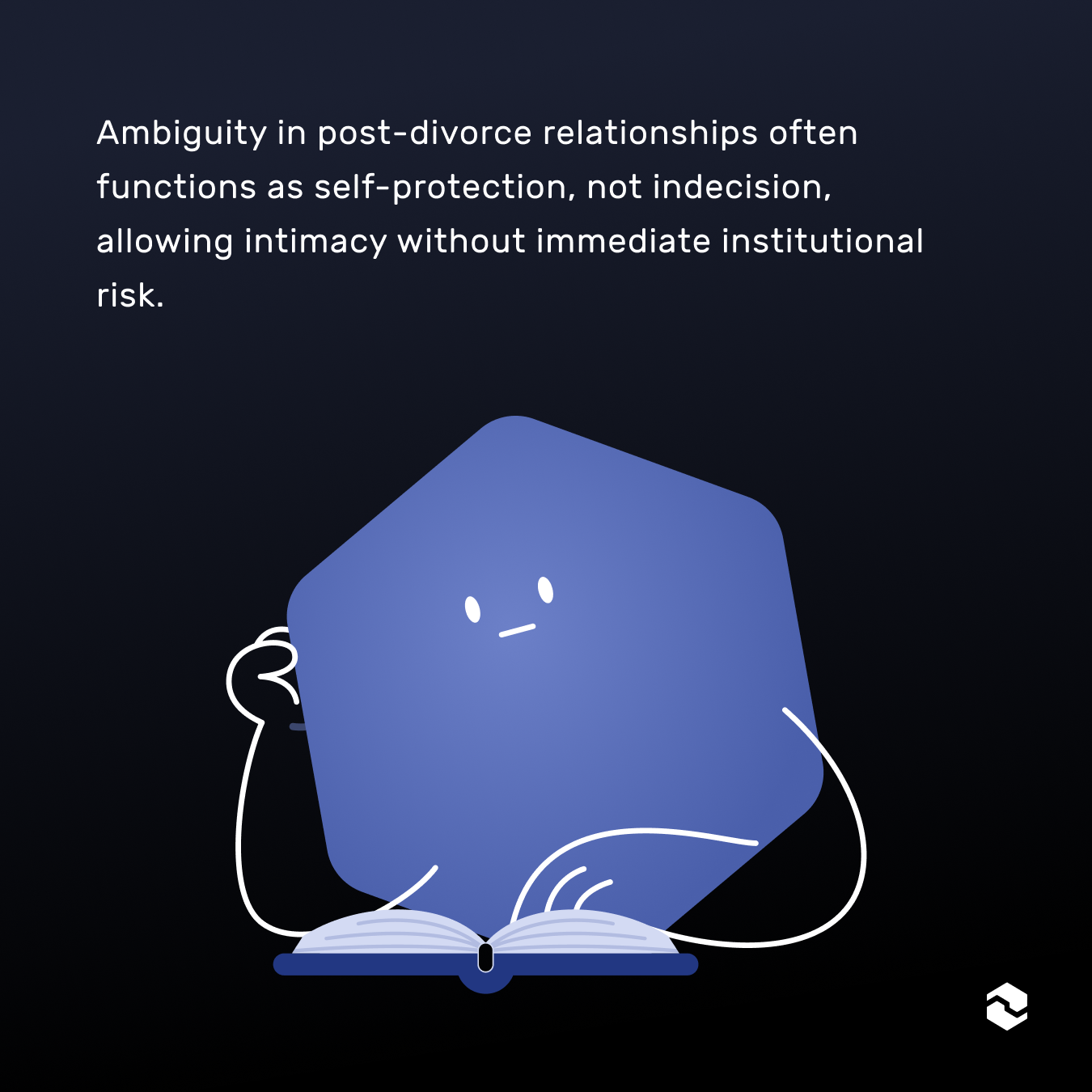
Within this context, relational ambiguity can take on a protective function. Rather than signalling emotional unavailability, ambiguity may operate as a strategy for preserving psychological safety following institutional and emotional strain [26,27]. This tendency is often framed as commitment avoidance, yet it can also be understood as a rational response to prior relational and legal experiences [14,27]. Post-divorce individuals may desire intimacy deeply while simultaneously resisting relational structures that previously imposed disproportionate emotional, legal or economic costs. Recognising this distinction allows post-divorce relationship patterns to be interpreted without moral judgement, situating them instead within broader histories of institutional experience, power and vulnerability [26,27].
The psychological aftermath of divorce in the Indian context:
Divorce is widely associated with grief, identity disruption, and emotional recalibration across cultural contexts. In India, these psychological processes are intensified by stigma, moral judgment, and the absence of socially sanctioned recovery narratives [4,7,10,16,28]. Emotional distress after divorce is not simply an internal experience; it is shaped by family responses, cultural narratives of failure, and social surveillance [4,10,28].
Marriage in India functions as a core marker of adulthood and legitimacy [19,20]. Its dissolution often triggers an identity crisis, particularly for women [4,10,28]. Divorced individuals frequently describe feeling socially undefined, no longer fitting neatly into categories of respectability. Questions such as “Who am I now?” and “Where do I belong?” become emotionally charged in a society that offers few positive images of life after divorce [4,10,28].
Grief following divorce is frequently socially unrecognised and emotionally invalidated. Unlike bereavement, divorce-related loss is rarely acknowledged as legitimate [28,29]. There are no widely recognised rituals for mourning a failed marriage, and few collective languages exist for ambivalence or regret [28,29]. Many individuals are expected to either justify their decision or suppress their pain. This lack of recognition can prolong distress and lead to unresolved grief, emotional numbing, or anxiety [28,29].
Guilt constitutes a central component of the psychological aftermath of divorce. Women, in particular, internalise blame due to cultural expectations that frame them as custodians of family harmony [4,10,28]. Even in cases of abuse or neglect, women may feel responsible for “breaking the family.” Men, while less morally scrutinised, may experience short-term declines in emotional well-being and loneliness [14,30]. In both cases, guilt is less about the relationship itself and more about violating social duty [28,30].
Family reactions strongly shape recovery. Supportive families can buffer emotional distress by affirming the individual’s decision and offering practical help [10,28]. However, many families respond with silence, disappointment, or pressure to reconcile. Such responses intensify isolation and delay healing, forcing individuals to manage family emotions alongside their own [28,30].
Loneliness is another defining feature of post-divorce life, especially in urban settings. Divorced individuals often find themselves excluded from couple-centric social spaces. Fear of judgment may lead to withdrawal, reinforcing emotional isolation. Without strong peer networks or mental health support, loneliness can become chronic, influencing how individuals approach future intimacy [4,14,28,30]. Re-entering social life, including through a dating app in Bangalore, therefore carries emotional weight beyond ordinary romantic exploration.
Gendered emotional landscapes: How men and women relearn intimacy:
Men and women experience post-divorce reconnection differently, shaped by gender socialisation, structural constraints, and unequal moral expectations. Research on relationship preferences following union dissolution consistently indicates that women are less likely than men to pursue remarriage or co-residential partnerships, following divorce, reflecting both differential preferences and constraints in the post-separation life course [32]. These patterns are not merely individual choices but are embedded in broader social roles and institutional arrangements that shape how intimacy is re-approached after marital exit.
One explanation for this divergence lies in the unequal caregiving and domestic responsibilities that divorced women shoulder. In many contexts, women retain primary responsibility for childcare after divorce, which limits time, mobility, and opportunities for forming new intimate relationships, while also making cohabitation or remarriage less attractive or feasible [5,12,32]. As a result, women may prefer non-co-residential or emotionally cautious forms of connection that allow them to preserve autonomy while managing care obligations.
Emotional adjustment after divorce also follows gendered trajectories. Large-scale demographic and psychological studies indicate that men often experience sharper declines in everyday emotional wellbeing immediately after divorce, partly because they are more likely to have relied on a spouse as their primary or sole source of emotional intimacy [30]. Women, by contrast, tend to maintain broader support networks, including friendships and kin ties, which can buffer emotional distress and facilitate adaptive coping [30]. These differences shape how men and women relearn intimacy: men may seek rapid reconnection to restore emotional stability, while women may approach new relationships with greater selectivity and emotional vigilance.
At the same time, divorce is not only associated with loss but also with psychological transformation. Recent research demonstrates that both men and women can experience post-traumatic growth after divorce, including increased self-esteem, greater self-knowledge, and a renewed appreciation for life [31]. Importantly, evidence suggests that when individual resources such as self-esteem are accounted for, levels of post-traumatic growth may be comparable across genders, challenging deficit-based narratives that portray one gender as inherently more resilient than the other [31]. This indicates that relearning intimacy after divorce involves not only recovery from distress but also the active reconstruction of relational expectations and emotional capacities.
Beyond these general patterns, gendered emotional landscapes are shaped by lived experience and social surveillance, particularly in the Indian context. For many women, divorce produces heightened emotional caution rooted in prior experiences of emotional neglect, control, or unequal domestic and emotional labour. Qualitative studies of divorced women in India describe a persistent fear of repetition, of re-entering relationships that reproduce asymmetries of care, authority, or sacrifice [4,7,10]. This often leads to ambivalence toward intimacy, characterised by a tension between the desire for closeness and the fear of losing autonomy again.
As a result, post-divorce dating for women is rarely experienced as casual or socially neutral. Romantic engagement is entangled with concerns about dignity, safety, legitimacy, and social judgment. Divorced women must assess not only emotional compatibility but also whether a relationship exposes them to stigma or moral scrutiny, as women’s romantic choices remain more visible and more heavily policed than men’s [16]. At the same time, many women report that divorce brings psychological clarity: stronger boundaries, clearer expectations, and reduced tolerance for unequal emotional labour [4,10]. This selectivity should not be read as emotional withdrawal, but as learned self-protection shaped by prior relational strain.
Men’s emotional struggles following divorce are often less publicly articulated but remain substantial. While men generally face less stigma in remarrying, research indicates that they are more likely to experience profound loneliness and emotional disorientation following marital dissolution [14,30]. Marriage frequently provides men with their primary structure for emotional expression and daily intimacy. Its loss can leave men uncertain about how to process vulnerability, particularly in social environments where emotional disclosure is discouraged by dominant norms of masculinity [14]. Some men seek rapid reconnection to restore routine and validation, while others withdraw from intimacy altogether, unsure how to rebuild emotional closeness outside the institutional framework of marriage.
For both genders, post-divorce relationships are shaped by emotional residue carried forward from the previous marriage. Fear of trust, hyper-independence, conflict avoidance, and attempts to tightly control emotional exposure are common features of post-divorce intimacy [30,31]. As a result, intimacy becomes cautious, negotiated, and psychologically complex rather than spontaneous or taken for granted.
Divorce is often imagined as an end to emotional labour; however, empirical research suggests that emotional work is instead redistributed along familiar gendered lines. Women are more likely to engage in deliberate emotional processing after divorce, reflecting on the relationship, articulating pain, and seeking meaning, partly because emotional coherence and relational insight continue to be socially expected of them [4,10,16]. Men, by contrast, often experience divorce as emotional dislocation, with fewer socially sanctioned spaces in which vulnerability is normalised, leading emotional pain to be deferred, externalised, or relationally outsourced [14,30].
Children: how post-divorce parenting is navigated
Divorce does not only break adult partnerships; it reconfigures family systems, with children often occupying the most vulnerable positions within this transition [29,30,33,36,38]. In India, a substantial proportion of marital dissolutions involve dependent children, yet children’s emotional and relational experiences remain comparatively undertheorised within discussions of post-divorce intimacy and adult recovery [1,3,6,8]. Indian family law formally places the child’s welfare as paramount in custody determinations. In practice, mothers are more likely to receive primary custody of younger children, while courts may consider the expressed preferences of older children depending on developmental maturity and circumstances [18,35].
Post-divorce dating introduces additional emotional complexity for parents and children alike. Research consistently documents loyalty conflicts among children, in which affection toward a parent’s new partner may feel like betrayal of the other parent, particularly in high-conflict separations [29,33,34,36]. Children may also encounter social stigma in peer environments, reinforcing feelings of difference or emotional insecurity [9,29,40].
A substantial body of longitudinal research indicates that parental divorce is associated with elevated risks of emotional distress, academic disengagement, and certain risk behaviours among children, especially when exposure to parental conflict persists [29,30,33,37,38]. These outcomes are not deterministic but are strongly shaped by the quality of post-divorce parenting, emotional availability, and co-parental cooperation [34,37,39].
As a result, many single parents approach new romantic relationships cautiously. Qualitative studies suggest that parents frequently delay dating, limit children’s exposure to new partners, or establish explicit boundaries around cohabitation in an effort to protect children’s emotional stability [4,10,18,36]. Rather than impulsive reconnection, parenting responsibilities often impose slower pacing and heightened deliberation in post-divorce intimacy [4,34,40].
Co-parenting dynamics play a decisive role in children’s adjustment. Although courts mandate cooperation, prolonged conflict and litigation are common in contested cases, creating extended periods of uncertainty for children [18,35]. Evidence consistently shows that children fare better when parents establish predictable routines, minimise exposure to conflict, and coordinate caregiving through structured parenting plans or mediated agreements [34,35,39]. In this sense, children reshape post-divorce intimacy itself, encouraging forms of relational engagement that are more deliberate, accountable, and emotionally regulated rather than reactive [27,40].
What helps people reconnect emotionally after divorce
Healing after divorce is not linear. Emotional recovery requires more than time; it requires integration [36,37]. Emotional validation is foundational. Being able to speak about one’s experience without judgment reduces shame and self-blame [37,38]. Support from friends, therapists, or peer communities helps individuals reframe divorce as a life transition rather than a moral failure [38,40].
Narrative reconstruction is equally important. Making sense of the marriage and its end, without reducing oneself to victimhood or blame, allows individuals to approach new relationships without unresolved resentment or fear [37,36]. Clear boundaries and communication skills help create emotional safety [38]. Many divorced individuals prioritise clarity over romance, valuing transparency and mutual expectations [36,39].
Economic and housing stability reduce pressure to enter relationships for survival rather than compatibility. Financial independence, particularly for women, allows for greater selectivity and emotional agency [39]. Therapeutic support plays a growing role in urban India. Counseling helps individuals recognise attachment patterns, trauma responses and emotional defenses that shape future relationships [40]. While access remains uneven, therapy provides tools for healthier reconnection. Healing does not eliminate fear. It allows individuals to engage with fear consciously rather than being controlled by it [37,40].
Digital dating after divorce: A psychological and social tool
Systematic empirical research specifically examining post-divorce dating practices in the Indian context remains scarce. As such, the role of dating applications in post-divorce adjustment should currently be understood as theoretically plausible and socially emerging rather than empirically established.
Drawing on qualitative research on identity reconstruction after divorce [4,14] and
studies of online interaction among divorced populations in other cultural contexts [41], it can be proposed
that digital platforms may function as transitional social spaces through which divorced individuals
cautiously re-enter romantic and social life. These environments may offer opportunities to experiment with
self-presentation, rebuild interpersonal confidence, and establish new social ties following marital
dissolution. In rapidly urbanising regions like Bangalore, this cautious return is often mediated through a dating app in Bangalore, where anonymity and control can feel psychologically protective.
From a psychological perspective, it is further hypothesized that digital dating environments could support the restoration of personal agency after divorce by allowing individuals to regulate the timing, pace, and depth of social engagement [31,33,36]. Such control may be particularly significant for individuals whose sense of autonomy was disrupted during marital conflict or legal separation. Narrative studies of divorce also suggest that post-divorce individuals actively engage in meaning-making and identity renegotiation [4,14], processes that may extend into how they present themselves and articulate future aspirations within digital contexts.
At present, there is no robust peer-reviewed evidence documenting whether divorced users experience unique vulnerabilities on dating applications, such as heightened exposure to harassment, emotional exploitation, or decision fatigue, within Indian or comparable Global South samples. Existing concerns regarding choice overload, ghosting, and platform-mediated rejection therefore remain extrapolations from general online dating research rather than divorce-specific findings [41].When approached reflectively rather than impulsively, digital dating can represent one of several possible tools through which divorced individuals explore renewed intimacy, companionship, or deliberate singlehood on self-determined terms [27,33,36].
Rethinking intimacy after divorce:
Divorced individuals frequently occupy an ambiguous social position that falls outside dominant marital categories. Sociological scholarship conceptualizes divorce as a liminal status, characterized by social uncertainty, conditional legitimacy, and ongoing moral evaluation rather than stable belonging [27,40]. Within the Indian context, where marriage continues to function as a central marker of adulthood and social respectability [19–22], this ambiguity may be particularly pronounced.
Existing qualitative and sociological studies suggest that such liminality can translate into social marginalization. Divorced individuals, especially women, are often excluded from couple-centered social spaces, family rituals, and informal networks, and may be positioned as socially “incomplete” until remarriage occurs [10,16,18]. These dynamics are associated with stigma, emotional isolation, and constrained opportunities for social reintegration [14,18].
On this basis, it can be proposed that post-divorce romantic relationships often carry meanings that extend beyond companionship or sexuality. They may operate as sites for re-establishing social legitimacy, affirming moral worth, and reconstructing personal identity following marital dissolution [27,31]. Intimacy after divorce thus appears to involve not only emotional connection but also symbolic reintegration into socially valued relational categories.
Post-divorce intimacy also raises broader questions regarding the nature of commitment in contemporary societies. Rather than indicating declining moral standards, rising divorce rates have been interpreted as revealing the limitations of endurance-based marital models that privilege permanence over emotional well-being [24,25]. Theories of reflexive intimacy propose that modern relationships increasingly emphasize communication, consent, emotional safety, and negotiated boundaries over obligation and sacrifice [25,26].
Although systematic longitudinal evidence from India remains limited, international research suggests that individuals who re-partner after divorce often demonstrate heightened caution, emotional reflexivity, and deliberate partner selection [29,31,32]. These relationships may not necessarily be more durable in formal terms, but they are frequently more consciously structured and psychologically negotiated [25,26]. From this perspective, love after divorce may be understood not as weakened, but as recalibrated toward emotional sustainability rather than institutional permanence.
In the Indian socio-cultural setting, this recalibration unfolds within enduring kinship systems and normative expectations surrounding marriage [19,20,21]. Post-divorce intimacy potentially involves the complex task of reclaiming emotional legitimacy within a social order that remains institutionally anchored to marital status [16,18]. Qualitative research suggests that individuals re-enter intimate life while simultaneously managing fear of repetition, hope for stability, social scrutiny, and the desire for emotional safety [14,16].Understanding intimacy after divorce therefore requires shifting emphasis away from moral judgement and toward the interaction between psychological recovery, social structure, and evolving relational norms. In this landscape, the meaning of a dating app in Bangalore may shift from casual interaction toward carefully reconstructed emotional possibility.
References:
[1] https://nfhsiips.in/nfhsuser/nfhs5.php
[2] https://divorcerate.org/india/
[3] https://dhsprogram.com/pubs/pdf/FR375/FR375.pdf
[4] L AT, Saranya TS, Gupta SK. The lived experience of divorce: a narrative analysis of personal stories and identity reconstruction of women. Frontiers in Sociology. 2025 Aug 12;10:1617489.
[5] Rajgarhia A, Husain Z, Dutta M. Determinants of Union Dissolution and Remarriage in India: Evidence from the National Family Health Survey. Vidyasagar University Journal of Economics. 2024 Jun 1;XXVIII(00):45–59.
[6] Sahoo H et al. Marital dissolution in India: Patterns and correlates. International Journal of Population Studies. 2024 May 10;11(3):27.
[7] Dcunha K, Sala JI. Women seeking divorce in India: Multiaxial analysis of a traumatic process. 2022.
[8] Elisetty S, Datti RS. Research trends on the intricate dimensions of divorce among women: A bibliometric analysis . Women’s Studies International Forum. 2025 Jan;108:103028.
[9] Biswas S. What divorce and separation tell us about modern India. BBC News. 2016.
[10] Rajan D. CHALLENGES FACED BY WOMEN AFTER DIVORCE IN THIRUVANANTHAPURAM DISTRICT. University of Kerala. 2023.
[11] Rise of Mutual Divorce in Urban India 2025. MutualDivorceOnline.com; 2025
[12] Nagarajan R. 86% of divorced women left with kids but no home. Times of India; 2011 Mar 8.
[13] Why Women File for Divorce: Understanding the Legal, Social, and Emotional Dimensions. AdvocateGandhi.com; 2025 Mar.
[14] Das S. Navigating life transitions: a qualitative study of divorce’s impact on Indian men. IPC2025 International Population Conference; 2025.
[15] Kumar A. Understanding what issues lead to divorce in India. Mindtalk.in; 2023 Oct 18.
[16] Varma I. Love after divorce: the stigma around healing and seeking affection again. Feminism in India; 2022 Feb 18.
[17] Indulia B. Live-in relationships: social myths, legal realities and the way forward | SCC Times. SCC Times. 2021.
[18] Tito O. Marriage and Divorce: Women’s Experiences with the Legal System, Socio-cultural Norms and Religion. ijssrr.com. 2024 Sep 3;
[19] Karve I. Kinship Organization in India. Asia Publishing House; 1965.
[20] Srinivas MN. Social Change in Modern India. Orient Longman; 1994.
[21] Allendorf K, Pandian RK. The decline of arranged marriage? Population and Development Review. 2016;42(3):435–464.
[22] Desai S, Andrist L. Gender scripts and age at marriage in India. Demography. 2010;47(3):667–687.
[23] Afridi F, Arora A, Dhar D, Mahajan K. Women’s Work, Social Norms and the Marriage Market. Economic Development and Cultural Change (2025).
[24] Cherlin AJ. The Marriage-Go-Round: The State of Marriage and the Family in America Today. Knopf; 2009.
[25] Giddens A. The Transformation of Intimacy: Sexuality, Love and Eroticism in Modern Societies. Stanford University Press; 1992.
[26] Jamieson L. Intimacy as a concept: Explaining social change in the context of globalisation. Sociology. 2011;45(6):1120–1135.
[27] Smart C. Personal Life: New Directions in Sociological Thinking. Polity Press; 2007.
[28] Amato PR, Previti D. People’s reasons for divorcing: Gender, social class, the life course, and adjustment. Journal of Family Issues. 2003;24(5):602–626.
[29] Wallerstein JS, Lewis JM. The Unexpected Legacy of Divorce: A 25-Year Landmark Study. Family Process. 2004;43(1):53–66.
[30] Leopold T. Gender differences in the consequences of divorce: A study of multiple outcomes. Demography. 2018 Apr 13;55(3):769–797.
[31] Torrado M, Alves S, Santos S, Costa P. Posttraumatic growth and subjective well-being in men and women after divorce: the mediating and moderating roles of self-esteem. J Happiness Stud. 2024;25(3):1021–1042.
[32] Poortman AR, Hewitt B. Gender differences in relationship preferences after union dissolution. Adv Life Course Res. 2015;26:11–21.
[33] Amato PR. The consequences of divorce for adults and children. Journal of Marriage and Family. 2010;72(3):650–666.
[34] Kelly JB, Emery RE. Children’s adjustment following divorce: Risk and resilience perspectives. Family Relations. 2003;52(4):352–362.
[35] Parkinson P. Family law and the indissolubility of parenthood. Cambridge Law Journal. 2011;70(2):326–346.
[36] Hetherington EM, Kelly J. For Better or For Worse: Divorce Reconsidered. New York: W.W. Norton; 2002.
[37] Amato PR. Research on divorce: Continuing trends and new developments. Journal of Marriage and Family. 2010;72(3):650–666.
[38] McLanahan S, Sandefur G. Growing Up with a Single Parent: What Hurts, What Helps. Harvard University Press; 1994.
[39] Feinberg ME. “The internal structure and ecological context of coparenting: A framework for research and intervention.” Parenting: Science and Practice. 2003;3(2):95–131.
[40] Smart C, Neale B, Wade A. The Changing Experience of Childhood: Families and Divorce. Polity Press; 2001.
[41] Wang J, Guo J. Disembedding and re-embedding: the online interaction mechanisms of divorced youth in China. Front Psychol. 2024;15:1413129.
[42] Brown SL, Lin IF. The gray divorce revolution: rising divorce among middle-aged and older adults, 1990–2010. J Gerontol B Psychol Sci Soc Sci. 2012;67(6):731–41.
About the author:
Sharvani is a bioinformatics graduate and neuroscience enthusiast passionate about understanding behavior, emotion, and connection. She enjoys exploring how science and technology influence modern relationships. In her free time, she loves watching films and reading. Connect with her on LinkedIn

Your privacy matters most.
- We will never share your data with any third parties. Vlncy will always be an ad-free platform.
- We will use your anonymised data only to improve the platform, in our efforts to serve you better.
- We do not store/ own any of your content on our servers.
- Upon account deletion, we will purge all your personal data.
- We will never reveal your identity on the platform. Only you decide when, how and with whom your information is shared.


