You cannot be known by someone you are always performing for
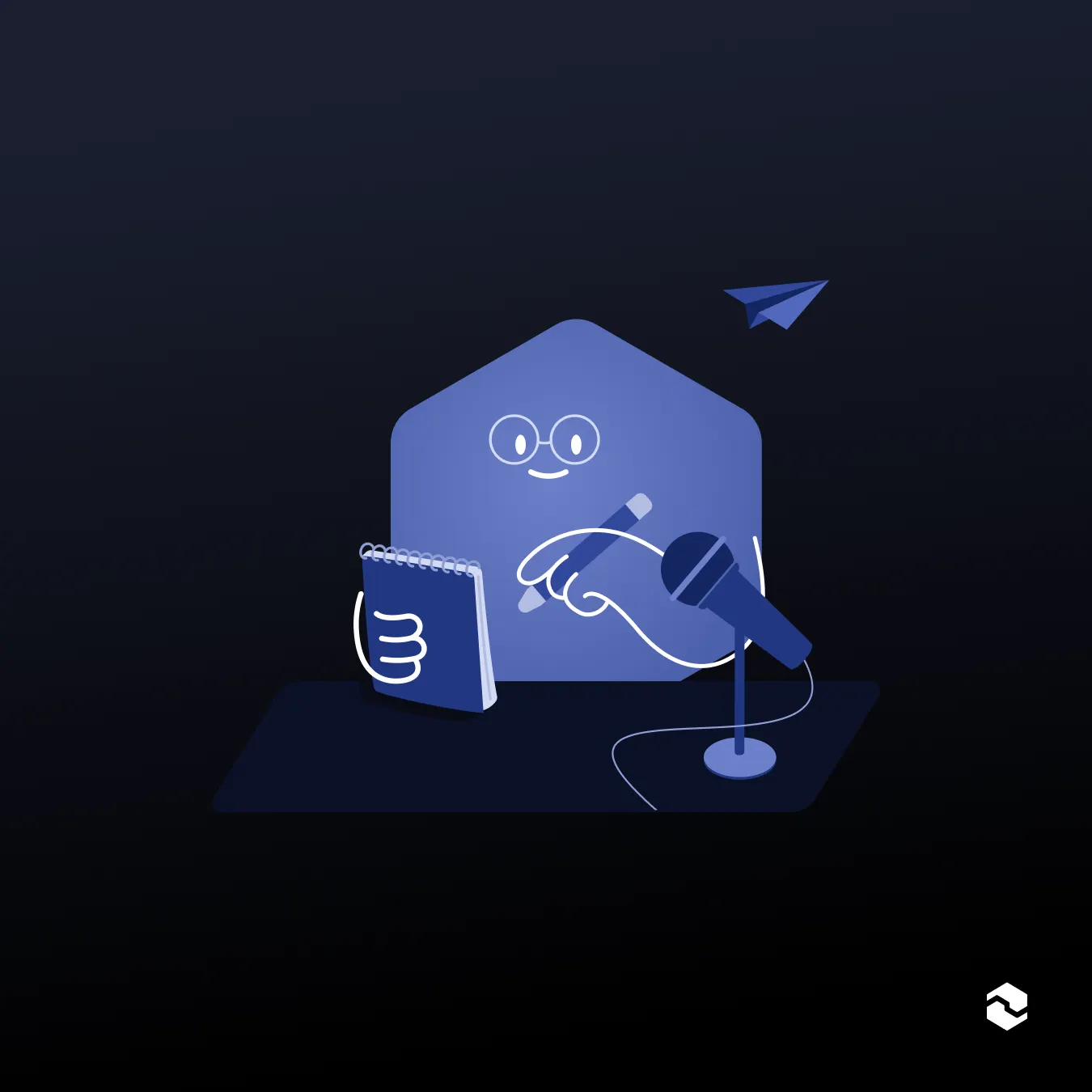
Think about the last time you felt genuinely, uncomplicatedly yourself with another person. No editing, no quiet internal monitoring of how you were coming across. You said the clumsy thing and it was fine. You didn't clean up the story before you told it. There was no audience, even in your own head.
Now think about how rare that was. Most of us spend most of our social lives in a state of low-grade performance. Not faking it, exactly. But managed. We watch ourselves from a slight distance, adjusting in real time, presenting the version most likely to land well with whoever is in the room. In 1959, sociologist Erving Goffman gave this a name: impression management. He argued it is woven into the fabric of every human interaction.
The core idea was that social life is essentially theatrical. We all have a front stage, where the performance happens, and backstage, which may be the dressing room, the kitchen before the dinner party, the car ride home. The place where the act drops. Where you can contradict yourself without consequence and exist [1].
You cannot be truly known by someone you are always performing for, not because the performance is dishonest, but because being known requires access to the parts of you that are not being managed.
That argument, made years ago about dinner parties and job interviews, turns out to be a precise description of what social media has done to modern intimacy. Platforms have not made us more performative, exactly. But they have made the performance relentless, ambient and profitable. And they have done something subtler: they have turned the backstage itself into content.The aesthetics of authenticity of rawness, of unfiltered honesty, of 'Okay, I'm going to be really vulnerable right now' have become a polished genre with its own production values and audience expectations.
What the backstage actually requires
The self, Goffman argued, is not a fixed interior thing waiting to be expressed. It is something we construct in relation to others, continuously, in real time. Every conversation involves a kind of negotiation between who you are trying to present and who the other person is allowing you to be.
Think of the difference between a first date and a relationship of ten years. On the first date, you are almost entirely front stage, presenting, assessing and adjusting. In a long relationship, there are stretches of backstage that can last hours, whole evenings in comfortable mutual incoherence where neither of you is performing much. You are just there. That is not the setting for intimacy. It is the condition that makes intimacy possible.
Arthur Aron's self-expansion theory found that in genuine intimacy, the boundary between self and other begins to blur; the resources, perspectives and identity of a close other become incorporated into your own sense of who you are [2]. This is not a metaphor. It is a measurable cognitive phenomenon. People in close relationships spontaneously use each other's knowledge and skills as their own, expanding their effective capabilities. But this only works with access to an actual person, not a curated projection.
Neuroscience points in the same direction. The neural regions involved in thinking about yourself are also recruited when thinking about people you genuinely know well, a process different from that involving strangers or acquaintances [3]. The brain treats the intimately known other as partially continuous with the self. That only happens when the knowing is real. When what you have is a performed version of someone, the brain registers the difference even when you consciously don’t.
The backstage has a requirement: it needs to be bounded. Off the record. There must be a genuine sense that this space is not being watched, that the usual rules of impression management are suspended by mutual agreement. Social media makes that mutual agreement structurally impossible to sustain.
The platform that never clocks out
Social media is a front stage with no off switch. Every post, every story, every casual reply is a public act, recorded, searchable, available to an audience whose full composition you often don't know. Your boss might see it. An ex might screenshot it. You are always, technically and practically, on.
Continuously managing your self-presentation is genuinely depleting; it draws on the same cognitive resources you need for everything else [5]. This constant digital curation is a leading driver of social media performance anxiety, as maintaining a public persona requires relentless cognitive effort. The performance is not neutral. It costs something, paid in attention and energy which you don't then have available for the riskier, slower work of actual closeness.
Studies of performers in urban nightlife culture found something more unsettling: sustained frontstage behaviour eventually reshapes the backstage self [6]. People began to inhabit the roles they had constructed, not cynically, but because the self is genuinely responsive to social feedback. Perform a version of yourself long enough and it becomes your working model of who you are. The same process almost certainly happens with digital self-presentation, only faster, because the feedback loop of likes and comments is continuous and immediate.
Platform design compounds this. Positive social feedback, the like, the comment and the share, activates reward circuitry in ways structurally similar to other pleasurable stimuli [7]. The intermittent nature of the reward, never knowing exactly when the next like is coming, is precisely what makes it hard to stop checking. The person performing online is not just making a conscious choice about self-presentation. They are inside a system engineered, deliberately, to keep them performing.
The pressure is not evenly distributed. The demand to perform online falls disproportionately on women, who face more intense scrutiny, more punishing consequences for performing incorrectly and a more persistent expectation of emotional availability and aesthetic self-management [8]. The performing self is not a generic human condition. It is a gendered one, continuous with older and more familiar forms of social surveillance.

The aesthetics of performing/ not performing
At some point, the internet noticed that everything looked curated. The response was not to stop curating. It was to curate the appearance of not curating. The unfiltered selfie. The tearful video filmed in a car. The caption that begins 'Okay, I don't usually share this kind of thing but.' These are now recognisable genres with their own conventions and audience expectations. The tears might be completely real. The decision to film them is a production choice.
Philosopher Charles Taylor argued that the ideal of authenticity, the idea of a true inner self waiting to be expressed, is not a universal human value but a historically specific one, a legacy of Romantic individualism [9]. What has happened online is a further mutation: authenticity is no longer about discovering a true self and expressing it. It is about performing the discovery convincingly. The audience watches a person signify realness, which is different from watching a person be real.
This distinction matters because of what actual vulnerability requires. Real closeness develops through a specific reciprocal process: one person shares something that carries genuine risk, the other responds with care and recognition, and through that exchange something deepens [10]. Performed vulnerability online mimics only the first half. The sharing is visible, but the reciprocity is absent, the disclosure goes out to thousands and returns as engagement metrics. That is not the same transaction. You cannot develop closeness with a notification.
There is also a class dimension worth naming directly. The carefully lit no-makeup look. The candid shot that took forty minutes to set up. The raw confessional post that went through three drafts. This flavour of performed authenticity is predominantly produced by people in the professional-creative class, where digital self-branding sustains a career [11]. For these people, the boundary between genuine self-expression and professional self-promotion has often ceased to exist. The backstage has been converted into a workplace. The intimacy the audience thinks it is accessing is, in part, a labour product.
Why being watched makes it hard to be known
Intimacy requires that at least some of the time, with at least some people, the performance stops. There has to be a version of you that is not being curated for reception. If there is no such version, or if you have lost reliable access to it, then what is available to the people who love you is not quite you. This is not a claim about social media being bad. It is a claim about conditions, structural, not moral.
Research on adult attachment has found that what distinguishes people who form close relationships from those who struggle is partly a capacity for what researchers call coherent self-disclosure: the ability to talk about your own experience without excessive monitoring or defensive editing [12]. Coherence here does not mean polish. It means almost the opposite, the willingness to let the account be incomplete, uncertain, not yet resolved. That willingness is exactly what sustained performance tends to erode. If you are always watching yourself, you start to lose access to the raw material.
Festinger's social comparison theory, developed in the 1950s and extensively studied since, holds that people assess themselves by comparing themselves to visible others [13]. Online platforms make this continuous and ambient. You are always, in the background, measuring yourself against what you can see, which means you are always performing for an implied audience even when no one is watching. The backstage gets colonised not just by platforms but by the comparison reflex. The audience becomes internal.
Sherry Turkle, after years of ethnographic research, arrived at a phrase that has stuck: alone together [14]. Constantly connected, rarely fully present. Substituting the managed contact of digital communication, controllable, editable and safe, for the riskier and more nourishing contact of being genuinely with someone. The forms of connection technology makes easy are precisely the forms that stop just short of what intimacy actually requires. Wide reach, shallow depth. Contact without exposure. And exposure, in the end, is what being known demands.
Psychologist Roy Baumeister's work on the 'need to belong' offers one reason this matters beyond the personal. Humans are not merely social as a preference, we are social as a biological imperative. Social exclusion and the chronic experience of being unknown activate the same neural pathways as physical pain. The performance that keeps others at a managed distance is not just emotionally costly. It works against something that is, in the most literal sense, a need.
The system that profits from the performance
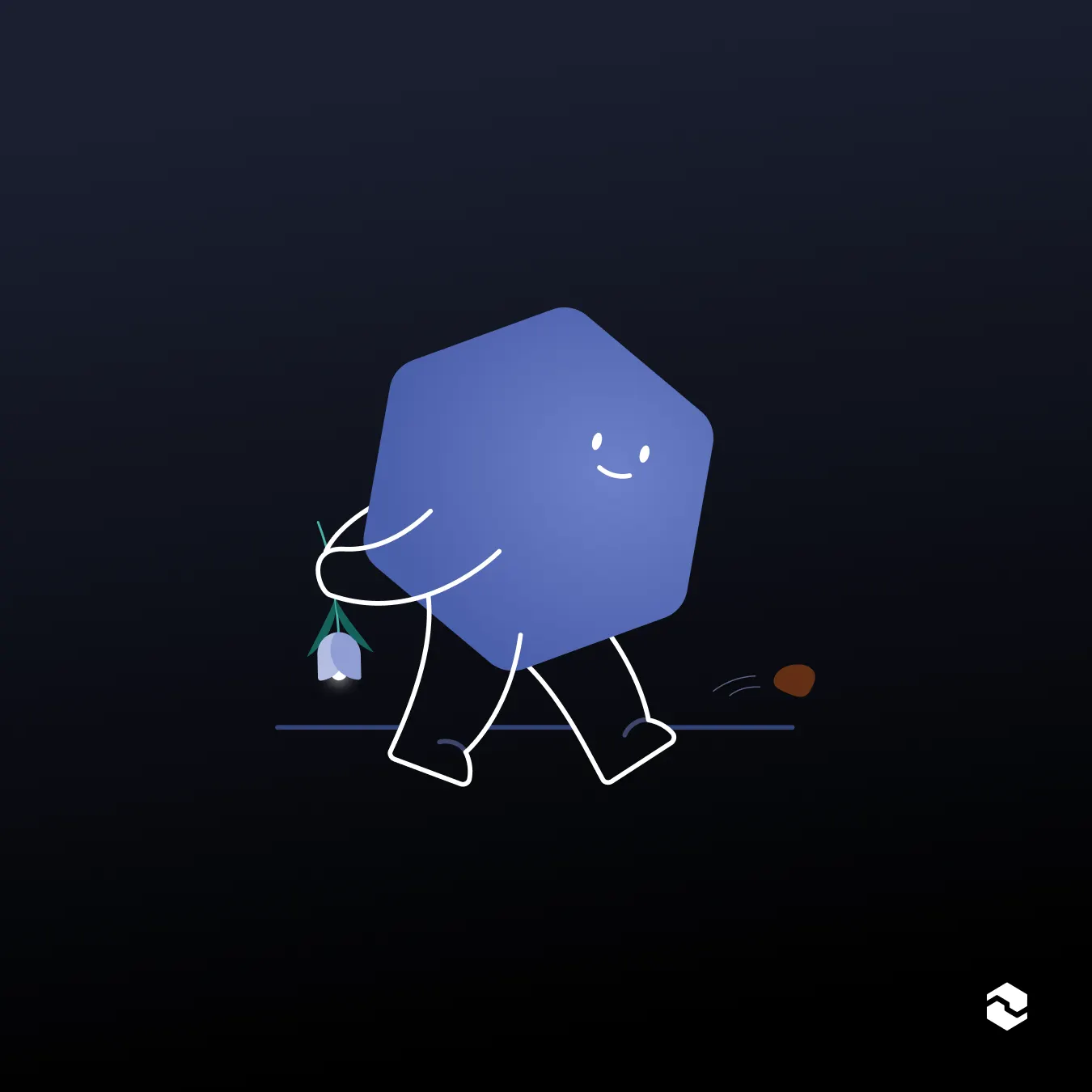
It would be a mistake to treat this as a personal problem with a personal solution. The forces shaping it are structural, economic and deliberate.
Platforms are not neutral tools for connection. They are attention businesses. Sociologist Zeynep Tufekci has argued that the logic of the attention economy produces a systematic bias toward emotional intensity, toward content that provokes strong reactions, because strong reactions sustain engagement [15]. The confessional post, the raw breakdown, the deeply personal disclosure: these are not just cultural fashions. They are rational responses to an incentive structure that rewards emotional charge. Platforms profit from performed vulnerability and have every reason to encourage it.
What this means is that the aesthetics of intimacy have been captured by a logic fundamentally at odds with what intimacy actually is. Intimacy is slow, private, reciprocal and resistant to being measured. The performance of intimacy is fast, public, one-directional and perfectly suited to a metrics dashboard. The confusion between these two things has not happened accidentally. It has been engineered in the same way that fast food was engineered to hit the same reward circuits as nourishment without providing what nourishment provides.
Researcher Dana Boyd spent years doing ethnographic work with teenagers navigating social media and identified a phenomenon she called context collapse: the condition in which a single post is simultaneously addressed to your friends, your parents, your employer, your ex and a stranger who found you through a hashtag [16]. When the audience is everyone, you cannot calibrate the performance for anyone. The result is a permanent generalised front stage performance for no one in particular and everyone at once. The backstage does not just become difficult to maintain. It becomes conceptually hard to locate.
This is experienced differently depending on where you sit. For people whose income depends on digital visibility, stepping off the front stage is not an option. It is the job. For people in cultures where privacy is defined communally rather than individually, the whole architecture of a private interior self maps differently onto lived experience. The loss of the backstage is not the same loss in every life.
What the research actually suggests
None of this means that people who use social media cannot have real relationships. They obviously can. The evidence does not support anything that sweeping.
Intimacy researcher Harry Reis found that what actually converts disclosure into closeness is not the volume of sharing nor the emotional intensity of it. It is something he called perceived partner responsiveness: the felt sense that the other person has genuinely understood you, cared about what you said and taken it seriously [10]. This cannot happen at scale. It cannot happen with an audience. It requires a specific other person who is actually paying attention. That shifts the question from 'how much am I sharing' to something more useful: with whom and under what conditions.
Self-expansion research suggests that deep relationships genuinely expand what a person is capable of. The resources and perspectives of someone you know well become available to you in ways that enrich your own thinking and experience [2]. This is an empirical argument for depth over breadth, not a romantic preference. The two are not equivalent, even though social media culture persistently frames them as if they were.
The practical implication is this: the quality of a backstage matters more than its size. One relationship in which you can be caught mid-sentence, uncertain, unflattering, contradicting yourself and still held is worth more, in intimacy terms, than a large audience that finds your performed vulnerability compelling. Knowing the difference and building your life accordingly is something social media culture makes hard to see.
Goffman died before social media existed. What he could not have foreseen is the way the backstage would become a product within which the performance of not performing would become its own genre. The person who says 'I'm being really vulnerable right now' is already performing the vulnerability. The loop closes on itself.
He was clear that there is no self outside of performance. The self is relational all the way down. But he was equally clear that some relational spaces are different from others. The backstage is not where the real you lives. It is where the unmonitored you lives and the unmonitored self is the only thing available for the kind of knowing that matters.
The question is not how to stop performing. You cannot. The question is whether there are still spaces, moments and people that allow the performance to slow down enough so that something else becomes possible.
References
[1] Goffman E. The Presentation of Self in Everyday Life. New York: Doubleday; 1959.
[2] Aron A, Aron EN, Tudor M, Nelson G. Close relationships as including other in the self. J Pers Soc Psychol. 1991;60(2):241–253.
[3] Mitchell JP, Macrae CN, Banaji MR. Dissociable medial prefrontal contributions to judgments of similar and dissimilar others. Neuron. 2006;50(4):655–663.
[5] Baumeister RF, Bratslavsky E, Muraven M, Tice DM. Ego depletion: is the active self a limited resource? J Pers Soc Psychol. 1998;74(5):1252–1265.
[6] Grazian D. On the Make: The Hustle of Urban Nightlife. Chicago: University of Chicago Press; 2008.
[7] Meshi D, Tamir DI, Heekeren HR. The emerging neuroscience of social media. Trends Cogn Sci. 2015;19(12):771–782.
[8] Duffy BE. (Not) Getting Paid to Do What You Love: Gender, Social Media, and Aspirational Work. New Haven: Yale University Press; 2017.
[9] Taylor C. The Ethics of Authenticity. Cambridge: Harvard University Press; 1991.
[10] Reis HT, Shaver P. Intimacy as an interpersonal process. In: Duck S, ed. Handbook of Personal Relationships. Chichester: Wiley; 1988:367–389.
[11] Banet-Weiser S. Authentic™: The Politics of Ambivalence in a Brand Culture. New York: NYU Press; 2012.
[12] Hesse E. The Adult Attachment Interview. In: Cassidy J, Shaver PR, eds. Handbook of Attachment. New York: Guilford; 2008:552–598.
[13] Festinger L. A theory of social comparison processes. Hum Relat. 1954;7(2):117–140.
[14] Turkle S. Alone Together: Why We Expect More from Technology and Less from Each Other. New York: Basic Books; 2011.
[15] Tufekci Z. Twitter and Tear Gas: The Power and Fragility of Networked Protest. New Haven: Yale University Press; 2017.
[16] boyd d. It's Complicated: The Social Lives of Networked Teens. New Haven: Yale University Press; 2014.
You cannot be known by someone you are always performing for
Think about the last time you felt genuinely, uncomplicatedly yourself with another person. No editing, no quiet internal monitoring of how you were coming across. You said the clumsy thing and it was fine. You didn't clean up the story before you told it. There was no audience, even in your own head.
Now think about how rare that was. Most of us spend most of our social lives in a state of low-grade performance. Not faking it, exactly. But managed. We watch ourselves from a slight distance, adjusting in real time, presenting the version most likely to land well with whoever is in the room. In 1959, sociologist Erving Goffman gave this a name: impression management. He argued it is woven into the fabric of every human interaction.
The core idea was that social life is essentially theatrical. We all have a front stage, where the performance happens, and backstage, which may be the dressing room, the kitchen before the dinner party, the car ride home. The place where the act drops. Where you can contradict yourself without consequence and exist [1].
You cannot be truly known by someone you are always performing for, not because the performance is dishonest, but because being known requires access to the parts of you that are not being managed.
That argument, made years ago about dinner parties and job interviews, turns out to be a precise description of what social media has done to modern intimacy. Platforms have not made us more performative, exactly. But they have made the performance relentless, ambient and profitable. And they have done something subtler: they have turned the backstage itself into content.The aesthetics of authenticity of rawness, of unfiltered honesty, of 'Okay, I'm going to be really vulnerable right now' have become a polished genre with its own production values and audience expectations.
What the backstage actually requires
The self, Goffman argued, is not a fixed interior thing waiting to be expressed. It is something we construct in relation to others, continuously, in real time. Every conversation involves a kind of negotiation between who you are trying to present and who the other person is allowing you to be.
Think of the difference between a first date and a relationship of ten years. On the first date, you are almost entirely front stage, presenting, assessing and adjusting. In a long relationship, there are stretches of backstage that can last hours, whole evenings in comfortable mutual incoherence where neither of you is performing much. You are just there. That is not the setting for intimacy. It is the condition that makes intimacy possible.
Arthur Aron's self-expansion theory found that in genuine intimacy, the boundary between self and other begins to blur; the resources, perspectives and identity of a close other become incorporated into your own sense of who you are [2]. This is not a metaphor. It is a measurable cognitive phenomenon. People in close relationships spontaneously use each other's knowledge and skills as their own, expanding their effective capabilities. But this only works with access to an actual person, not a curated projection.
Neuroscience points in the same direction. The neural regions involved in thinking about yourself are also recruited when thinking about people you genuinely know well, a process different from that involving strangers or acquaintances [3]. The brain treats the intimately known other as partially continuous with the self. That only happens when the knowing is real. When what you have is a performed version of someone, the brain registers the difference even when you consciously don’t.
The backstage has a requirement: it needs to be bounded. Off the record. There must be a genuine sense that this space is not being watched, that the usual rules of impression management are suspended by mutual agreement. Social media makes that mutual agreement structurally impossible to sustain.
The platform that never clocks out
Social media is a front stage with no off switch. Every post, every story, every casual reply is a public act, recorded, searchable, available to an audience whose full composition you often don't know. Your boss might see it. An ex might screenshot it. You are always, technically and practically, on.
Continuously managing your self-presentation is genuinely depleting; it draws on the same cognitive resources you need for everything else [5]. This constant digital curation is a leading driver of social media performance anxiety, as maintaining a public persona requires relentless cognitive effort. The performance is not neutral. It costs something, paid in attention and energy which you don't then have available for the riskier, slower work of actual closeness.
Studies of performers in urban nightlife culture found something more unsettling: sustained frontstage behaviour eventually reshapes the backstage self [6]. People began to inhabit the roles they had constructed, not cynically, but because the self is genuinely responsive to social feedback. Perform a version of yourself long enough and it becomes your working model of who you are. The same process almost certainly happens with digital self-presentation, only faster, because the feedback loop of likes and comments is continuous and immediate.
Platform design compounds this. Positive social feedback, the like, the comment and the share, activates reward circuitry in ways structurally similar to other pleasurable stimuli [7]. The intermittent nature of the reward, never knowing exactly when the next like is coming, is precisely what makes it hard to stop checking. The person performing online is not just making a conscious choice about self-presentation. They are inside a system engineered, deliberately, to keep them performing.
The pressure is not evenly distributed. The demand to perform online falls disproportionately on women, who face more intense scrutiny, more punishing consequences for performing incorrectly and a more persistent expectation of emotional availability and aesthetic self-management [8]. The performing self is not a generic human condition. It is a gendered one, continuous with older and more familiar forms of social surveillance.
The aesthetics of performing/ not performing
At some point, the internet noticed that everything looked curated. The response was not to stop curating. It was to curate the appearance of not curating. The unfiltered selfie. The tearful video filmed in a car. The caption that begins 'Okay, I don't usually share this kind of thing but.' These are now recognisable genres with their own conventions and audience expectations. The tears might be completely real. The decision to film them is a production choice.
Philosopher Charles Taylor argued that the ideal of authenticity, the idea of a true inner self waiting to be expressed, is not a universal human value but a historically specific one, a legacy of Romantic individualism [9]. What has happened online is a further mutation: authenticity is no longer about discovering a true self and expressing it. It is about performing the discovery convincingly. The audience watches a person signify realness, which is different from watching a person be real.
This distinction matters because of what actual vulnerability requires. Real closeness develops through a specific reciprocal process: one person shares something that carries genuine risk, the other responds with care and recognition, and through that exchange something deepens [10]. Performed vulnerability online mimics only the first half. The sharing is visible, but the reciprocity is absent, the disclosure goes out to thousands and returns as engagement metrics. That is not the same transaction. You cannot develop closeness with a notification.
There is also a class dimension worth naming directly. The carefully lit no-makeup look. The candid shot that took forty minutes to set up. The raw confessional post that went through three drafts. This flavour of performed authenticity is predominantly produced by people in the professional-creative class, where digital self-branding sustains a career [11]. For these people, the boundary between genuine self-expression and professional self-promotion has often ceased to exist. The backstage has been converted into a workplace. The intimacy the audience thinks it is accessing is, in part, a labour product.
Why being watched makes it hard to be known
Intimacy requires that at least some of the time, with at least some people, the performance stops. There has to be a version of you that is not being curated for reception. If there is no such version, or if you have lost reliable access to it, then what is available to the people who love you is not quite you. This is not a claim about social media being bad. It is a claim about conditions, structural, not moral.
Research on adult attachment has found that what distinguishes people who form close relationships from those who struggle is partly a capacity for what researchers call coherent self-disclosure: the ability to talk about your own experience without excessive monitoring or defensive editing [12]. Coherence here does not mean polish. It means almost the opposite, the willingness to let the account be incomplete, uncertain, not yet resolved. That willingness is exactly what sustained performance tends to erode. If you are always watching yourself, you start to lose access to the raw material.
Festinger's social comparison theory, developed in the 1950s and extensively studied since, holds that people assess themselves by comparing themselves to visible others [13]. Online platforms make this continuous and ambient. You are always, in the background, measuring yourself against what you can see, which means you are always performing for an implied audience even when no one is watching. The backstage gets colonised not just by platforms but by the comparison reflex. The audience becomes internal.
Sherry Turkle, after years of ethnographic research, arrived at a phrase that has stuck: alone together [14]. Constantly connected, rarely fully present. Substituting the managed contact of digital communication, controllable, editable and safe, for the riskier and more nourishing contact of being genuinely with someone. The forms of connection technology makes easy are precisely the forms that stop just short of what intimacy actually requires. Wide reach, shallow depth. Contact without exposure. And exposure, in the end, is what being known demands.
Psychologist Roy Baumeister's work on the 'need to belong' offers one reason this matters beyond the personal. Humans are not merely social as a preference, we are social as a biological imperative. Social exclusion and the chronic experience of being unknown activate the same neural pathways as physical pain. The performance that keeps others at a managed distance is not just emotionally costly. It works against something that is, in the most literal sense, a need.
The system that profits from the performance
It would be a mistake to treat this as a personal problem with a personal solution. The forces shaping it are structural, economic and deliberate.
Platforms are not neutral tools for connection. They are attention businesses. Sociologist Zeynep Tufekci has argued that the logic of the attention economy produces a systematic bias toward emotional intensity, toward content that provokes strong reactions, because strong reactions sustain engagement [15]. The confessional post, the raw breakdown, the deeply personal disclosure: these are not just cultural fashions. They are rational responses to an incentive structure that rewards emotional charge. Platforms profit from performed vulnerability and have every reason to encourage it.
What this means is that the aesthetics of intimacy have been captured by a logic fundamentally at odds with what intimacy actually is. Intimacy is slow, private, reciprocal and resistant to being measured. The performance of intimacy is fast, public, one-directional and perfectly suited to a metrics dashboard. The confusion between these two things has not happened accidentally. It has been engineered in the same way that fast food was engineered to hit the same reward circuits as nourishment without providing what nourishment provides.
Researcher Dana Boyd spent years doing ethnographic work with teenagers navigating social media and identified a phenomenon she called context collapse: the condition in which a single post is simultaneously addressed to your friends, your parents, your employer, your ex and a stranger who found you through a hashtag [16]. When the audience is everyone, you cannot calibrate the performance for anyone. The result is a permanent generalised front stage performance for no one in particular and everyone at once. The backstage does not just become difficult to maintain. It becomes conceptually hard to locate.
This is experienced differently depending on where you sit. For people whose income depends on digital visibility, stepping off the front stage is not an option. It is the job. For people in cultures where privacy is defined communally rather than individually, the whole architecture of a private interior self maps differently onto lived experience. The loss of the backstage is not the same loss in every life.
What the research actually suggests
None of this means that people who use social media cannot have real relationships. They obviously can. The evidence does not support anything that sweeping.
Intimacy researcher Harry Reis found that what actually converts disclosure into closeness is not the volume of sharing nor the emotional intensity of it. It is something he called perceived partner responsiveness: the felt sense that the other person has genuinely understood you, cared about what you said and taken it seriously [10]. This cannot happen at scale. It cannot happen with an audience. It requires a specific other person who is actually paying attention. That shifts the question from 'how much am I sharing' to something more useful: with whom and under what conditions.
Self-expansion research suggests that deep relationships genuinely expand what a person is capable of. The resources and perspectives of someone you know well become available to you in ways that enrich your own thinking and experience [2]. This is an empirical argument for depth over breadth, not a romantic preference. The two are not equivalent, even though social media culture persistently frames them as if they were.
The practical implication is this: the quality of a backstage matters more than its size. One relationship in which you can be caught mid-sentence, uncertain, unflattering, contradicting yourself and still held is worth more, in intimacy terms, than a large audience that finds your performed vulnerability compelling. Knowing the difference and building your life accordingly is something social media culture makes hard to see.
Goffman died before social media existed. What he could not have foreseen is the way the backstage would become a product within which the performance of not performing would become its own genre. The person who says 'I'm being really vulnerable right now' is already performing the vulnerability. The loop closes on itself.
He was clear that there is no self outside of performance. The self is relational all the way down. But he was equally clear that some relational spaces are different from others. The backstage is not where the real you lives. It is where the unmonitored you lives and the unmonitored self is the only thing available for the kind of knowing that matters.
The question is not how to stop performing. You cannot. The question is whether there are still spaces, moments and people that allow the performance to slow down enough so that something else becomes possible.
References
[1] Goffman E. The Presentation of Self in Everyday Life. New York: Doubleday; 1959.
[2] Aron A, Aron EN, Tudor M, Nelson G. Close relationships as including other in the self. J Pers Soc Psychol. 1991;60(2):241–253.
[3] Mitchell JP, Macrae CN, Banaji MR. Dissociable medial prefrontal contributions to judgments of similar and dissimilar others. Neuron. 2006;50(4):655–663.
[5] Baumeister RF, Bratslavsky E, Muraven M, Tice DM. Ego depletion: is the active self a limited resource? J Pers Soc Psychol. 1998;74(5):1252–1265.
[6] Grazian D. On the Make: The Hustle of Urban Nightlife. Chicago: University of Chicago Press; 2008.
[7] Meshi D, Tamir DI, Heekeren HR. The emerging neuroscience of social media. Trends Cogn Sci. 2015;19(12):771–782.
[8] Duffy BE. (Not) Getting Paid to Do What You Love: Gender, Social Media, and Aspirational Work. New Haven: Yale University Press; 2017.
[9] Taylor C. The Ethics of Authenticity. Cambridge: Harvard University Press; 1991.
[10] Reis HT, Shaver P. Intimacy as an interpersonal process. In: Duck S, ed. Handbook of Personal Relationships. Chichester: Wiley; 1988:367–389.
[11] Banet-Weiser S. Authentic™: The Politics of Ambivalence in a Brand Culture. New York: NYU Press; 2012.
[12] Hesse E. The Adult Attachment Interview. In: Cassidy J, Shaver PR, eds. Handbook of Attachment. New York: Guilford; 2008:552–598.
[13] Festinger L. A theory of social comparison processes. Hum Relat. 1954;7(2):117–140.
[14] Turkle S. Alone Together: Why We Expect More from Technology and Less from Each Other. New York: Basic Books; 2011.
[15] Tufekci Z. Twitter and Tear Gas: The Power and Fragility of Networked Protest. New Haven: Yale University Press; 2017.
[16] boyd d. It's Complicated: The Social Lives of Networked Teens. New Haven: Yale University Press; 2014.

Your privacy matters most.
- We will never share your data with any third parties. Vlncy will always be an ad-free platform.
- We will use your anonymised data only to improve the platform, in our efforts to serve you better.
- We do not store/ own any of your content on our servers.
- Upon account deletion, we will purge all your personal data.
- We will never reveal your identity on the platform. Only you decide when, how and with whom your information is shared.


