Swipe nation: What the data actually says about dating in India

It is a Tuesday evening in Bengaluru. A 27-year-old software engineer opens Bumble for the fourth time today. She has had the app for eight months, been on six dates and is still, technically, looking. Somewhere in Kolkata, a 31-year-old man is doing the same thing on Hinge, while his mother wonders aloud when he will settle down. These two people have never met and are part of the same vast social experiment driving online dating in India today: the digitisation of courtship.
Online dating in India is no longer niche. Almost half of urban Indians have used or currently use an online dating app [1], a figure that would have seemed implausible a decade ago in a country where arranged marriage remains the dominant paradigm. Today the market sits at roughly USD 788 million and is projected to reach USD 1.42 billion by 2030 [2]. These numbers represent a structural shift in how a generation finds, vets and relates to potential partners.
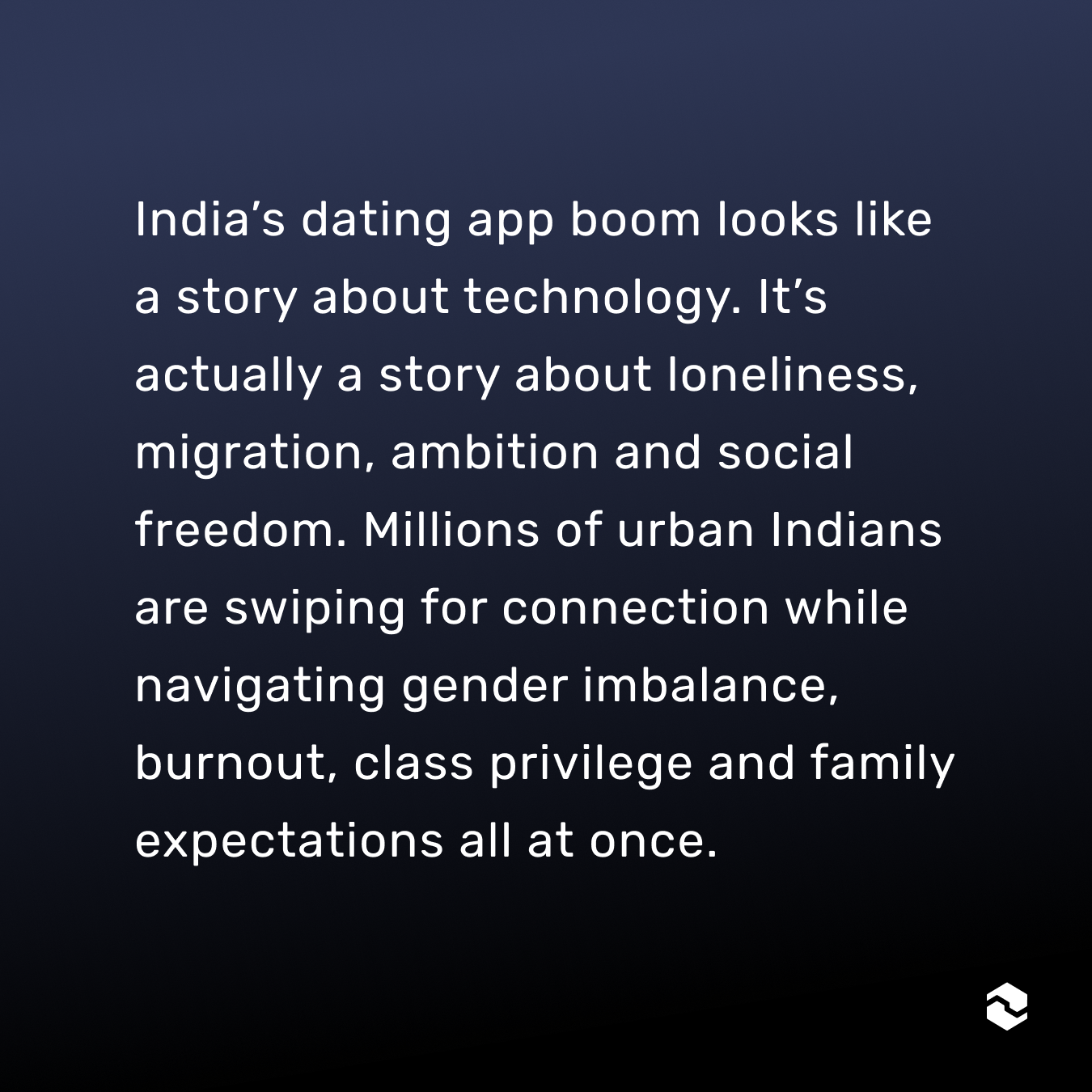
Headline statistics, however, flatter the apps. The fuller picture reveals dramatic gender imbalances, class-stratified willingness to pay, sharp city-to-city variation and a growing sense among younger users that the swipe-first model is burning out. India's dating app story is not primarily about technology. At its core, this is about a generation that moved to cities, got jobs, and now has no idea how to meet someone their parents didn't pick for them.
The gender problem no one talks about:
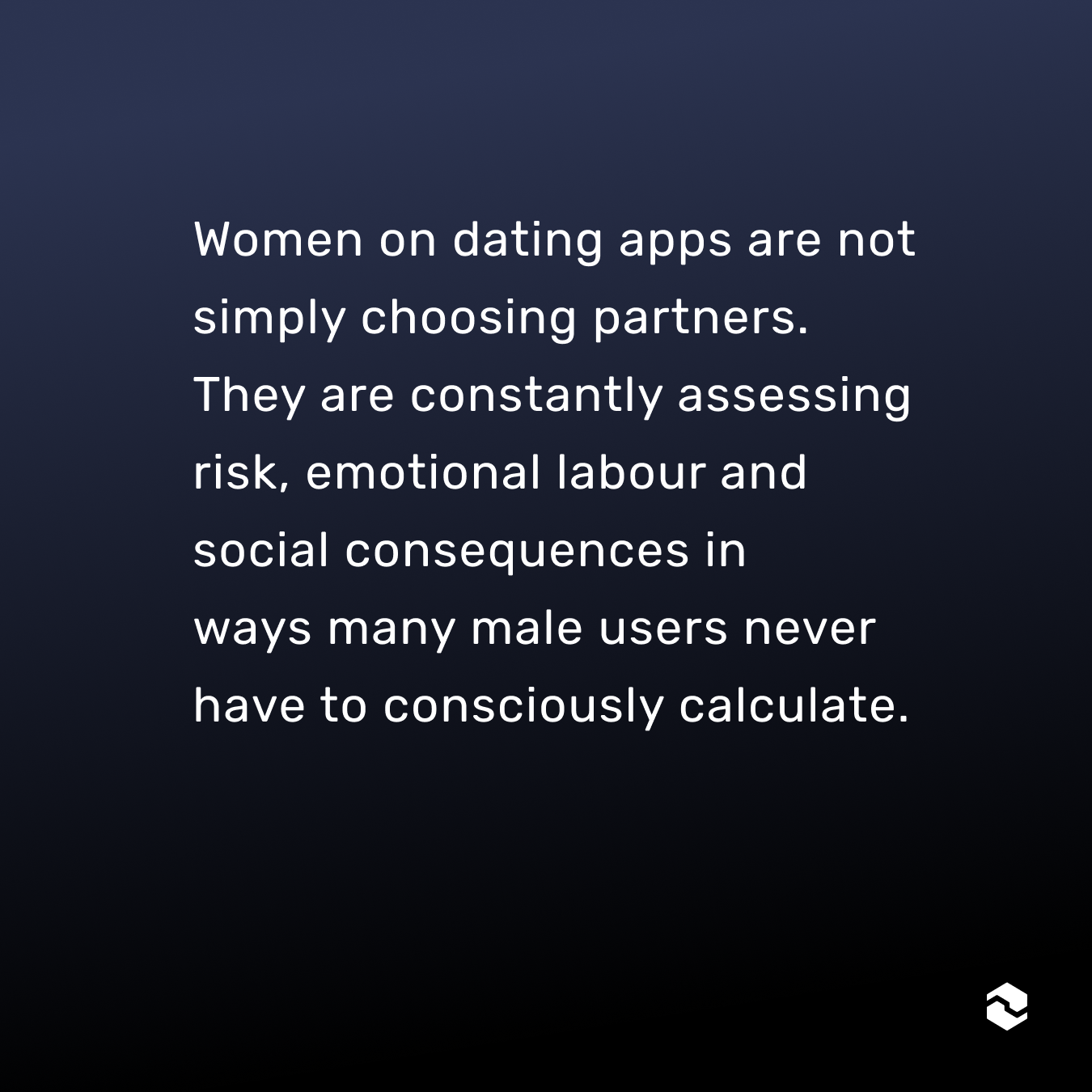
One of the defining structural realities of online dating in India is its extreme gender imbalance: on Indian Tinder, male users account for approximately 93% of the user base; women represent just 7% [3]. On the world's most downloaded dating app, the Indian version is, for practical purposes, a platform where men swipe on profiles of women who are almost entirely absent. This is not a rounding error. It is a structural condition that shapes every other metric.
Global research on digital mate selection confirms the downstream effects: women receive dramatically more matches than men, and the asymmetry shapes behaviour on both sides [4]. On Tinder globally, women average a 10% match rate; men average 0.6% [4,5]. In India, where women are so underrepresented to begin with, these dynamics are amplified further. Men swipe and wait. Women are inundated and remain selective.
Safety concerns, social stigma and family surveillance all suppress female participation. Perceived safety risks and social stigma are major deterrents to women using dating platforms in India, including fears of harassment, stalking, and being identified by acquaintances [6]. What makes the statistic stranger is this: among Indians who do pay for subscriptions, women are more likely to do so. 62% of female users have bought a premium account, versus 41% of men [1]. The women on these apps are deeply invested. There are just very few of them.
The city is everything:
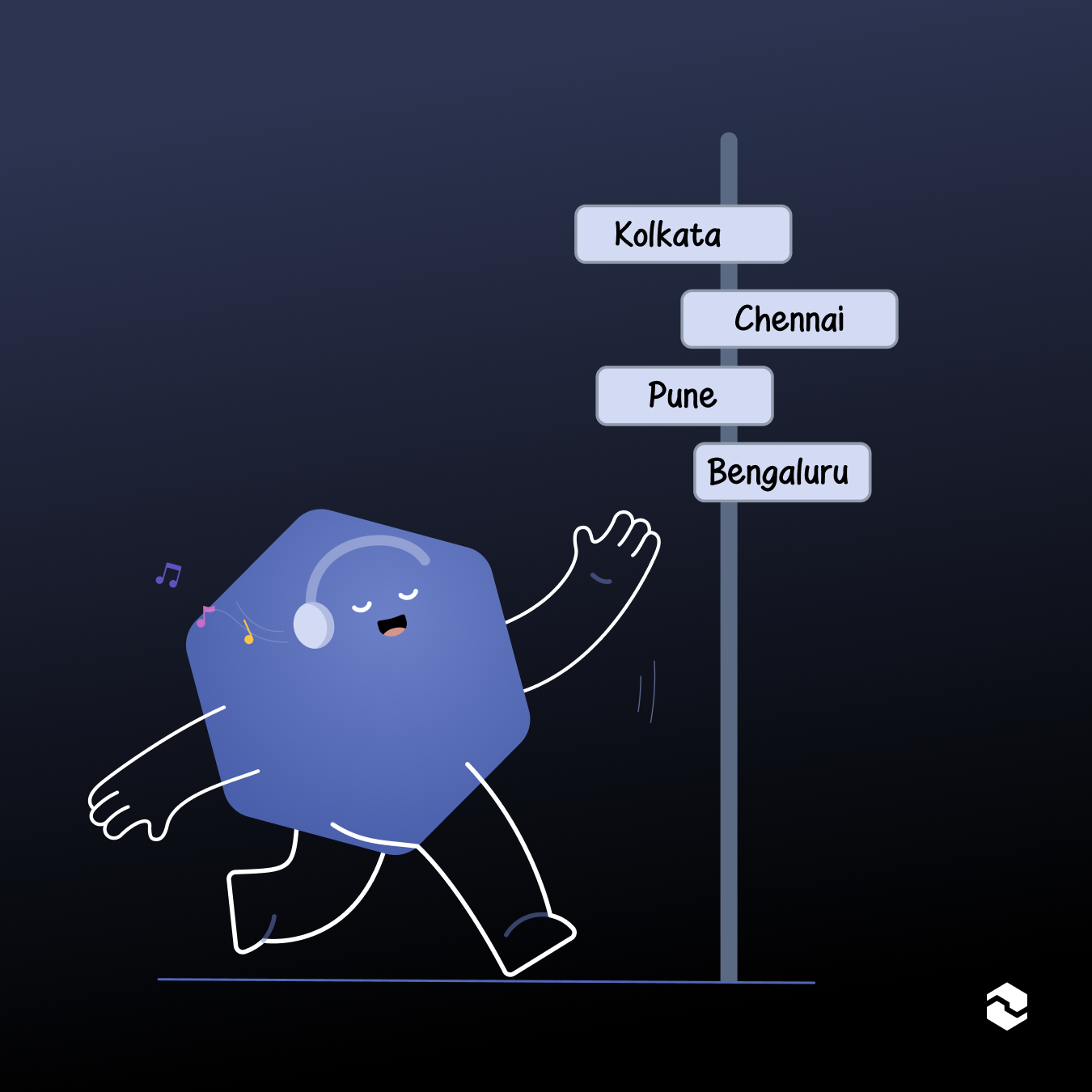
Aggregate national numbers disguise the fact that India is not one dating market. There are at least six distinct ones, varying by culture, income, gender norms and the demographics of the local professional class.
Kolkata leads in overall user penetration at 56%, while Hyderabad sits at the other end at 33% [1]. Kolkata's safety profile matters here. Repeatedly rated the safest major Indian city by the National Crime Records Bureau [7], it creates conditions where young people feel more comfortable navigating the semi-public social world that dating apps inhabit. Pune, by contrast, tops Tinder's right-swipe rate across six Indian cities, ahead of Delhi–NCR, Chandigarh, Mumbai, Ahmedabad and Bengaluru as of 2019 [8]. Its large student and IT workforce, combined with high per-capita internet penetration, produces a user base that is young, digitally fluent and swiping fast.
According to a survey commissioned by a dating app, 60% of Gen Z singles in Mumbai say they prioritise clear dating intentions, and 91% consider career alignment essential in a partner [9]. Mumbai Tinder users skew older too, with 70.9% in the 25-34 bracket and only 23.5% aged 18-24 [3], suggesting a user base that has largely moved past casual experimentation.
The marriage context:
Any account of Indian dating apps that brackets out marriage is incomplete. The average age at first marriage in urban India has been climbing steadily [10]. The gap between biological readiness, social pressure and personal readiness for partnership is precisely the space that dating apps have colonised.
India's expanding middle class, concentrated in cities, represents people who have left their natal networks for urban jobs, for whom the traditional arranged marriage pipeline requires logistical workarounds [11]. Apps like Matrimony.com long served this function. Tinder and its peers entered a different segment: users who want autonomy, who may not yet be ready to signal matrimonial intent to their families, or who are exploring before committing to that process. The lines between these categories are blurrier than the branding suggests.
What users want and are not getting:
The swipe model was designed for speed and volume, and it delivered both .But according to Bumble's own 2024 Future of Dating Trends Report, more than 75% of Gen Z users globally now report swiping fatigue, defined as emotional and cognitive burnout from high-volume, photo-based selection [12]. The same report notes, many premium dating apps in India are seeing growth in positioning themselves around intentional relationships rather than endless swiping, reporting a 17% increase in paying users [12]. The pivot from swipe-first to intent-first is underway.
The paradox of choice predicts that when options appear infinite and low-cost, decision quality declines and satisfaction with chosen options falls [13]. Applied to online dating, users presented with larger match pools show lower intention to pursue any single match [14]. Volume is not the same as opportunity. Industry estimates suggest it takes over 285 Tinder matches to produce a relationship, and 57 matches to produce one in-person meeting [5]. For most male users in India, where match rates are already suppressed by the gender imbalance, these figures are theoretical ceilings.
Structural forces underneath:
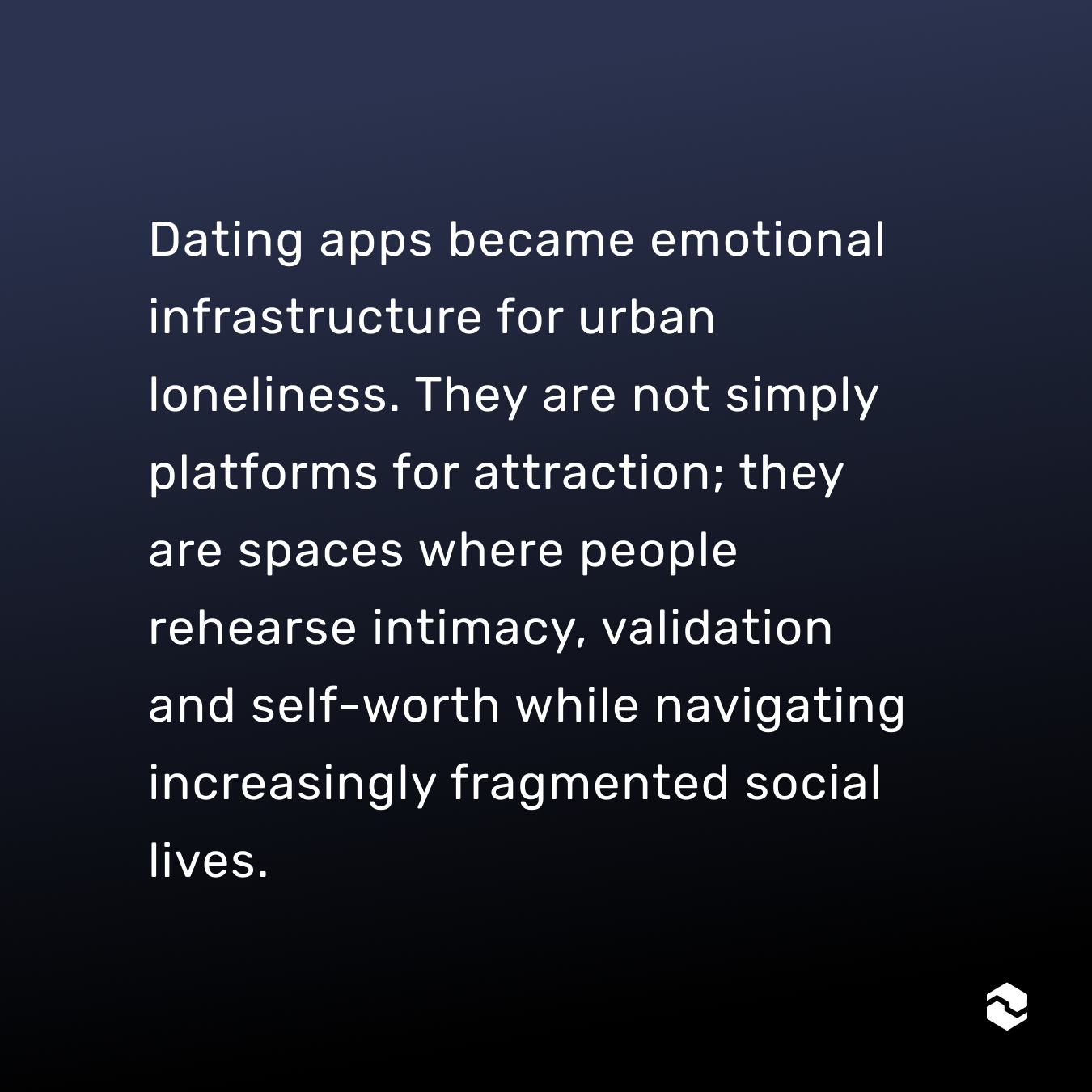
The boom in online dating in India is embedded in three broader processes. First, urbanisation: India's urban population has grown from roughly 286 million in 2001 to over 500 million by the mid-2020s [11]. Young migrants arrive in cities where they know few people and have limited time. Apps are a rational response to that social thinning. Second, expanding female education and employment widens the window of non-matrimonially-directed socialisation, even as aspirations outrun the infrastructure available to support them.
Third, a cohort-level shift in what intimacy means. College-educated urban Indians who have spent time outside their home state are significantly more likely to prioritise emotional compatibility and shared values over caste and family approval in mate selection [15]. The apps are not creating these preferences. They are serving demand that was already there, built by education, migration and exposure.
Premium tiers attract a self-selected cohort of more serious users. Given that intent-focused apps are seeing 17% growth in paid subscriptions, according to bumble’s own survey data [12], filtering for intent early may be more efficient than volume-swiping on a free tier. Research on decision fatigue also shows that self-imposed limits on daily swipe volume, combined with deeper evaluation of fewer profiles, produces better outcomes than maximising exposure [14]. The fatigue is documented.
Whom dating apps actually serve:

There is a question buried under all the statistics that rarely gets asked directly: who are these apps actually built for? The answer, when you look at the data honestly, is a surprisingly narrow slice of the Indian population.
The dominant global dating apps, Tinder, Hinge, OkCupid skew heavily toward English-comfortable users in their profile prompts, onboarding copy and cultural defaults, even where device-level language switching is technically available [16]. Indian-origin apps such as TrulyMadly, Woo and QuackQuack have made more deliberate moves toward regional language support, but the overall ecosystem remains oriented toward urban, educated, smartphone-owning users. That already excludes the majority of the country [16]. Layer on top of that the requirement for reliable mobile data, enough disposable income to consider a premium subscription and enough social freedom to use the app without family surveillance, and the addressable population shrinks considerably further.
The cities with the highest users, Kolkata (at 56%), Mumbai and Pune, tell the same story. These are cities with large concentrations of salaried professionals, college graduates and people who have migrated for work. For first-generation urban migrants still embedded in dense family networks, or for young people in Tier 2 and Tier 3 cities where the social consequences of app use are more visible, the barriers are not technological. They are social and economic.
This matters because the growth narrative around Indian dating apps tends to project the urban professional experience onto a much larger population. When industry reports cite hundreds of millions of potential users, they are counting smartphones, not social permission. A person can own a phone and still face family structures, income constraints and community surveillance that make dating app use practically impossible.
The premium payment data is the clearest indicator of this class stratification. Nearly half of all urban Indian dating app users, 49%, have paid for subscriptions on premium dating apps in India now increasingly markets toward intent-focused users [1].That is a remarkably high conversion rate by global standards, and it suggests that the people who are on these apps are not casual browsers. They are invested, they have money to spend, and they are self-selected for a particular kind of social orientation: comfortable with digital intimacy, comfortable spending on it and comfortable existing outside the traditional matchmaking pipeline. That is a real and growing cohort. It is just not representative of urban India as a whole.
Policy conversations, media coverage and academic research treat the dating app user as the default young Indian. The data does not support that. What it supports is a more modest and more interesting claim: a specific class fraction of Indian youth has built a parallel courtship infrastructure, and it is telling us something real about what that fraction wants. The question is whether the infrastructure will broaden over the next decade, or whether it will remain what it currently is: a premium product for people who have already won several social lotteries.
There is a version of this story that ends with cautious optimism: the apps are imperfect instruments for a real social need, and they will improve as the market matures, as more women participate, as intent-driven-matching replaces swiping.
But a 93-to-7 gender split is not a problem that better algorithms fix. It reflects something the apps cannot address: that female safety, autonomy and social permission are unevenly distributed across Indian cities, classes and family structures. The apps work best for people who already have a degree of social freedom.
But something is changing in online dating in India. A new wave of curated and premium dating apps in India are moving away from the swipe entirely, replacing volume with intention, cold algorithms with human curation and endless browsing with a smaller, better set of options. The market is not broken. The first model was just optimised for the wrong outcomes. What comes next might finally get it right.
References:
1. NumrcXM Research. Dating apps India survey: Tinder vs Happn vs TrulyMadly and more. 2022.
2. MarkNtel Advisors. India Dating Apps Market Competition, Forecast and Opportunities, 2030F. 2025.
3. Start.io Audience Intelligence. Dating users: Tinder in Mumbai. 2024. Enterprise Apps Today. Tinder statistics. 2024.
4. Tyson G, Perta VC, Haddadi H, Seto MC. A first look at user activity on Tinder. In: Proceedings of the IEEE/ACM ASONAM; 2016. p. 461-466.
5. Octal Software. Dating app statistics 2024.
6. Feminism in India. Why Online Dating Is Dangerous For Women In India (2023).
7. National Crime Records Bureau. Crime in India 2022. Ministry of Home Affairs, Government of India; 2023.
8. CNBC TV18. These Indian cities swipe right the most on Tinder. 2019.
9. Times of India. Mumbai daters prioritise self-care and boundaries, says dating app. 2023.
10. Office of the Registrar General and Census Commissioner. Census of India 2011: Primary Census Abstracts. New Delhi: Government of India; 2013.
11. Times of India. How the middle class has turned cities into India's growth engine. 2022.
12. Bumble Inc. The future of dating: 2024 trends report. 2024.
13. Schwartz B, Ward A, Monterosso J, Lyubomirsky S, White K, Lehman DR. Maximizing versus satisficing: happiness is a matter of choice. J Pers Soc Psychol. 2002;83(5):1178-1197.
14. D'Angelo JD, Toma CL. There are plenty of fish in the sea: the effects of choice overload and reversibility on online daters' satisfaction with selected partners. Media Psychol. 2017;20(1):1-27.
15. Banerjee A, Duflo E, Ghatak M, Lafortune J. Marry for what? Caste and mate selection in modern India. Am Econ J Microecon. 2013;5(2):33-72.
16. Internet and Mobile Association of India (IAMAI) and Kantar. India Internet Report 2023. Available from: https://www.iamai.in
About the author:
Sharvani is a bioinformatics graduate and neuroscience enthusiast passionate about understanding behavior, emotion, and connection. She enjoys exploring how science and technology influence modern relationships. In her free time, she loves watching films and reading. Connect with her on LinkedIn
Swipe nation: What the data actually says about dating in India
It is a Tuesday evening in Bengaluru. A 27-year-old software engineer opens Bumble for the fourth time today. She has had the app for eight months, been on six dates and is still, technically, looking. Somewhere in Kolkata, a 31-year-old man is doing the same thing on Hinge, while his mother wonders aloud when he will settle down. These two people have never met and are part of the same vast social experiment driving online dating in India today: the digitisation of courtship.
Online dating in India is no longer niche. Almost half of urban Indians have used or currently use an online dating app [1], a figure that would have seemed implausible a decade ago in a country where arranged marriage remains the dominant paradigm. Today the market sits at roughly USD 788 million and is projected to reach USD 1.42 billion by 2030 [2]. These numbers represent a structural shift in how a generation finds, vets and relates to potential partners.
Headline statistics, however, flatter the apps. The fuller picture reveals dramatic gender imbalances, class-stratified willingness to pay, sharp city-to-city variation and a growing sense among younger users that the swipe-first model is burning out. India's dating app story is not primarily about technology. At its core, this is about a generation that moved to cities, got jobs, and now has no idea how to meet someone their parents didn't pick for them.
The gender problem no one talks about:
One of the defining structural realities of online dating in India is its extreme gender imbalance: on Indian Tinder, male users account for approximately 93% of the user base; women represent just 7% [3]. On the world's most downloaded dating app, the Indian version is, for practical purposes, a platform where men swipe on profiles of women who are almost entirely absent. This is not a rounding error. It is a structural condition that shapes every other metric.
Global research on digital mate selection confirms the downstream effects: women receive dramatically more matches than men, and the asymmetry shapes behaviour on both sides [4]. On Tinder globally, women average a 10% match rate; men average 0.6% [4,5]. In India, where women are so underrepresented to begin with, these dynamics are amplified further. Men swipe and wait. Women are inundated and remain selective.
Safety concerns, social stigma and family surveillance all suppress female participation. Perceived safety risks and social stigma are major deterrents to women using dating platforms in India, including fears of harassment, stalking, and being identified by acquaintances [6]. What makes the statistic stranger is this: among Indians who do pay for subscriptions, women are more likely to do so. 62% of female users have bought a premium account, versus 41% of men [1]. The women on these apps are deeply invested. There are just very few of them.
The city is everything:
Aggregate national numbers disguise the fact that India is not one dating market. There are at least six distinct ones, varying by culture, income, gender norms and the demographics of the local professional class.
Kolkata leads in overall user penetration at 56%, while Hyderabad sits at the other end at 33% [1]. Kolkata's safety profile matters here. Repeatedly rated the safest major Indian city by the National Crime Records Bureau [7], it creates conditions where young people feel more comfortable navigating the semi-public social world that dating apps inhabit. Pune, by contrast, tops Tinder's right-swipe rate across six Indian cities, ahead of Delhi–NCR, Chandigarh, Mumbai, Ahmedabad and Bengaluru as of 2019 [8]. Its large student and IT workforce, combined with high per-capita internet penetration, produces a user base that is young, digitally fluent and swiping fast.
According to a survey commissioned by a dating app, 60% of Gen Z singles in Mumbai say they prioritise clear dating intentions, and 91% consider career alignment essential in a partner [9]. Mumbai Tinder users skew older too, with 70.9% in the 25-34 bracket and only 23.5% aged 18-24 [3], suggesting a user base that has largely moved past casual experimentation.
The marriage context:
Any account of Indian dating apps that brackets out marriage is incomplete. The average age at first marriage in urban India has been climbing steadily [10]. The gap between biological readiness, social pressure and personal readiness for partnership is precisely the space that dating apps have colonised.
India's expanding middle class, concentrated in cities, represents people who have left their natal networks for urban jobs, for whom the traditional arranged marriage pipeline requires logistical workarounds [11]. Apps like Matrimony.com long served this function. Tinder and its peers entered a different segment: users who want autonomy, who may not yet be ready to signal matrimonial intent to their families, or who are exploring before committing to that process. The lines between these categories are blurrier than the branding suggests.
What users want and are not getting:
The swipe model was designed for speed and volume, and it delivered both .But according to Bumble's own 2024 Future of Dating Trends Report, more than 75% of Gen Z users globally now report swiping fatigue, defined as emotional and cognitive burnout from high-volume, photo-based selection [12]. The same report notes, many premium dating apps in India are seeing growth in positioning themselves around intentional relationships rather than endless swiping, reporting a 17% increase in paying users [12]. The pivot from swipe-first to intent-first is underway.
The paradox of choice predicts that when options appear infinite and low-cost, decision quality declines and satisfaction with chosen options falls [13]. Applied to online dating, users presented with larger match pools show lower intention to pursue any single match [14]. Volume is not the same as opportunity. Industry estimates suggest it takes over 285 Tinder matches to produce a relationship, and 57 matches to produce one in-person meeting [5]. For most male users in India, where match rates are already suppressed by the gender imbalance, these figures are theoretical ceilings.
Structural forces underneath:
The boom in online dating in India is embedded in three broader processes. First, urbanisation: India's urban population has grown from roughly 286 million in 2001 to over 500 million by the mid-2020s [11]. Young migrants arrive in cities where they know few people and have limited time. Apps are a rational response to that social thinning. Second, expanding female education and employment widens the window of non-matrimonially-directed socialisation, even as aspirations outrun the infrastructure available to support them.
Third, a cohort-level shift in what intimacy means. College-educated urban Indians who have spent time outside their home state are significantly more likely to prioritise emotional compatibility and shared values over caste and family approval in mate selection [15]. The apps are not creating these preferences. They are serving demand that was already there, built by education, migration and exposure.
Premium tiers attract a self-selected cohort of more serious users. Given that intent-focused apps are seeing 17% growth in paid subscriptions, according to bumble’s own survey data [12], filtering for intent early may be more efficient than volume-swiping on a free tier. Research on decision fatigue also shows that self-imposed limits on daily swipe volume, combined with deeper evaluation of fewer profiles, produces better outcomes than maximising exposure [14]. The fatigue is documented.
Whom dating apps actually serve:
There is a question buried under all the statistics that rarely gets asked directly: who are these apps actually built for? The answer, when you look at the data honestly, is a surprisingly narrow slice of the Indian population.
The dominant global dating apps, Tinder, Hinge, OkCupid skew heavily toward English-comfortable users in their profile prompts, onboarding copy and cultural defaults, even where device-level language switching is technically available [16]. Indian-origin apps such as TrulyMadly, Woo and QuackQuack have made more deliberate moves toward regional language support, but the overall ecosystem remains oriented toward urban, educated, smartphone-owning users. That already excludes the majority of the country [16]. Layer on top of that the requirement for reliable mobile data, enough disposable income to consider a premium subscription and enough social freedom to use the app without family surveillance, and the addressable population shrinks considerably further.
The cities with the highest users, Kolkata (at 56%), Mumbai and Pune, tell the same story. These are cities with large concentrations of salaried professionals, college graduates and people who have migrated for work. For first-generation urban migrants still embedded in dense family networks, or for young people in Tier 2 and Tier 3 cities where the social consequences of app use are more visible, the barriers are not technological. They are social and economic.
This matters because the growth narrative around Indian dating apps tends to project the urban professional experience onto a much larger population. When industry reports cite hundreds of millions of potential users, they are counting smartphones, not social permission. A person can own a phone and still face family structures, income constraints and community surveillance that make dating app use practically impossible.
The premium payment data is the clearest indicator of this class stratification. Nearly half of all urban Indian dating app users, 49%, have paid for subscriptions on premium dating apps in India now increasingly markets toward intent-focused users [1].That is a remarkably high conversion rate by global standards, and it suggests that the people who are on these apps are not casual browsers. They are invested, they have money to spend, and they are self-selected for a particular kind of social orientation: comfortable with digital intimacy, comfortable spending on it and comfortable existing outside the traditional matchmaking pipeline. That is a real and growing cohort. It is just not representative of urban India as a whole.
Policy conversations, media coverage and academic research treat the dating app user as the default young Indian. The data does not support that. What it supports is a more modest and more interesting claim: a specific class fraction of Indian youth has built a parallel courtship infrastructure, and it is telling us something real about what that fraction wants. The question is whether the infrastructure will broaden over the next decade, or whether it will remain what it currently is: a premium product for people who have already won several social lotteries.
There is a version of this story that ends with cautious optimism: the apps are imperfect instruments for a real social need, and they will improve as the market matures, as more women participate, as intent-driven-matching replaces swiping.
But a 93-to-7 gender split is not a problem that better algorithms fix. It reflects something the apps cannot address: that female safety, autonomy and social permission are unevenly distributed across Indian cities, classes and family structures. The apps work best for people who already have a degree of social freedom.
But something is changing in online dating in India. A new wave of curated and premium dating apps in India are moving away from the swipe entirely, replacing volume with intention, cold algorithms with human curation and endless browsing with a smaller, better set of options. The market is not broken. The first model was just optimised for the wrong outcomes. What comes next might finally get it right.
References:
1. NumrcXM Research. Dating apps India survey: Tinder vs Happn vs TrulyMadly and more. 2022.
2. MarkNtel Advisors. India Dating Apps Market Competition, Forecast and Opportunities, 2030F. 2025.
3. Start.io Audience Intelligence. Dating users: Tinder in Mumbai. 2024. Enterprise Apps Today. Tinder statistics. 2024.
4. Tyson G, Perta VC, Haddadi H, Seto MC. A first look at user activity on Tinder. In: Proceedings of the IEEE/ACM ASONAM; 2016. p. 461-466.
5. Octal Software. Dating app statistics 2024.
6. Feminism in India. Why Online Dating Is Dangerous For Women In India (2023).
7. National Crime Records Bureau. Crime in India 2022. Ministry of Home Affairs, Government of India; 2023.
8. CNBC TV18. These Indian cities swipe right the most on Tinder. 2019.
9. Times of India. Mumbai daters prioritise self-care and boundaries, says dating app. 2023.
10. Office of the Registrar General and Census Commissioner. Census of India 2011: Primary Census Abstracts. New Delhi: Government of India; 2013.
11. Times of India. How the middle class has turned cities into India's growth engine. 2022.
12. Bumble Inc. The future of dating: 2024 trends report. 2024.
13. Schwartz B, Ward A, Monterosso J, Lyubomirsky S, White K, Lehman DR. Maximizing versus satisficing: happiness is a matter of choice. J Pers Soc Psychol. 2002;83(5):1178-1197.
14. D'Angelo JD, Toma CL. There are plenty of fish in the sea: the effects of choice overload and reversibility on online daters' satisfaction with selected partners. Media Psychol. 2017;20(1):1-27.
15. Banerjee A, Duflo E, Ghatak M, Lafortune J. Marry for what? Caste and mate selection in modern India. Am Econ J Microecon. 2013;5(2):33-72.
16. Internet and Mobile Association of India (IAMAI) and Kantar. India Internet Report 2023. Available from: https://www.iamai.in
About the author:
Sharvani is a bioinformatics graduate and neuroscience enthusiast passionate about understanding behavior, emotion, and connection. She enjoys exploring how science and technology influence modern relationships. In her free time, she loves watching films and reading. Connect with her on LinkedIn

Your privacy matters most.
- We will never share your data with any third parties. Vlncy will always be an ad-free platform.
- We will use your anonymised data only to improve the platform, in our efforts to serve you better.
- We do not store/ own any of your content on our servers.
- Upon account deletion, we will purge all your personal data.
- We will never reveal your identity on the platform. Only you decide when, how and with whom your information is shared.


